
Digital marketing is no longer just about getting more people to visit your website. It's about reaching the right audience, answering their questions, earning their trust, and giving them a reason to choose your business.
Think about how people discover brands today. Someone might search Google for a nearby service, watch a product review on YouTube, discover a company through Instagram, or ask an AI assistant to compare different solutions. Each interaction can influence a buying decision.
For businesses, this creates both an opportunity and a challenge. There are more ways to reach customers than ever before, but choosing the right channels has become increasingly important.
This digital marketing blog explores the strategies, tools, and practical steps businesses can use to strengthen their online presence in 2026. Whether you're running a startup, managing an established company, or learning digital marketing for the first time, you'll find ideas you can apply to your own goals.
1. What Is Digital Marketing?
Digital marketing is the process of promoting products, services, or brands through online channels such as search engines, websites, social media, email, and digital advertising.
Unlike traditional advertising, many digital marketing activities allow businesses to measure how people interact with their campaigns.
For example, imagine you own a small skincare brand.
You could publish articles explaining how to choose products for different skin types, use Instagram to demonstrate your products, run Google Ads for relevant shopping searches, and send helpful emails to customers who have subscribed to your newsletter.
Each channel serves a different purpose, but they work toward a common goal: helping potential customers discover and connect with your business.
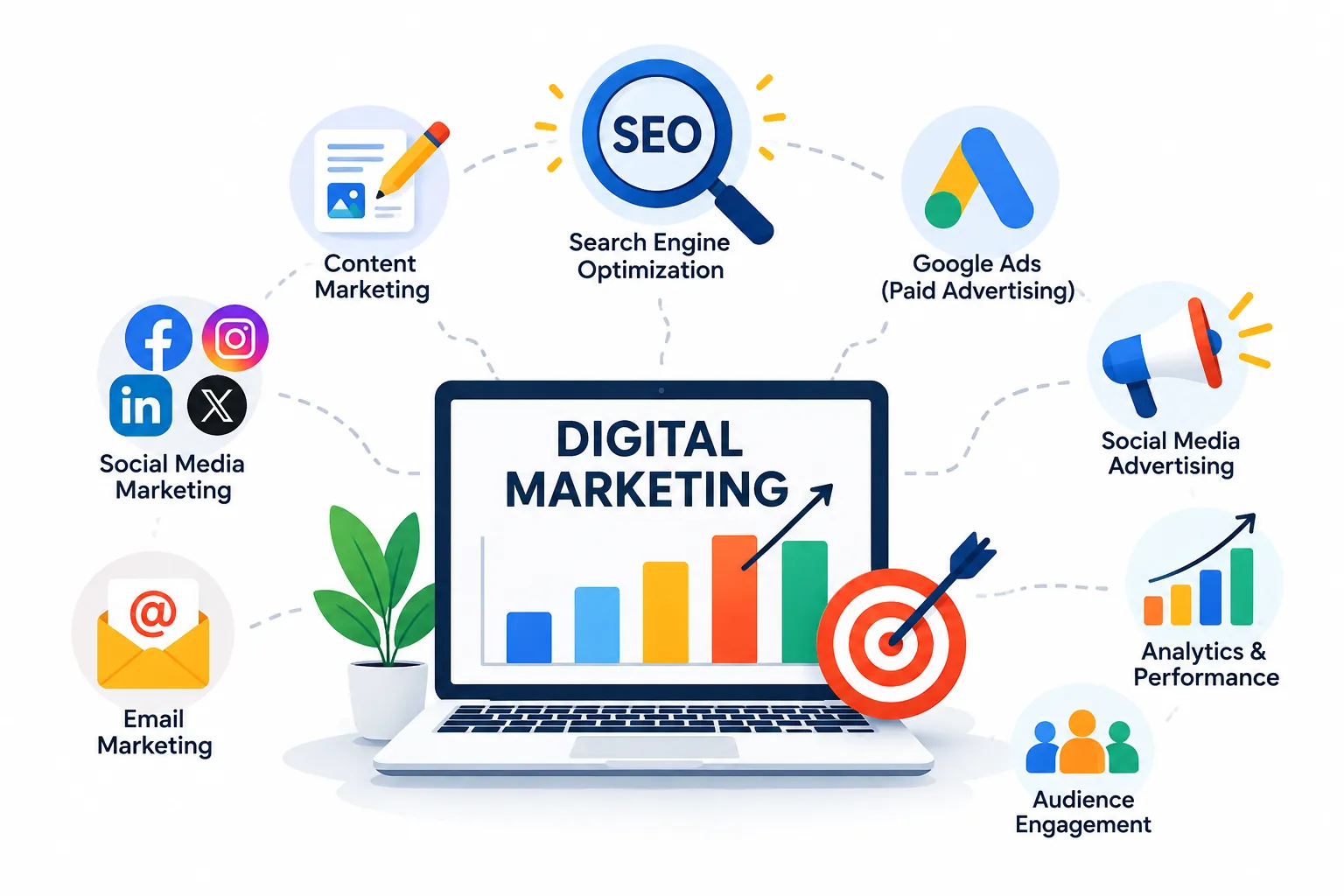
Digital marketing generally includes:
Search Engine Optimization (SEO)
Search engine advertising
Social media marketing
Content marketing
Email marketing
Conversion rate optimization
Affiliate marketing
Marketing automation
Analytics and performance measurement
The most effective approach isn't necessarily to use every channel. It's to identify which channels matter most to your audience.
2. Why Is Digital Marketing Important for Businesses in 2026?
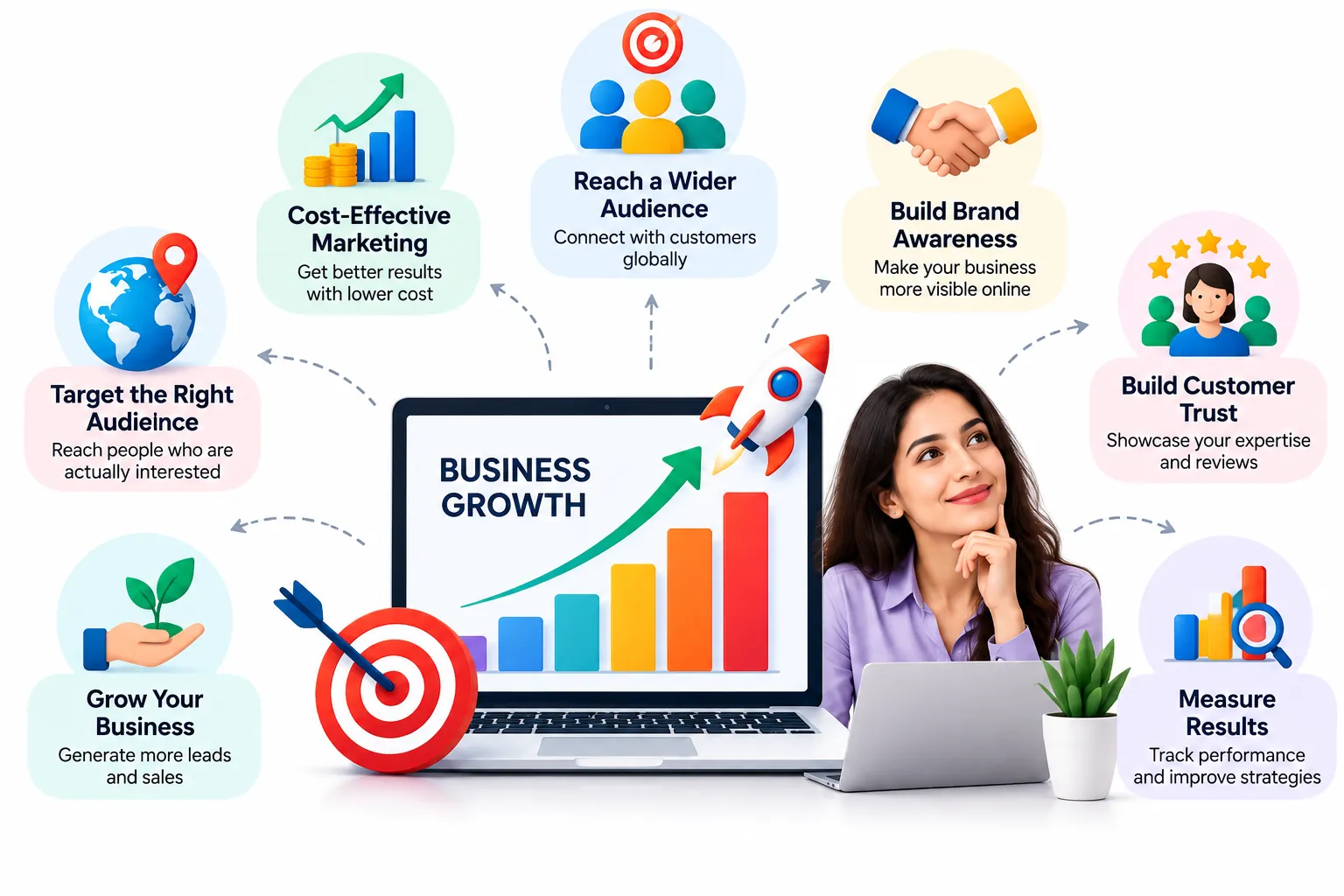
Customer journeys are rarely straightforward.
A potential customer might discover your business through a social media post, visit your website a few days later, compare your services with competitors, and finally contact you after reading a helpful article.
Digital marketing helps businesses remain visible throughout that journey.
Reach Customers Across Different Markets
A business doesn't need a physical office in every country to attract international visitors.
A well-structured website with useful content can reach audiences in markets such as the United States, United Kingdom, Canada, Australia, and India.
However, reaching international audiences requires more than publishing content in English. Businesses must also consider regional search behavior, customer expectations, competition, and service availability.
Build Trust Before the First Conversation
Customers often research businesses before contacting them.
Clear service descriptions, useful articles, transparent pricing information where appropriate, and genuine customer feedback can help visitors evaluate whether a company meets their needs.
Measure What Matters
Digital analytics can help answer questions such as:
Which marketing channels bring relevant visitors?
Which pages encourage enquiries?
Where do visitors leave the website?
Which campaigns generate qualified leads?
How much does it cost to acquire a customer?
These insights make it easier to improve marketing decisions over time.
3. Search Engine Optimization: Building Long-Term Visibility
Search Engine Optimization, commonly known as SEO, helps search engines discover, understand, and present relevant website content to users.
Imagine someone searching for "how to improve website traffic."
If your business publishes a genuinely useful guide answering that question, it may become eligible to appear in relevant search results.
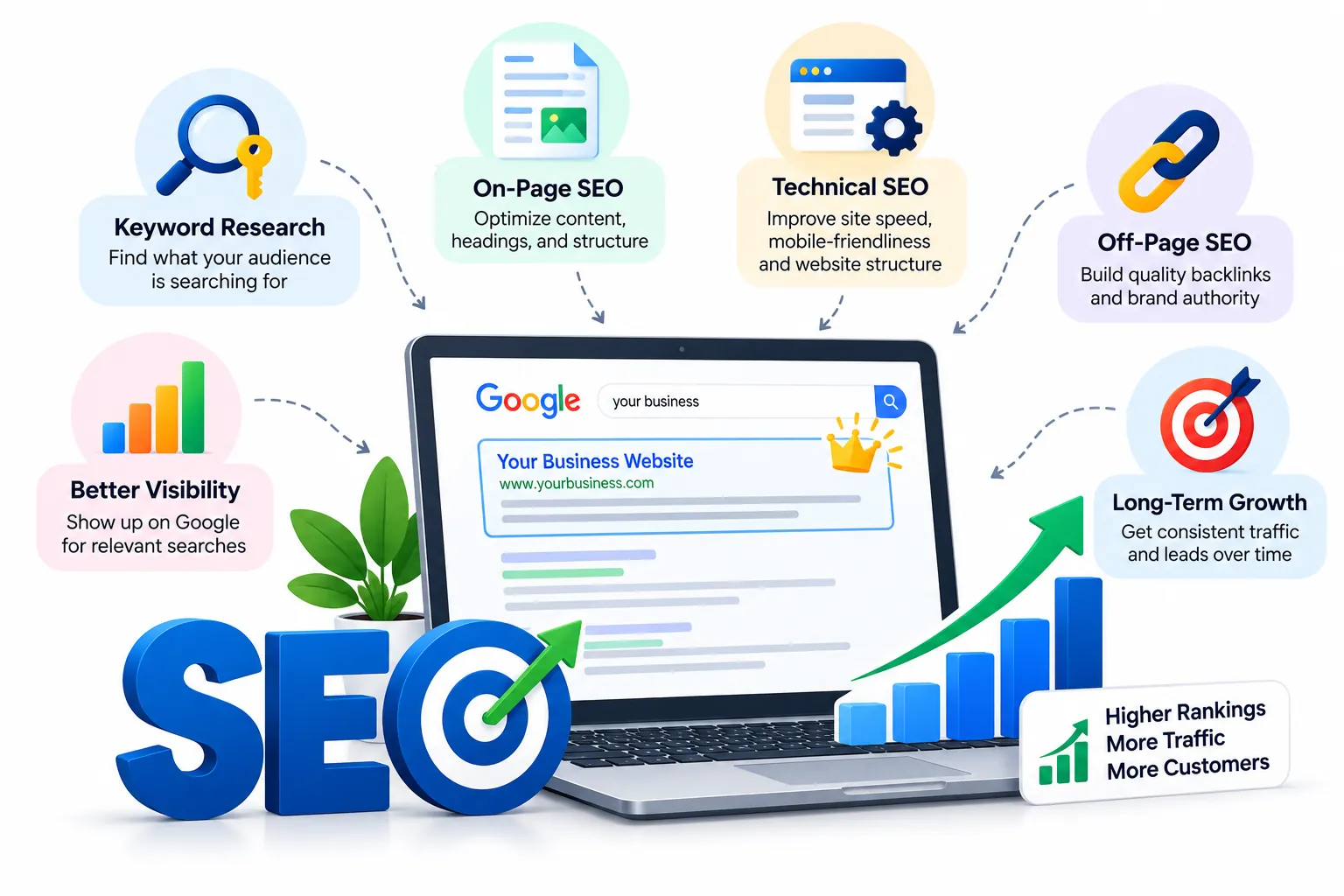
SEO generally involves three connected areas.
On-Page SEO
On-page SEO focuses on improving the content and structure of individual webpages.
Important activities include writing descriptive page titles, organizing content with clear headings, answering search queries, adding relevant internal links, and providing useful image descriptions.
For example, a website development company might publish an article explaining how to choose between WordPress and a custom-built website.
Instead of repeating "website development services" throughout the article, the company should answer practical questions about cost, maintenance, flexibility, and performance.
Technical SEO
Technical SEO helps search engines access and understand your website.
Common areas to review include:
Crawlability and indexability
Mobile usability
Website loading performance
Canonical URLs
XML sitemaps
Internal linking
HTTPS security
Structured data where appropriate
A technically accessible website creates a stronger foundation for content discovery.
Off-Page SEO
Off-page SEO includes activities that build a website's reputation beyond its own pages.
Relevant editorial mentions, useful research, industry relationships, and naturally earned backlinks can support visibility.
Buying manipulative links or participating in link schemes, however, can create unnecessary risks.
Practical tip: Start by improving your most important existing pages before creating dozens of new articles. Sometimes a clearer explanation, stronger internal linking, or a technical fix can be more useful than publishing additional content.
4. Google Ads vs SEO: Which Is Better for Business Growth?
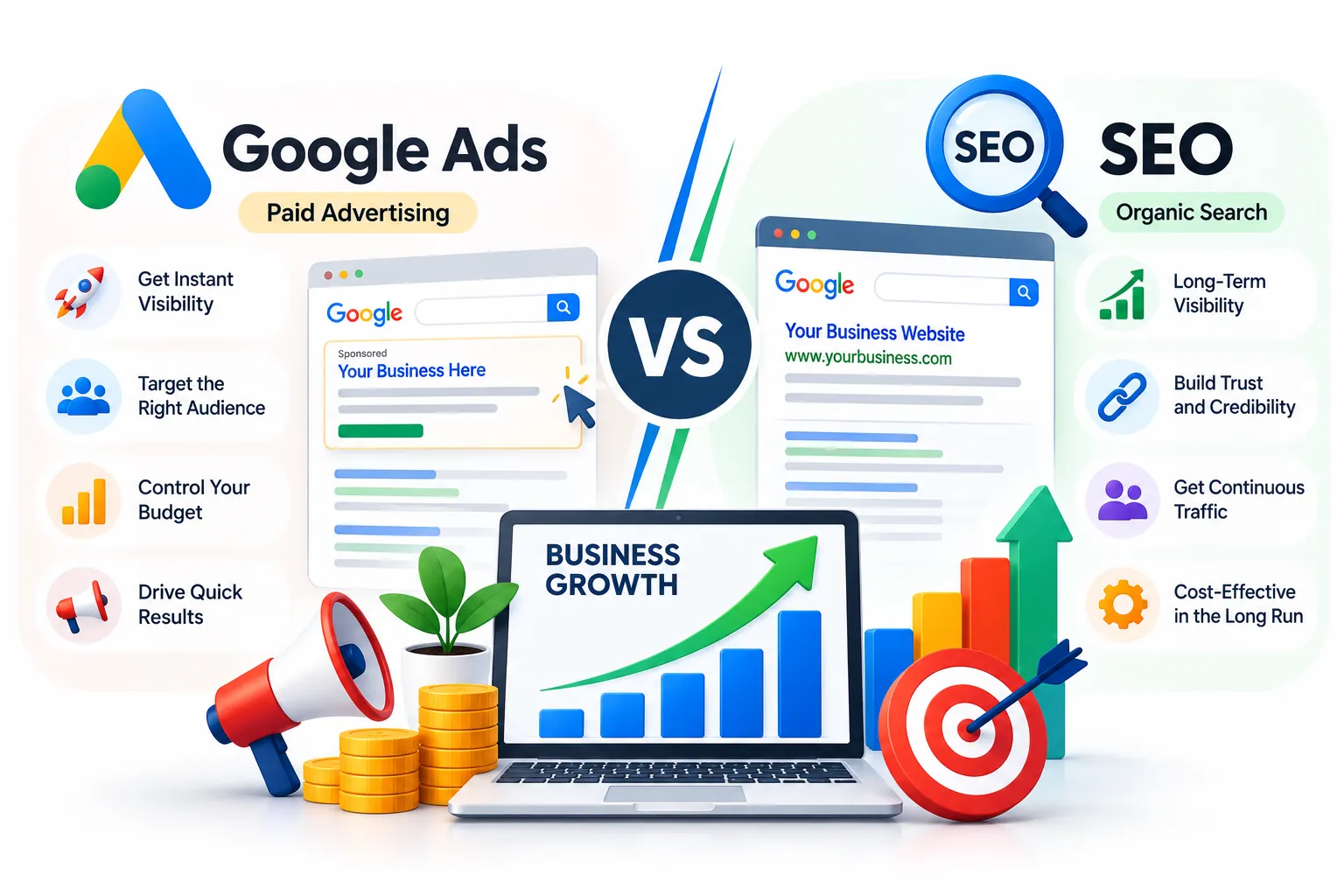
SEO and Google Ads both help businesses reach people searching online, but they work differently.
SEO focuses on earning visibility in organic search results. Google Ads allows advertisers to compete for paid placements through eligible campaigns.
| Factor | SEO | Google Ads |
|---|---|---|
| Visibility | Organic search results | Paid placements |
| Direct advertising cost | No payment for organic clicks | Advertising spend required |
| Time to results | Often gradual | Can generate visibility once campaigns are active |
| Main focus | Sustainable organic discovery | Targeted paid acquisition |
| Ongoing work | Content, technical improvements, monitoring | Budget, targeting, testing, optimization |
Consider a new accounting firm entering a competitive market.
Google Ads could help it reach people actively searching for accounting services while the firm develops informative articles and service pages for organic discovery.
Over time, both channels can support different stages of the customer journey.
The better choice depends on your budget, competition, customer acquisition goals, and available resources.
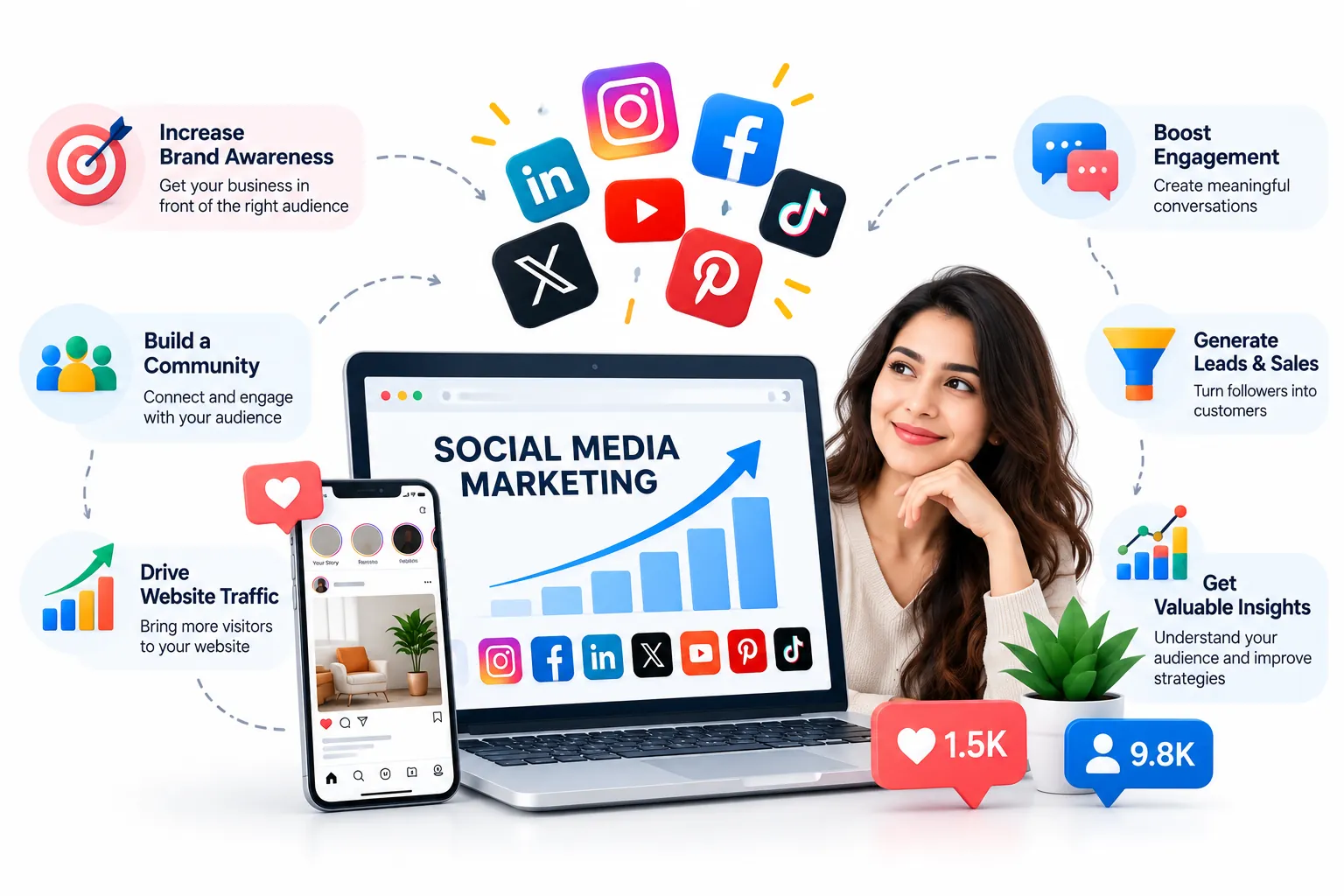
5. Social Media Marketing: Creating Meaningful Connections
Social media marketing is more than posting attractive graphics.
People use social platforms to discover products, learn new skills, follow creators, compare brands, and communicate with businesses.
The right platform depends on your audience.
LinkedIn may be useful for B2B consulting and professional services. Instagram can support visually driven brands, while YouTube can be effective for tutorials, demonstrations, and detailed educational content.
How to Build a Practical Social Media Strategy
Start by identifying the questions your audience frequently asks.
A website development agency, for example, could publish:
Short explanations of common website mistakes
Before-and-after website redesign examples, with permission
Tutorials about improving website navigation
Answers to frequently asked client questions
Educational videos about website security
These topics offer something useful rather than simply asking people to buy a service.
Consistency matters, but quality and relevance should guide your publishing schedule.
6. How AI Is Changing Digital Marketing in 2026
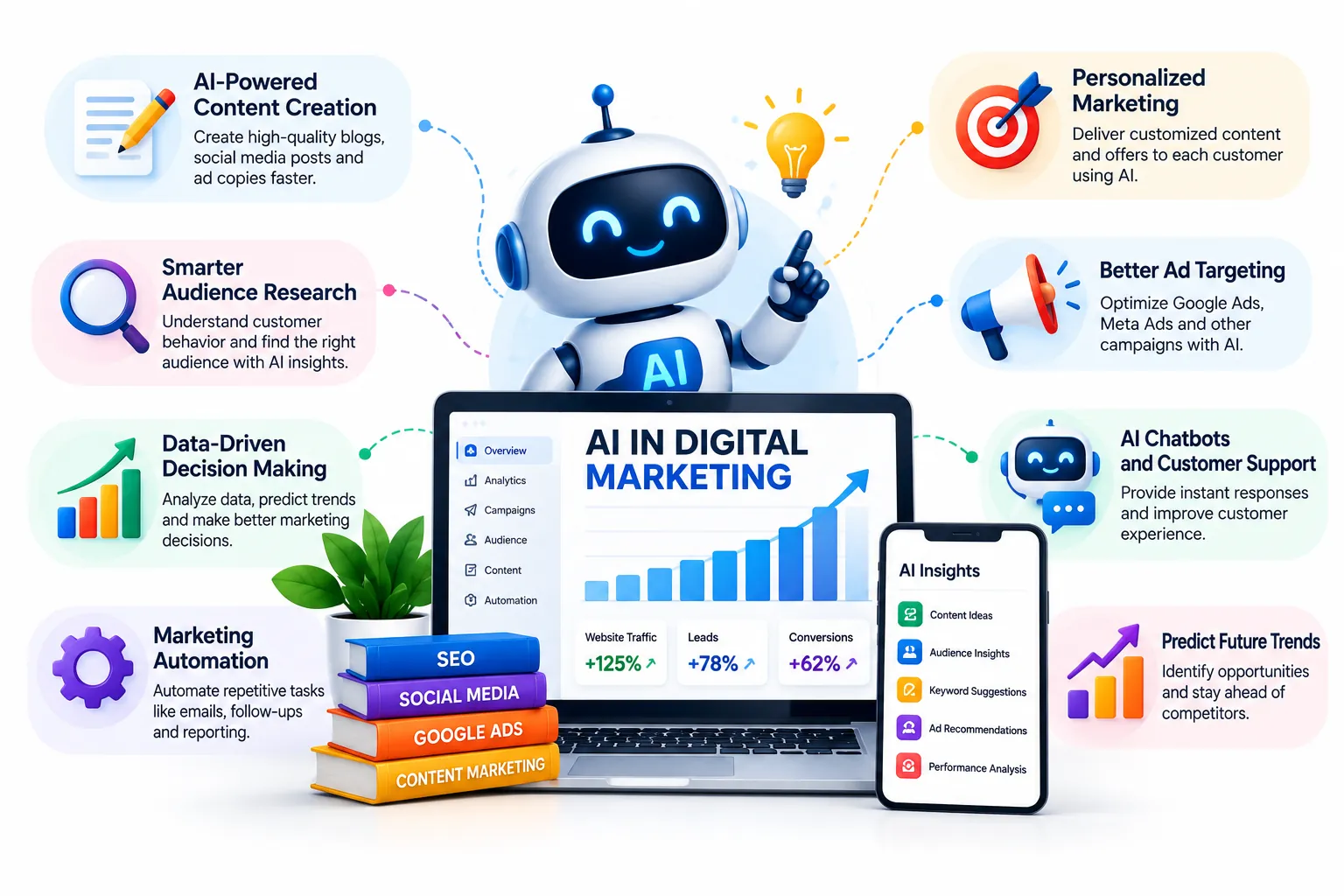
Artificial intelligence is influencing how businesses research audiences, create content, analyze information, and manage marketing workflows.
AI-powered tools can help marketers brainstorm topics, organize research, summarize campaign data, and explore different messaging approaches.
However, using AI effectively requires human judgment.
AI-Assisted Content Creation
AI can help prepare an outline for a blog article or suggest questions readers may have.
But publishing automatically generated material without reviewing its accuracy can lead to factual errors, repetitive writing, or misleading claims.
A better process is to use AI for assistance while relying on real expertise, original examples, careful editing, and fact-checking.
AI Search and Brand Visibility
Search experiences are also evolving.
Google AI Overviews and AI Mode can help users explore information through AI-powered responses.
For businesses, this makes clear, original, well-organized information especially valuable.
Rather than chasing shortcuts for AI visibility, focus on creating pages that answer real questions and offer information users cannot easily find elsewhere.
AI for Marketing Analysis
AI tools can also help identify patterns in campaign reports or summarize large datasets.
For example, a marketer might use an AI assistant to organize common customer questions collected from support conversations.
The marketer must still validate the findings, protect sensitive information, and decide which recommendations make business sense.
Key takeaway: AI works best as a supporting tool, not a replacement for business understanding, accuracy, or creativity.
7. Content Marketing: Give People a Reason to Visit Your Website
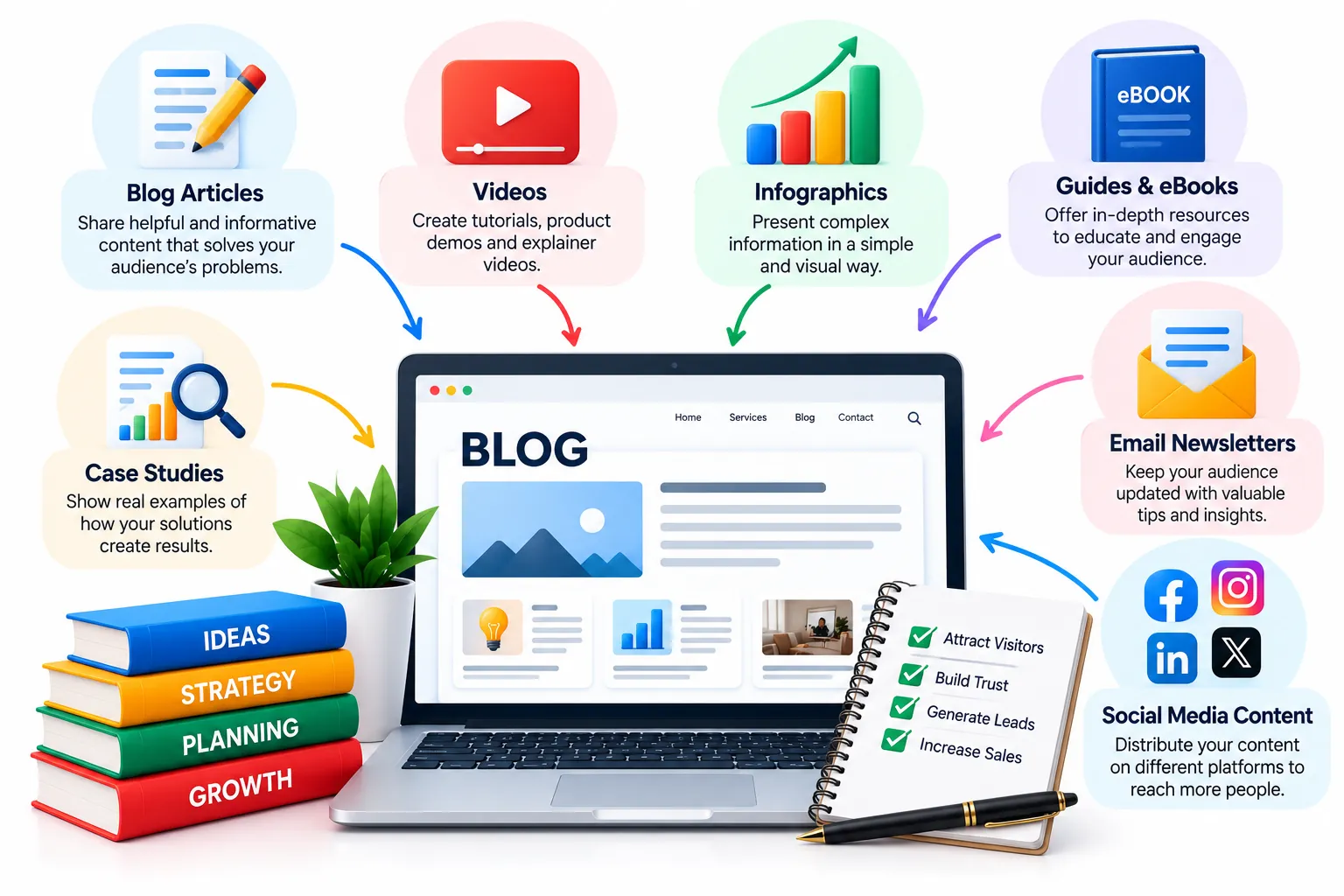
Content marketing focuses on creating and sharing information that attracts and helps a defined audience.
Useful content can include articles, videos, comparison guides, tutorials, case studies, and downloadable resources.
The challenge is choosing topics that match what your audience actually needs.
Suppose a small business owner is considering hiring an SEO agency.
They might search for:
How much do SEO services cost?
How long does SEO take?
What should an SEO agency provide?
How can I measure SEO results?
A digital marketing company that answers these questions clearly can help readers make more informed decisions.
Build Content Around Search Intent
Search intent describes what someone wants to accomplish with a query.
A person searching "what is SEO" usually wants an explanation.
Someone searching "SEO agency pricing" may be comparing service options.
Someone searching a specific company's name may want to visit its website.
Understanding these differences helps you choose the right page format and content depth.
Create Topic Clusters
Rather than publishing unrelated articles, organize content around connected subjects.
For example, a digital marketing website could create an SEO topic cluster covering keyword research, on-page optimization, technical SEO, international SEO, and performance tracking.
Linking these resources naturally makes it easier for readers to explore related questions.
8. Email Marketing: Building Relationships Beyond the First Visit
Not every website visitor is ready to purchase immediately.
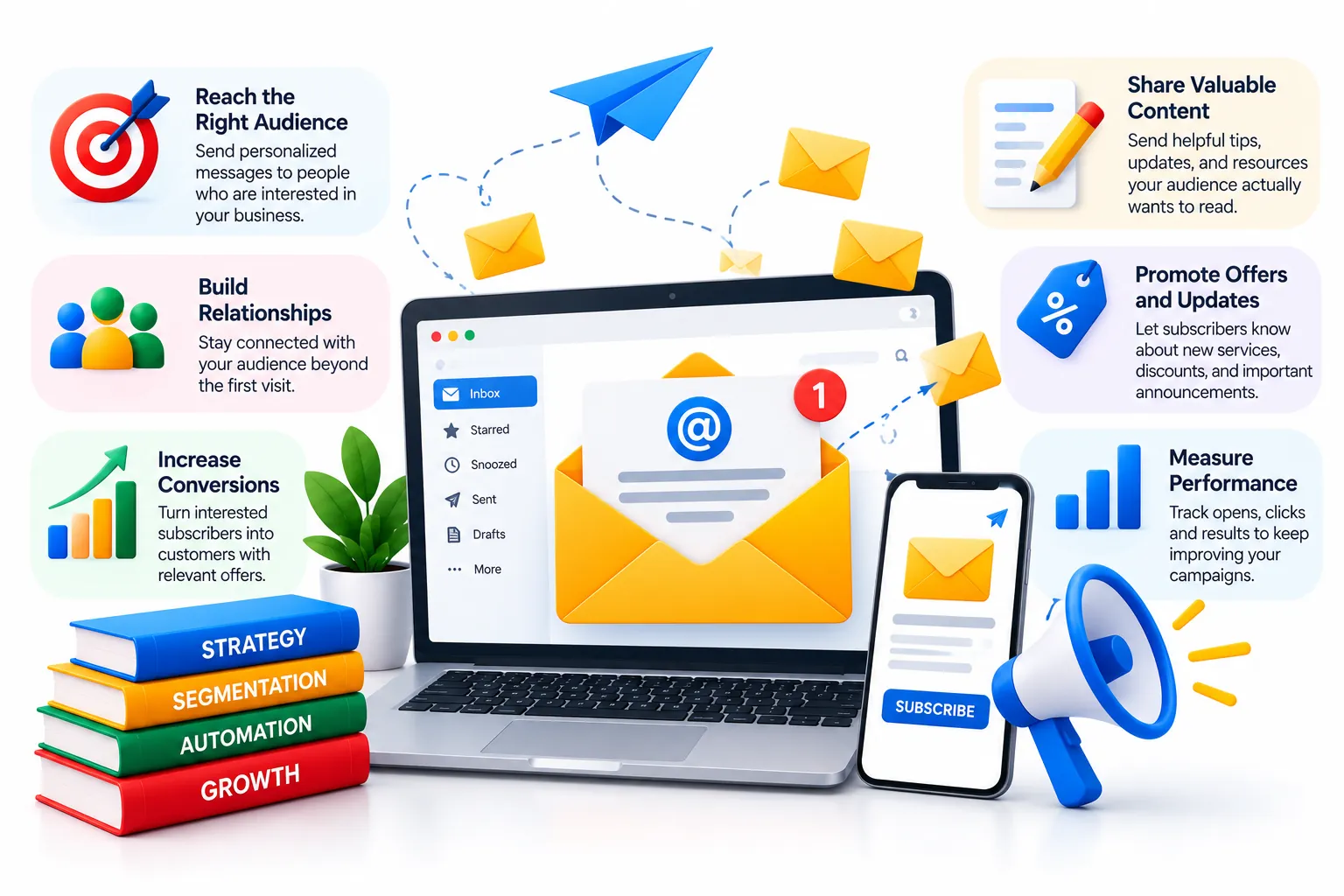
Email marketing provides a way to continue communicating with people who have agreed to receive messages from your business.
A useful email strategy might include educational newsletters, product updates, relevant resources, and personalized follow-ups.
For example, a software company could offer a practical onboarding guide to new subscribers, followed by tutorials explaining how to use important features.
Effective email marketing depends on relevance and trust.
Businesses should obtain appropriate consent, explain what subscribers can expect, protect personal information, and provide a clear way to unsubscribe.
Sending more emails isn't automatically better. The goal is to send information that recipients actually want.
9. Digital Marketing Tools Worth Learning
Marketing tools can simplify reporting and help teams understand performance.
Here are several commonly used options.
| Tool | Primary purpose |
|---|---|
| Google Search Console | Monitor organic search visibility and indexing |
| Google Analytics 4 | Analyze website and app interactions |
| Google Keyword Planner | Research keywords and advertising estimates |
| Google Trends | Explore relative search interest |
| PageSpeed Insights | Review page performance |
| Google Ads | Manage paid search and other advertising campaigns |
| Meta Ads Manager | Manage advertising across eligible Meta placements |
| Microsoft Clarity | Explore website behavior through recordings and heatmaps |
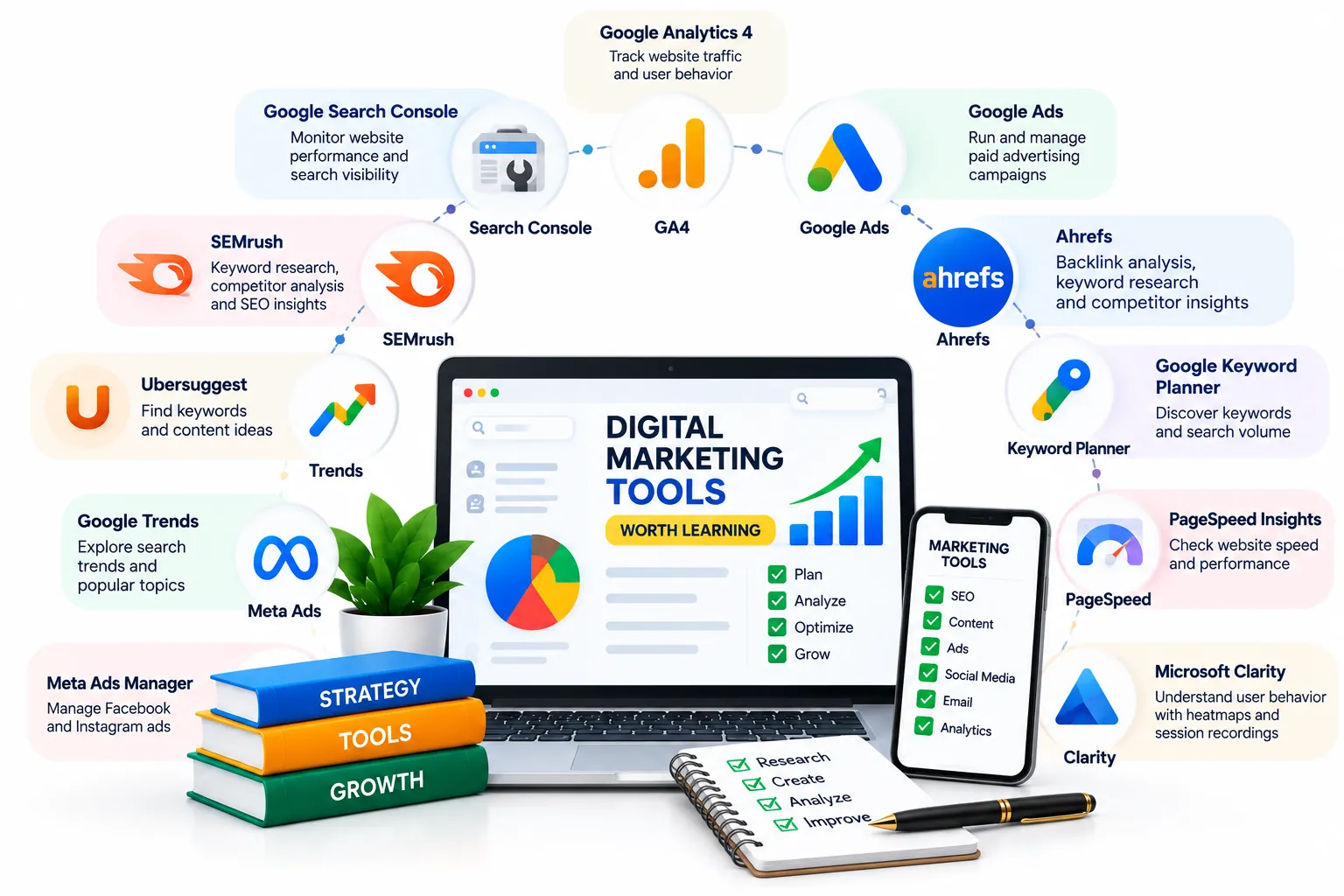
You don't need every tool on day one.
A small business can begin with Search Console, GA4, and a simple reporting dashboard. Additional tools become useful as campaigns and reporting requirements grow.
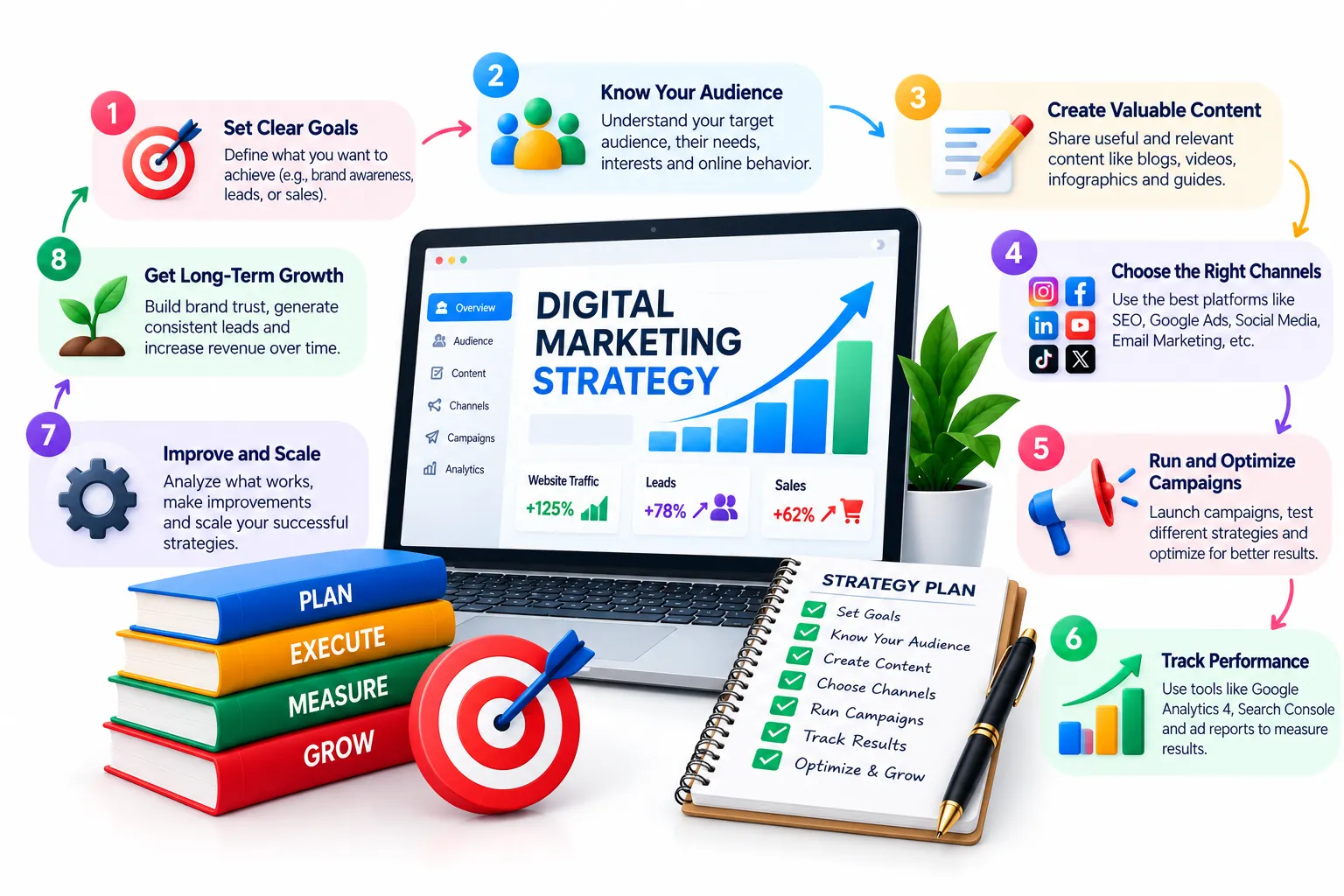
10. How to Create a Digital Marketing Strategy That Works
A good strategy begins with a business objective, not a list of platforms.
Step 1: Define a Specific Goal
Instead of saying "we want more traffic," decide what successful traffic should accomplish.
For example, your objective might be to increase qualified consultation enquiries through your website.
Step 2: Understand Your Audience
Identify who your customers are, what problems they face, and how they research solutions.
Speak with customers, review genuine enquiries, and examine search queries where possible.
Step 3: Choose Your Channels
Select channels based on customer behavior and business resources.
A B2B technology company might prioritize search, LinkedIn, and email, while a consumer lifestyle brand may benefit from visual content and paid social campaigns.
Step 4: Build Helpful Landing Pages
A landing page should explain what you offer, who it helps, why it matters, and what visitors should do next.
Avoid vague claims and unnecessarily complicated contact forms.
Step 5: Measure Performance
Track metrics connected to your objective.
For lead generation, useful measurements might include qualified enquiries, conversion rate, cost per lead, and lead-to-customer rate.
Step 6: Improve Based on Evidence
Review what works, investigate weak points, and make targeted improvements.
Digital marketing is an ongoing process of learning, testing, and refinement.
11. International Digital Marketing: Reaching a Global Audience
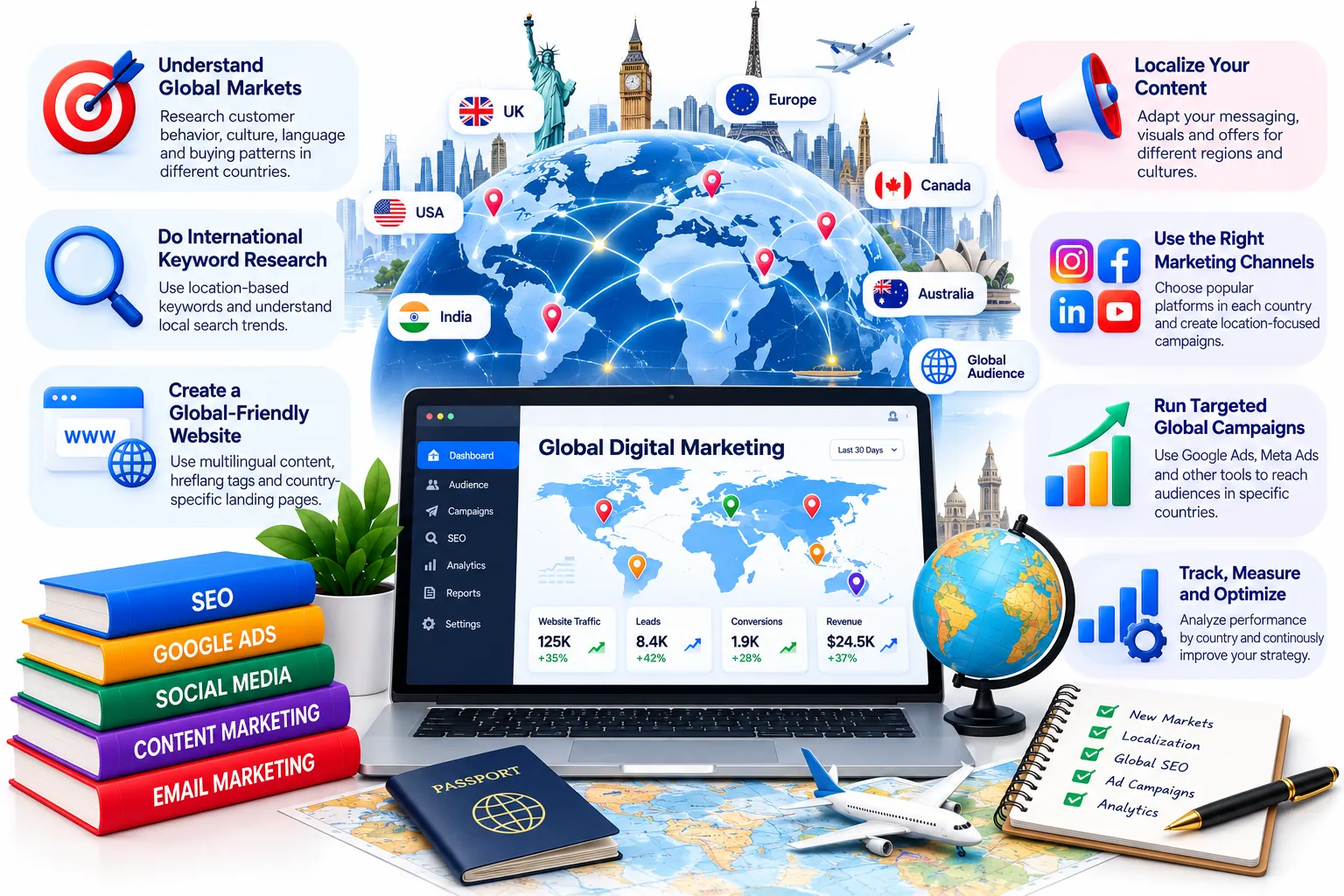
Reaching customers in different countries requires understanding more than geography.
A business offering services internationally should consider language, search terminology, time zones, customer expectations, payment methods, and local regulations.
Research Keywords by Country
The same service may be described differently across markets.
For example, customers in different English-speaking countries may use different terms when searching for professional services.
Country-level keyword research helps identify these differences.
Create Relevant International Content
A generic English-language guide may serve a broad audience well.
However, country-specific pages are useful when your services, pricing, regulations, or customer needs genuinely differ between markets.
Avoid creating nearly identical pages for dozens of countries simply to target more keywords.
Make Your Website Easy to Use Worldwide
Use clear navigation, mobile-friendly layouts, readable content, and reliable hosting.
If you publish multiple language or regional versions of pages, implement appropriate international SEO signals, including hreflang where relevant.
Most importantly, make sure international visitors can understand whether your business serves their location.
12. Common Digital Marketing Mistakes to Avoid
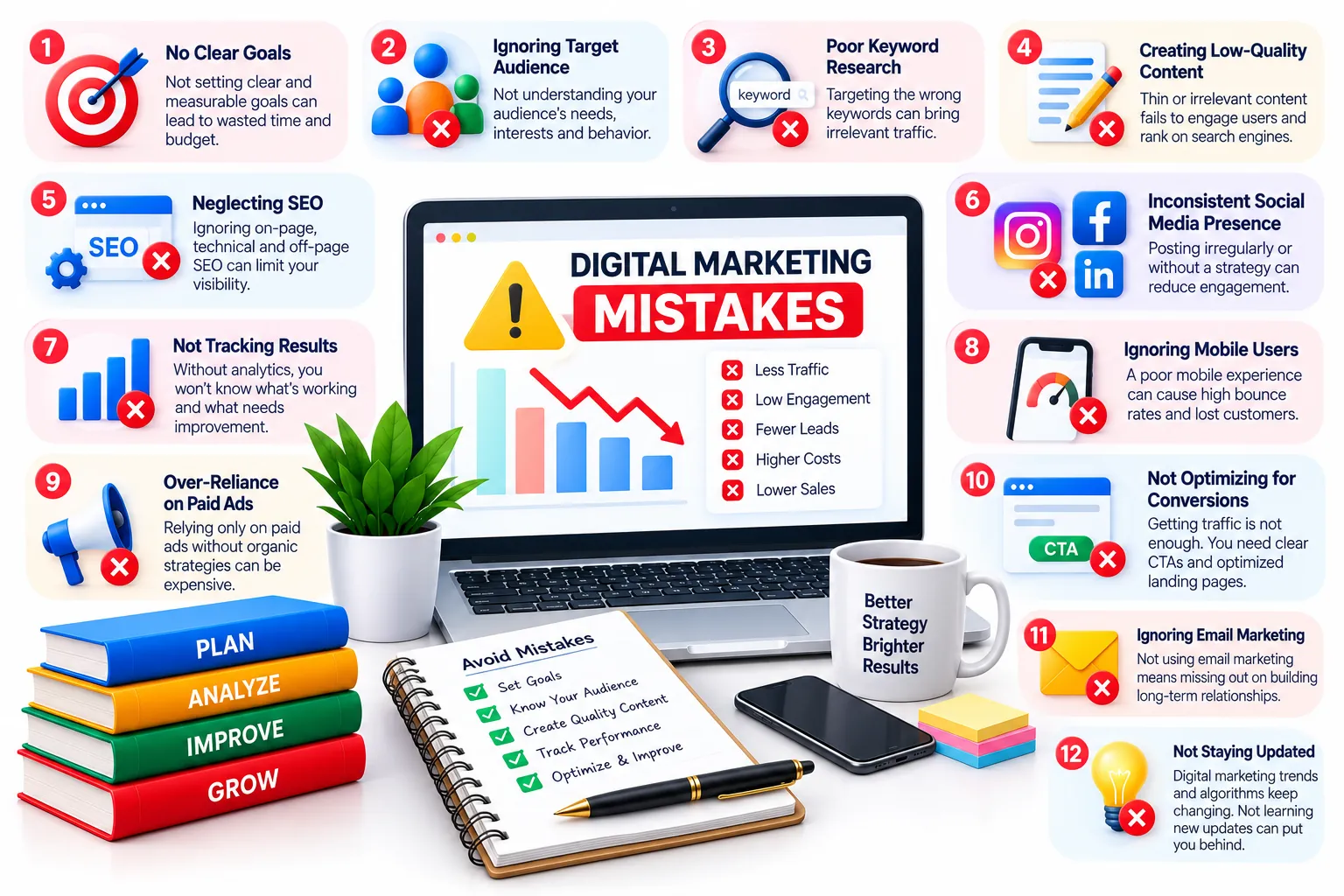
Even experienced teams can waste time when marketing activities are disconnected from customer needs.
One common mistake is focusing entirely on website traffic while ignoring lead quality.
A page receiving thousands of irrelevant visits may contribute less business value than a smaller page attracting people ready to enquire.
Another mistake is publishing content solely to target keywords. Readers want useful answers, not paragraphs filled with repeated search phrases.
Businesses also run into problems when they neglect mobile users, fail to measure conversions, or launch paid campaigns without checking landing-page quality.
Finally, copying competitor strategies without understanding your own audience can lead to disappointing results.
Competitor research should inform your decisions, not replace your business strategy.
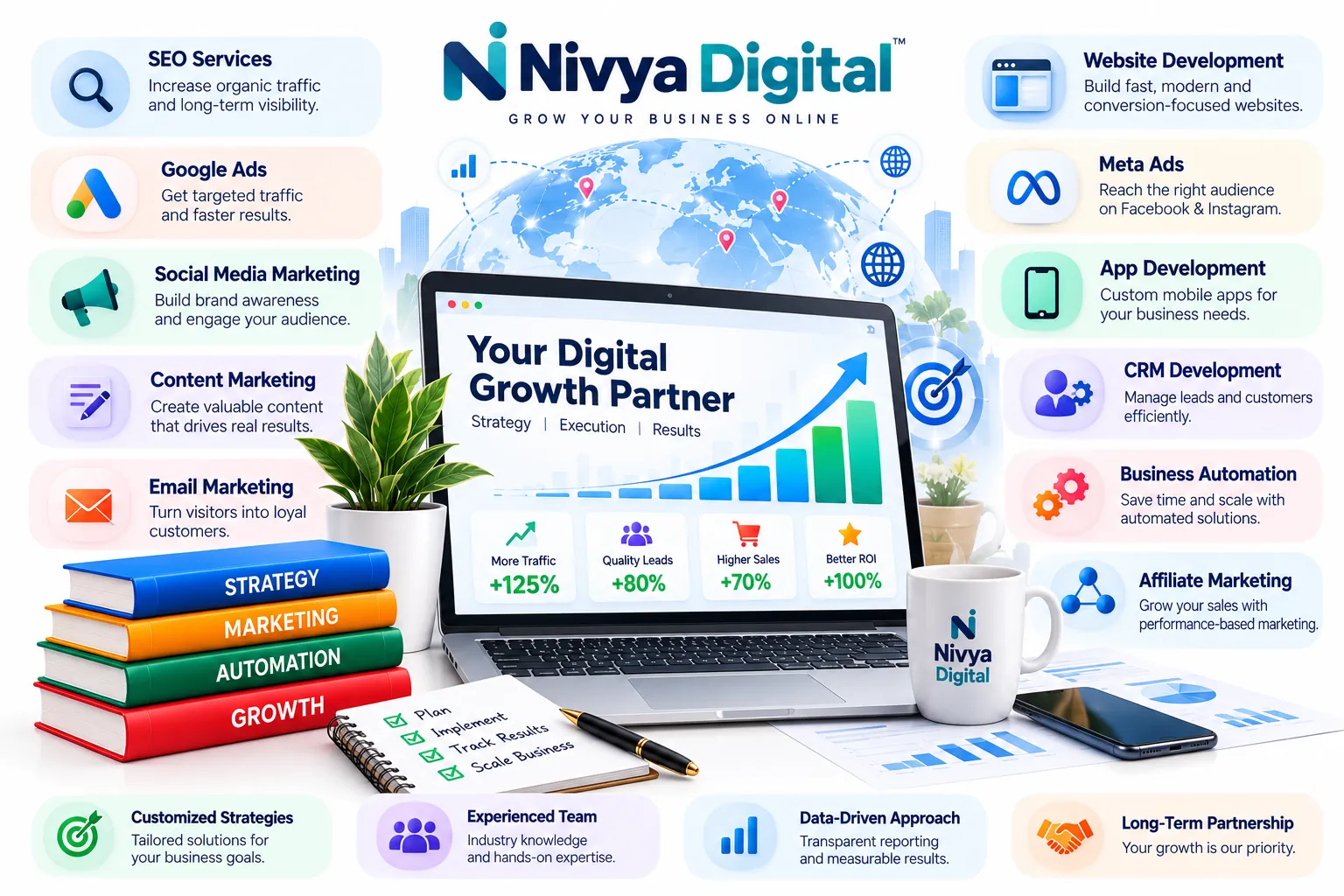
13. How Nivya Digital Can Support Your Digital Growth
Building an effective online presence involves multiple connected activities, from website development and search visibility to advertising, content, and customer management.
Nivya Digital focuses on digital marketing and technology solutions designed to support these needs.
Its service areas include:
SEO and organic search optimization
Google Ads and Meta Ads
Social media and content marketing
Email marketing
Website and app development
CRM development
Affiliate marketing
Business automation
Different businesses need different combinations of services.
A new business might begin with a professional website and foundational SEO. An established business may need campaign optimization, better lead tracking, or improved marketing automation.
The right starting point depends on the company's current position, resources, and growth objectives.
Explore Nivya Digital at https://nivyadigital.com to learn more about its digital services.
14. Final Thoughts: Build a Digital Marketing Strategy Around People
Digital marketing in 2026 offers businesses many opportunities to reach and engage customers.
SEO can help people discover useful information. Paid advertising can support targeted visibility. Social media allows brands to communicate with their communities, while email and content marketing can build longer-term relationships.
AI can make parts of the process more efficient, but technology alone doesn't create a successful marketing strategy.
The foundation remains the same: understand your audience, solve real problems, communicate clearly, and measure meaningful outcomes.
If you're planning your next marketing campaign, begin with one question:
What does your ideal customer need to know before they feel confident choosing your business?
Build your marketing around that answer.
**
Comments (1)
A valuable resource for the latest SEO trends, AI-powered marketing insights, and practical business growth strategies in 2026. Perfect for businesses and marketers looking to improve online visibility, attract quality leads, and stay ahead in digital marketing.