
Google regularly updates its search systems to improve the quality of search results and reduce manipulative SEO practices. One of its latest changes, the Google September 2026 Spam Update, has attracted attention from website owners, digital marketers, and SEO professionals.
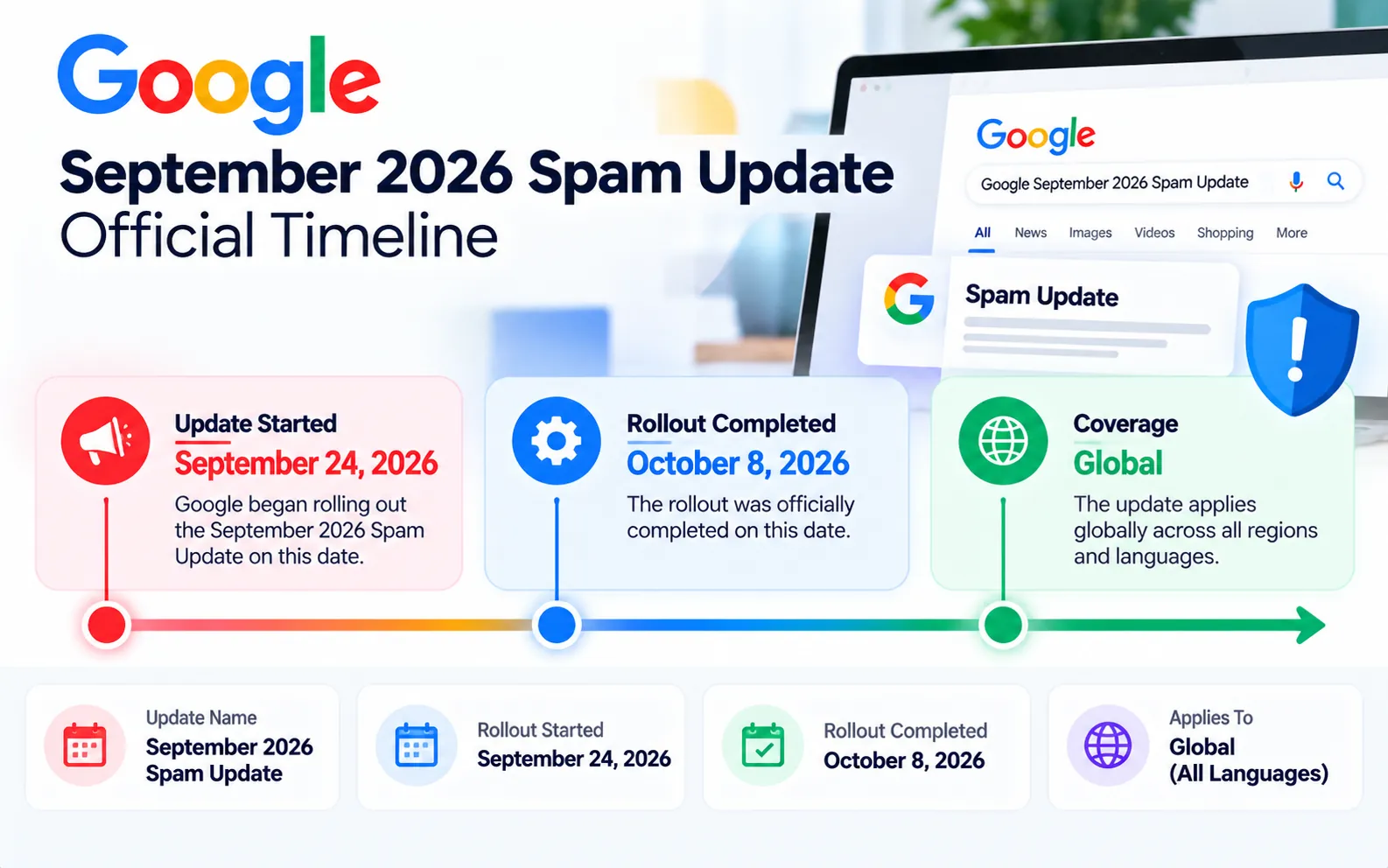
The update began on September 24, 2026, and officially completed its rollout on October 8, 2026. It applied globally and across all languages, making it relevant to businesses operating in different markets.
If your website has experienced changes in rankings, organic traffic, or search visibility, understanding this update can help you investigate possible causes.
In this guide, we'll explain what the September 2026 spam update means, how it may affect websites, and the practical steps businesses can take to improve their SEO practices.
What Is the Google September 2026 Spam Update?
The Google September 2026 Spam Update is a search ranking update designed to improve Google's ability to identify and address content or practices that violate its spam policies.
Google uses automated systems to detect search spam. These systems operate continuously, but Google occasionally releases significant improvements through dedicated spam updates.
One example is SpamBrain, Google's AI-based spam-prevention system.
The purpose of spam detection is to make search results more useful by reducing the visibility of pages that attempt to manipulate rankings rather than genuinely help users.
Importantly, Google did not publicly identify a specific new spam technique targeted exclusively by the September 2026 update. Website owners should therefore review Google's existing spam policies instead of assuming the update introduced an entirely new set of rules.
Google September 2026 Spam Update: Official Timeline
According to the Google Search Status Dashboard, the rollout took nearly two weeks to complete.
| Update Detail | Official Information |
|---|---|
| Update Name | September 2026 Spam Update |
| Rollout Started | September 24, 2026 |
| Rollout Completed | October 8, 2026 |
| Geographic Coverage | Global |
| Languages | All languages |
| Update Type | Spam Update |
Because the rollout has recently finished, website owners should review performance trends carefully before drawing conclusions.
A ranking decline during the rollout does not automatically prove that a website violated Google's spam policies.
Why Does Google Release Spam Updates?
Google aims to provide search results that are relevant, reliable, and useful.
However, some websites use manipulative methods to gain search visibility. These practices may include creating pages solely for ranking purposes, using artificial backlinks, or publishing misleading content.
Spam updates help Google's systems identify such behavior more effectively.
For legitimate businesses, these updates reinforce the importance of sustainable SEO practices.
Rather than trying to exploit ranking systems, businesses should concentrate on delivering information that matches users' needs.
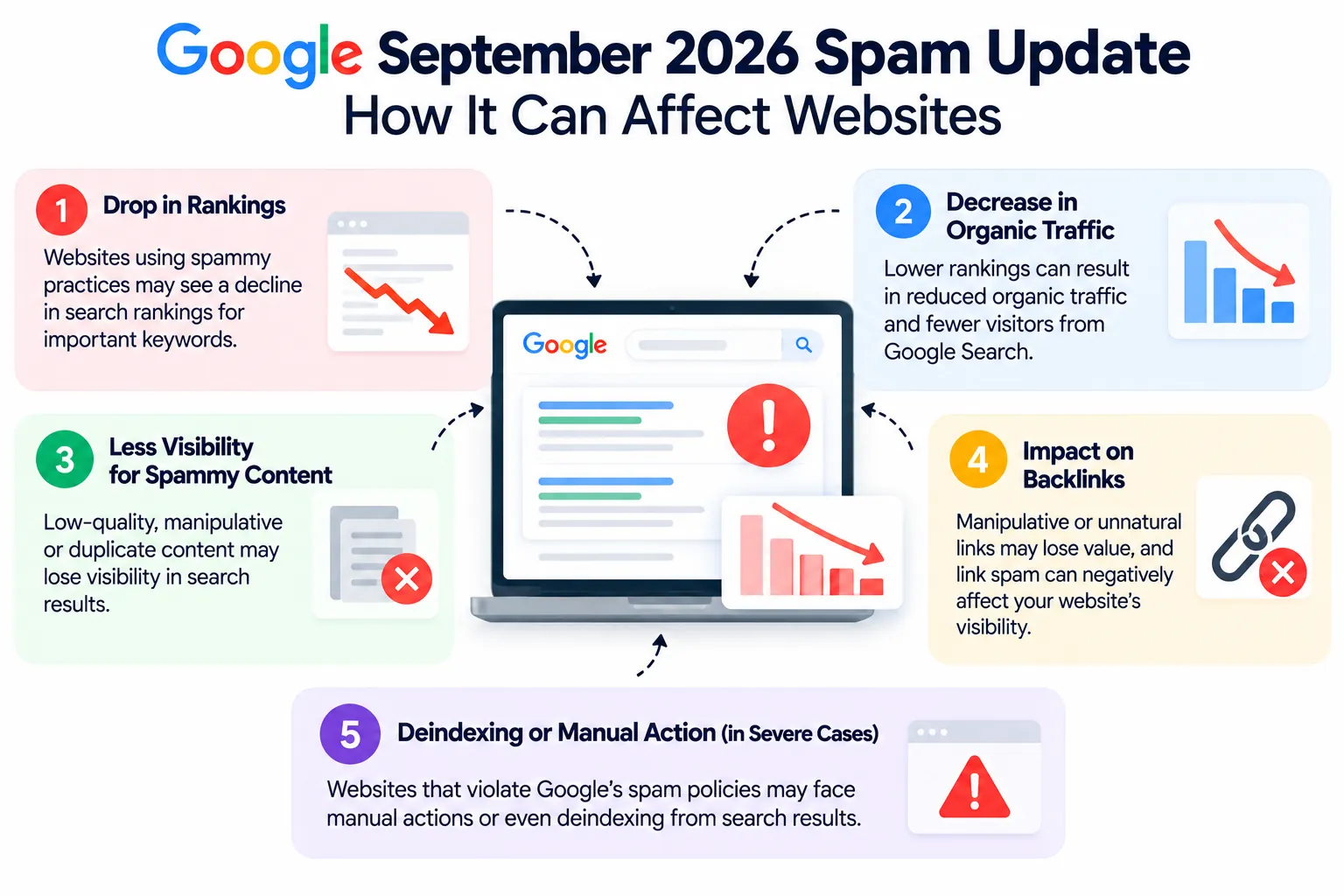
How Can the September 2026 Spam Update Affect Websites?
The impact of a spam update can vary depending on a website's content, technical condition, and SEO practices.
1. Changes in Organic Search Rankings
Some websites may experience ranking declines when Google's systems identify spam-related practices.
However, ranking changes can also happen because of competition, search demand, technical issues, or other ranking systems.
Review multiple data points before attributing a decline to the update.
2. Fluctuations in Organic Traffic
Changes in rankings can influence the number of visitors arriving through Google Search.
For example, a website losing visibility for important service-related queries may receive fewer organic clicks.
Google Search Console can help identify which pages and search queries experienced changes.
3. Reduced Visibility for Manipulative Content
Websites using keyword stuffing, doorway pages, or other spam tactics may face reduced search visibility.
Google's policies apply to individual pages as well as broader website practices.
The safest approach is to review content quality and remove practices intended primarily to manipulate search rankings.
4. Changes in the Value of Spammy Links
Google's spam systems can reduce the ranking benefits associated with manipulative links.
When the influence of link spam is neutralized, removing those links does not necessarily restore the rankings they previously helped produce.
This is why building a natural, relevant backlink profile is more sustainable than relying on paid link schemes.
SEO Practices That May Put Your Website at Risk
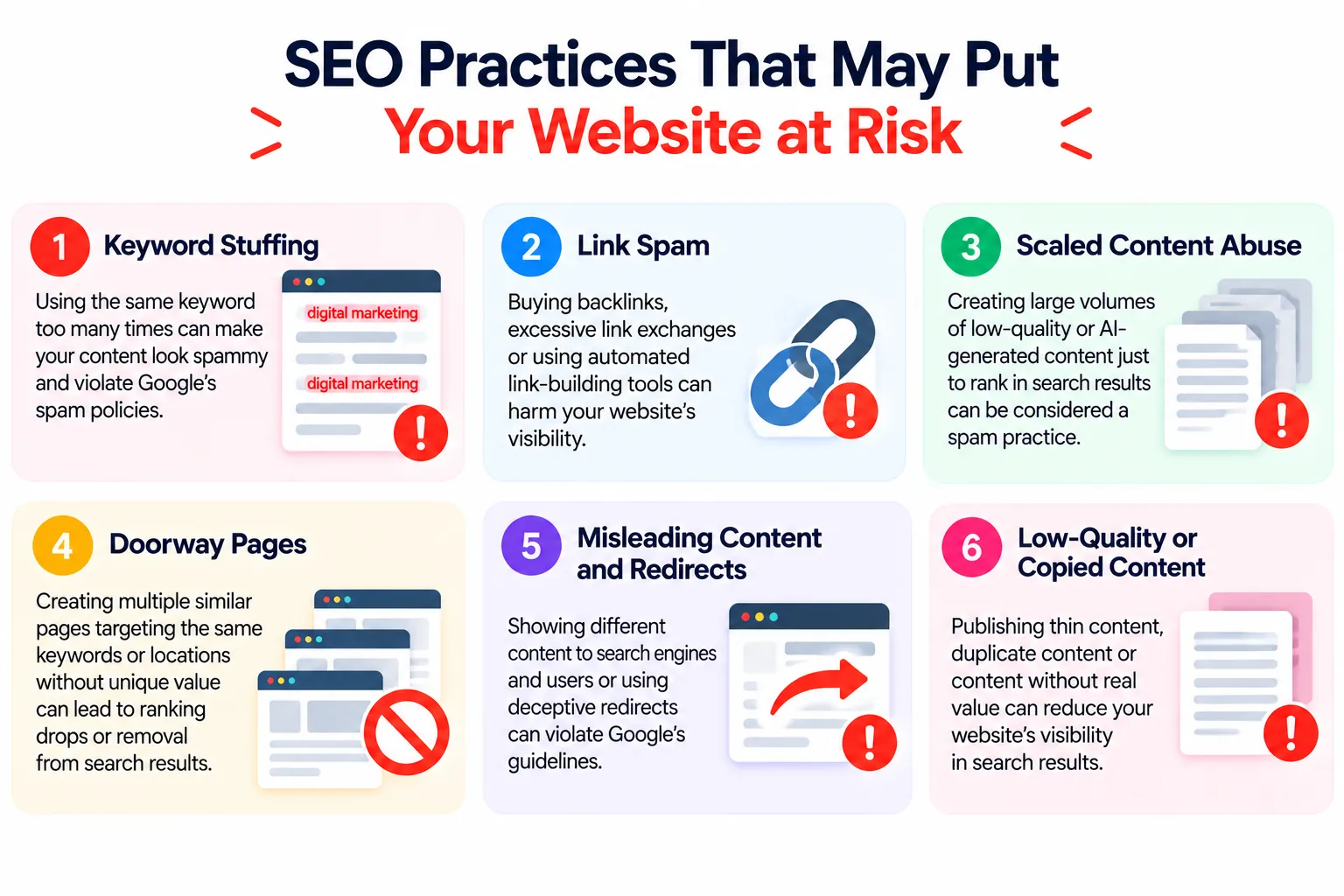
Google's spam policies describe several practices that website owners should avoid.
Keyword Stuffing
Keyword stuffing means repeating keywords excessively to manipulate search rankings.
For example, using the same target keyword unnaturally throughout a service page can make the content difficult to read.
Instead, include keywords where they fit naturally and focus on answering the user's questions.
Link Spam
Buying backlinks for ranking purposes, participating in excessive link exchanges, or using automated link-building programs can violate Google's policies.
Businesses should prioritize genuine editorial mentions, useful resources, and relevant relationships.
Scaled Content Abuse
Creating large volumes of pages primarily to manipulate search rankings can violate Google's scaled content abuse policy.
This applies whether the content is produced through automation, human writers, or a combination of both.
The concern is the purpose and value of the content, not simply the technology used to create it.
Doorway Pages
Doorway pages are created to rank for similar searches while directing visitors toward essentially the same destination.
For example, publishing numerous nearly identical city pages without meaningful local information may create problems.
Each location page should provide genuine value to its intended audience.
Misleading Content and Redirects
Showing search engines one type of content while presenting users with something substantially different can violate Google's cloaking policies.
Similarly, deceptive redirects can damage user trust and create search compliance issues.
Businesses should ensure that visitors receive the information they expect.
How to Check Whether Your Website Was Affected
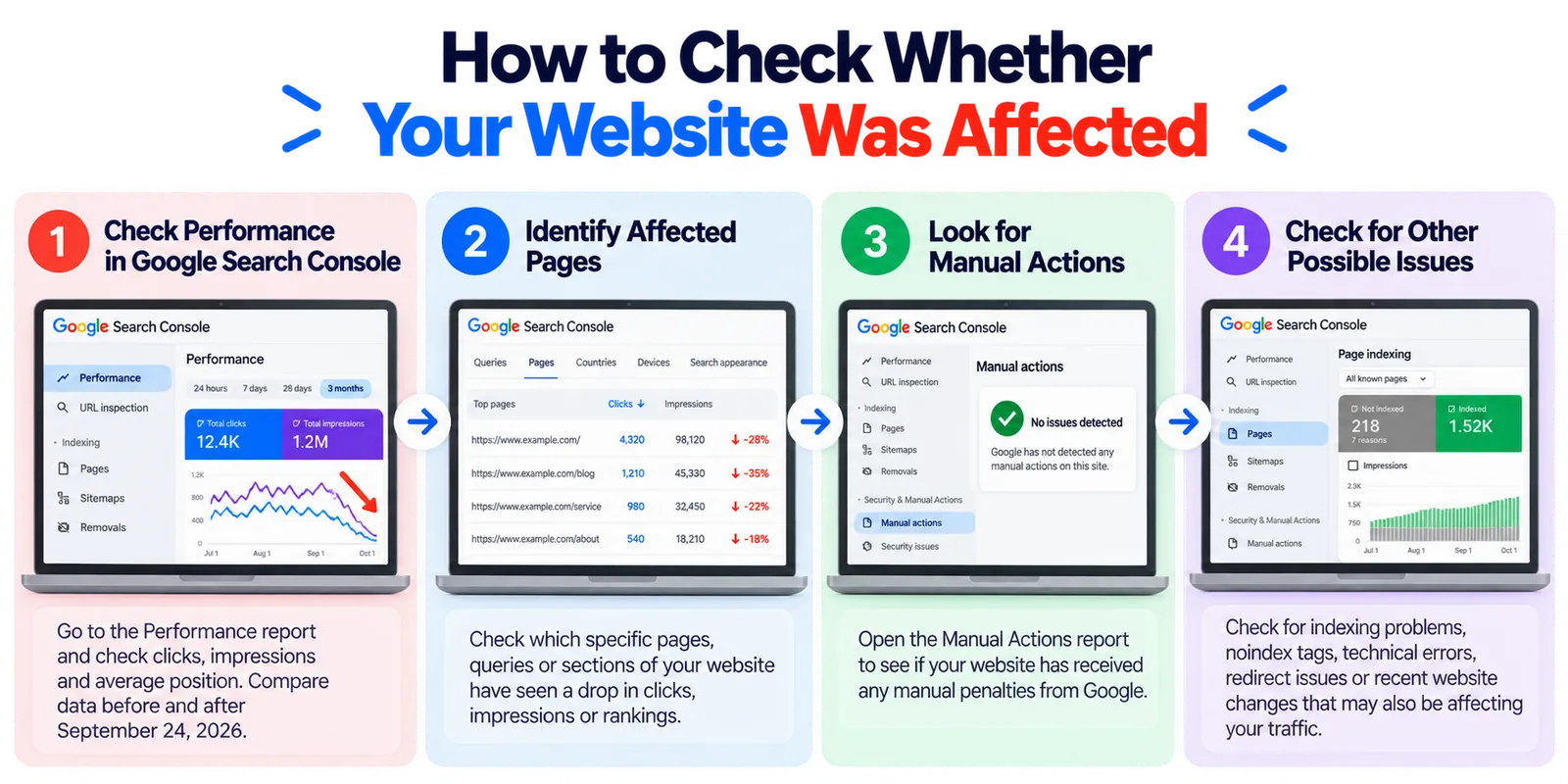
If your website traffic changed around the rollout, follow a structured investigation.
Step 1: Review Google Search Console
Open Google Search Console and navigate to the Performance report.
Compare clicks, impressions, average position, and important search queries across relevant periods.
Pay particular attention to changes beginning around September 24 and continuing through October 8, 2026.
Step 2: Identify Affected Pages
Determine whether the decline affects your entire website or only specific sections.
For example, a drop limited to blog articles may require a different investigation from a decline affecting product or service pages.
Step 3: Check for Manual Actions
Visit the Manual Actions report in Google Search Console.
A manual action is different from an automated spam update. A website can be affected by automated systems without receiving a manual action notification.
Step 4: Investigate Other Possible Causes
Check for indexing problems, accidental noindex tags, broken redirects, server errors, and recent website changes.
Also consider seasonality and changes in search demand.
Avoid assuming every traffic decline is caused by a Google update.
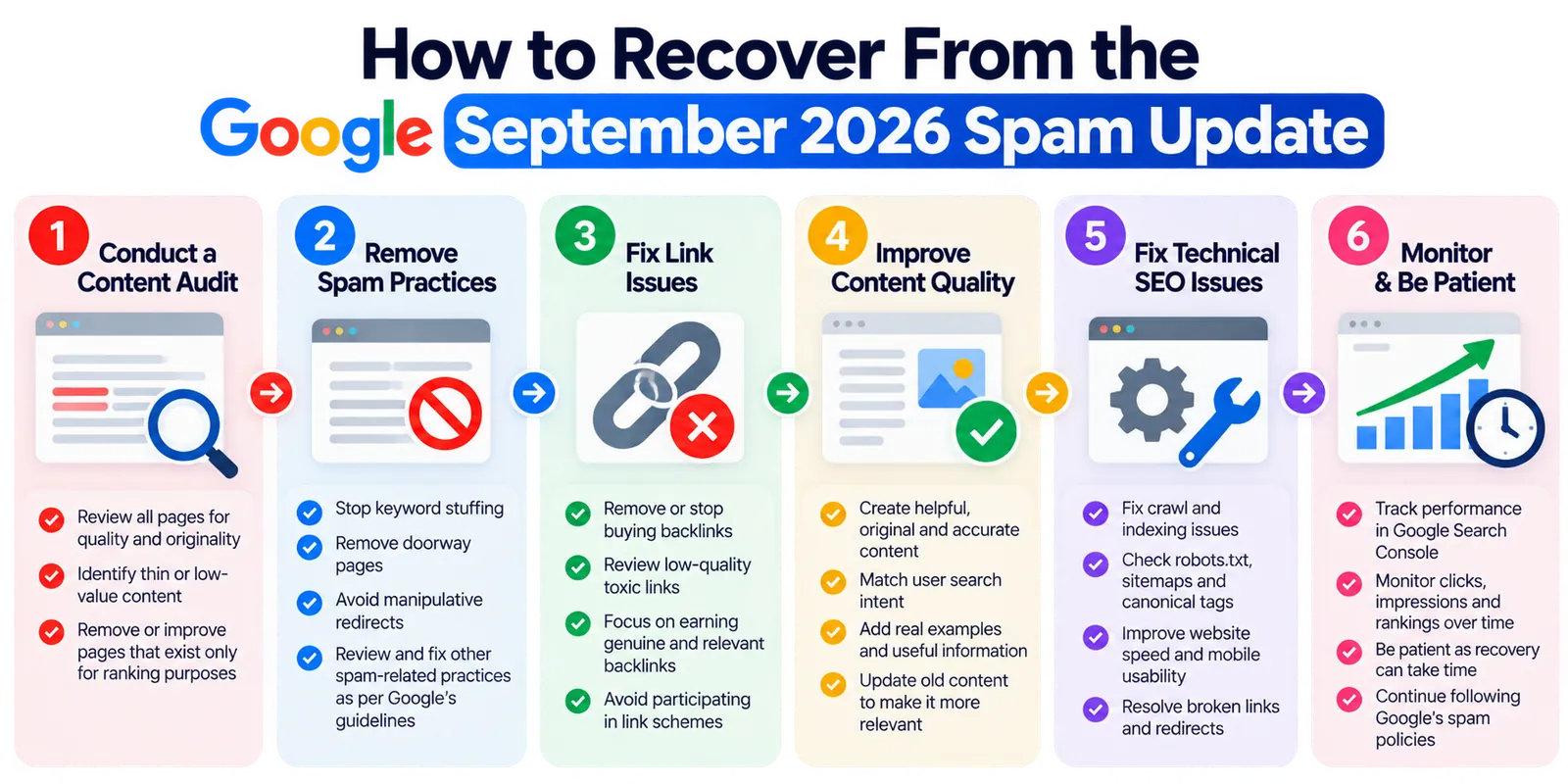
How to Recover From the Google September 2026 Spam Update
Recovery begins with understanding the underlying issue rather than making random SEO changes.
1. Conduct a Complete Content Audit
Review important pages for originality, accuracy, usefulness, and search intent.
Identify content that exists primarily to attract search traffic without offering meaningful information.
Improve weak pages with clearer explanations, relevant examples, and genuinely useful details.
2. Remove Manipulative SEO Practices
Review your website against Google's spam policies.
Address keyword stuffing, doorway pages, misleading redirects, and other problematic techniques.
If your website has participated in manipulative link schemes, review those practices carefully rather than indiscriminately disavowing every low-quality-looking link.
3. Improve Content Quality and Credibility
Publish information that demonstrates genuine knowledge of the subject.
For business websites, clearly describe services, processes, pricing where appropriate, and contact information.
Use real examples and verifiable claims instead of invented results or testimonials.
4. Fix Technical SEO Problems
Ensure important pages are crawlable, indexable, and accessible on mobile devices.
Review internal links, canonical tags, sitemap accuracy, and website performance.
Technical improvements will not automatically reverse a spam-related ranking decline, but they help eliminate other obstacles to search visibility.
5. Monitor Results Patiently
Google explains that its automated systems may take months to recognize that a website consistently complies with spam policies.
There is no guaranteed recovery date.
Focus on meaningful improvements, document your changes, and evaluate performance over time.
SEO Best Practices to Follow After the September 2026 Update
A sustainable SEO strategy should support users and search engines without depending on shortcuts.
| SEO Area | Recommended Best Practice |
|---|---|
| Content | Publish original, accurate, helpful information |
| Keywords | Use relevant keywords naturally |
| Backlinks | Earn genuine, relevant links |
| Technical SEO | Maintain crawlable and accessible pages |
| User Experience | Make navigation clear and mobile-friendly |
| Website Trust | Use accurate business details and genuine reviews |
| Performance Tracking | Monitor clicks, impressions, and conversions |
These practices cannot guarantee top rankings, but they create a stronger foundation for long-term organic search performance.
How Long Does Recovery Take After a Google Spam Update?
There is no fixed recovery timeline.
According to Google's guidance, improvements may help if its automated systems determine over time that a website follows spam policies.
This process can take months.
Recovery also depends on the nature of the problem. In cases involving link spam, previously gained ranking benefits may not return after Google neutralizes manipulative links.
Website owners should avoid agencies or services promising immediate recovery or guaranteed rankings.
Final Thoughts
The Google September 2026 Spam Update is another reminder that sustainable SEO depends on useful content, trustworthy practices, and a website that serves real users.
The update officially completed on October 8, 2026, but its effects should be assessed through careful performance analysis rather than assumptions.
If your rankings have changed, begin with Google Search Console, investigate possible technical issues, and review your website against Google's spam policies.
For businesses looking to strengthen their online presence, Nivya Digital recommends focusing on practical SEO improvements, consistent content quality, and measurable business outcomes.
The goal is not simply to recover lost rankings. It is to build a website that remains useful, credible, and competitive as search continues to evolve.
Comments (0)
No comments yet
Start the discussion by sharing your perspective