
Growing a business online is no longer just about creating a website, publishing social media posts, or running a few advertisements. In 2026, businesses need a connected digital marketing strategy that helps the right people discover their brand, understand their services, and confidently become customers.
Whether you run a startup in India, an eCommerce business in the United States, a consultancy in the United Kingdom, or a service-based company targeting customers worldwide, the fundamentals remain similar: visibility, trust, relevance, and measurable results.
But the way you reach those customers depends on your market, competition, budget, and business goals.
In this guide, we'll explore 12 practical digital marketing strategies that can help your business strengthen its online presence, reach local and international audiences, and turn more website visitors into qualified leads.
Why Is Digital Marketing Important for Business Growth in 2026?
Today's customers often research businesses online before making a purchasing decision. They compare websites, read reviews, explore social media, evaluate services, and look for evidence that a company understands their needs.
This means having an online presence is only the beginning.
Your business also needs to answer important customer questions:
Can potential customers find your business when searching for your services?
Does your website explain what makes your business valuable?
Are you reaching customers in the right countries or cities?
Can visitors easily contact you or request a quotation?
Do you know which marketing channels generate actual business opportunities?
A successful digital marketing strategy connects these questions to clear business objectives.
For example, a website development company targeting Australian businesses may need location-relevant service content, a fast website, useful project examples, and an enquiry process that accommodates different time zones.
A local business in Delhi may instead benefit from Google Business Profile optimization, local search visibility, customer reviews, and location-specific landing pages.
Neither approach is automatically better. The right strategy depends on the customers you want to reach.
1. Build a Professional, Conversion-Focused Website
Your website is often the first meaningful interaction a potential customer has with your business.
An attractive design can create a positive impression, but visual appeal alone doesn't guarantee conversions.
A business website should communicate what you offer, who you help, and why someone should choose your services.
Essential elements of a high-performing business website
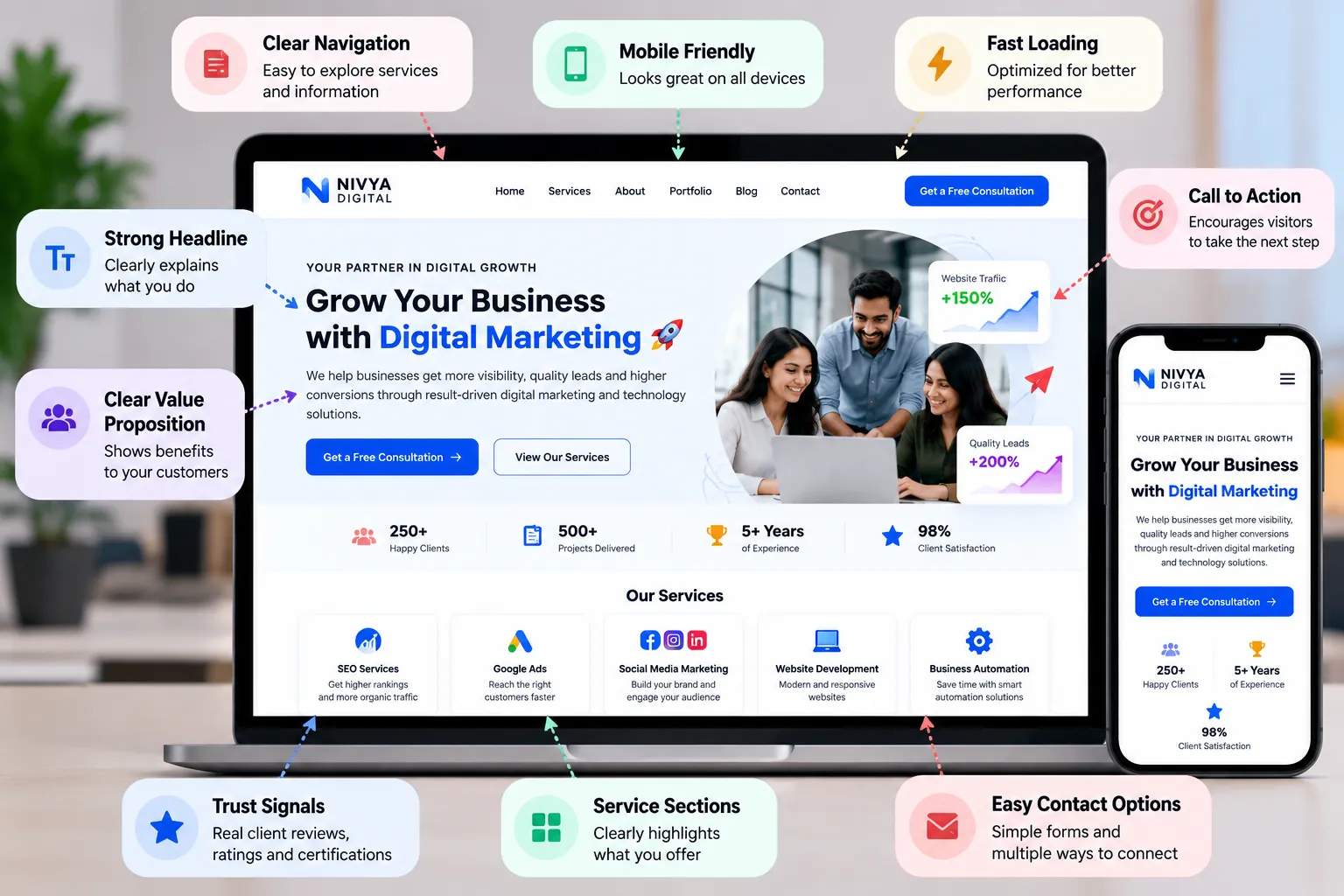
A useful website should include:
A clear headline describing your main service or value proposition.
Easy navigation across important service pages.
Mobile-friendly layouts and readable content.
Fast-loading pages and properly optimized images.
Clear calls to action, such as "Request a Quote" or "Book a Consultation."
Trust signals, including genuine testimonials, relevant credentials, and real project examples.
Secure contact forms and accessible business information.
For businesses targeting international customers, clarity becomes even more important.
Visitors from different countries should be able to understand your services, the markets you support, and how your team communicates with clients.
Practical example: A UK-based business owner searching for website development services should be able to quickly understand whether your agency supports UK clients, what services are included, and how to request a project estimate.
The goal isn't simply to attract visitors. It's to help relevant visitors take the next step.
2. Invest in Search Engine Optimization (SEO)
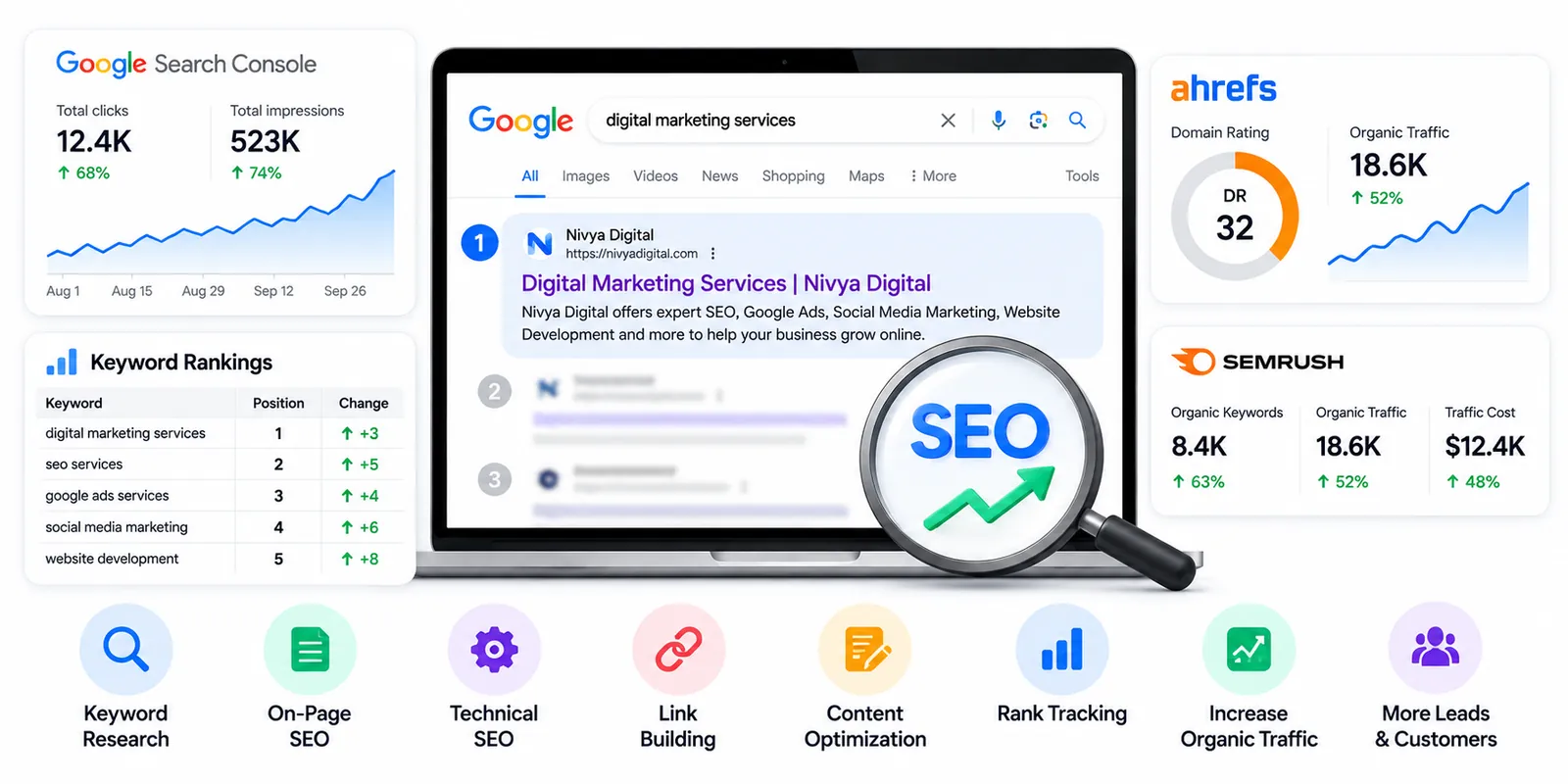
Search Engine Optimization helps search engines discover, understand, and present your website to people searching for relevant information, products, and services.
Unlike paid advertising, organic search visibility does not require paying for each click. However, SEO still requires investment in content, technical improvements, research, and ongoing maintenance.
Key SEO activities for business growth
Keyword research: Identify the phrases your potential customers use when searching for solutions.
On-page SEO: Optimize titles, headings, URLs, internal links, and page content.
Technical SEO: Ensure important pages can be crawled and indexed, and address issues affecting website usability.
Content optimization: Publish accurate, original resources that answer meaningful customer questions.
Authority and reputation: Earn relevant mentions and links through legitimate relationships, useful resources, and trustworthy work.
For example, a business offering CRM development might create a dedicated service page targeting relevant CRM development queries, supported by educational articles about implementation, integration, and workflow automation.
The important principle is to match each page to a specific user need instead of repeating the same keywords throughout your website.
3. Use International SEO to Reach Customers Across Countries
Expanding internationally requires more than adding the names of different countries to your website.
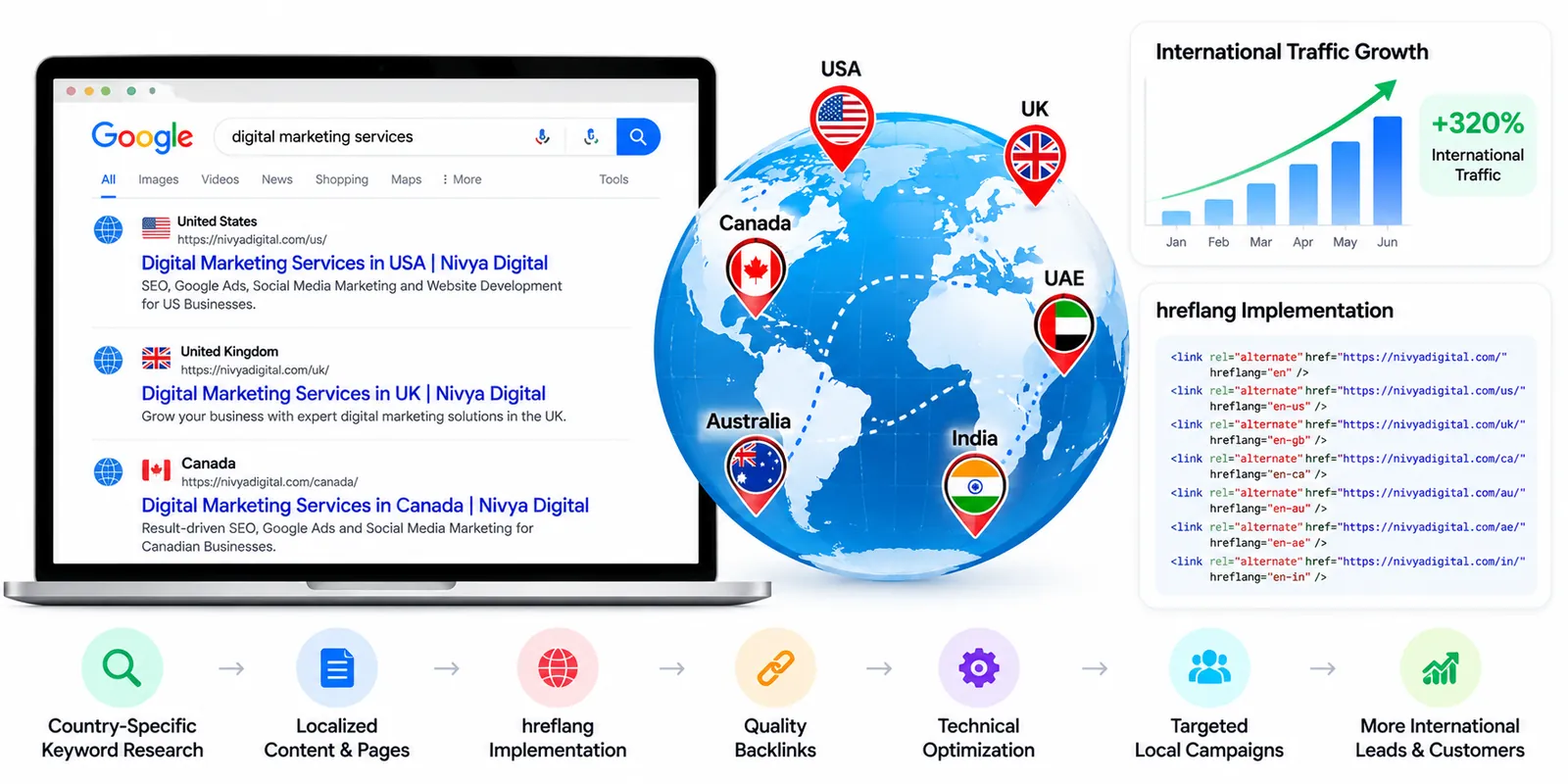
A business targeting customers in India, the USA, the UK, Canada, Australia, and the UAE should understand how search behavior, terminology, expectations, and purchasing decisions vary across markets.
How to build an international SEO strategy
Start by researching country-specific search intent.
For example, potential clients might search for:
SEO services for small businesses in the USA.
Digital marketing agency for UK businesses.
Website development services in India.
SEO agency for Australian small businesses.
Digital marketing services for UAE companies.
These are illustrative search phrases, not verified high-volume keywords.
Create dedicated regional pages when you can offer genuinely useful information specific to those markets.
A page for US customers might explain your service delivery process, meeting arrangements, relevant project experience, and quotation process.
A UK-focused page could provide appropriately localized terminology, relevant service examples, and information about supporting UK businesses.
Avoid producing dozens of nearly identical country pages that only replace one location name with another.
If your website has different language or regional versions, implement the appropriate technical signals, including hreflang where applicable.
International SEO works best when the content provides a meaningful reason for visitors in each target market to choose your business.
4. Run Google Ads to Reach High-Intent Customers
SEO can support sustainable visibility, but some businesses also need faster opportunities to reach potential customers.
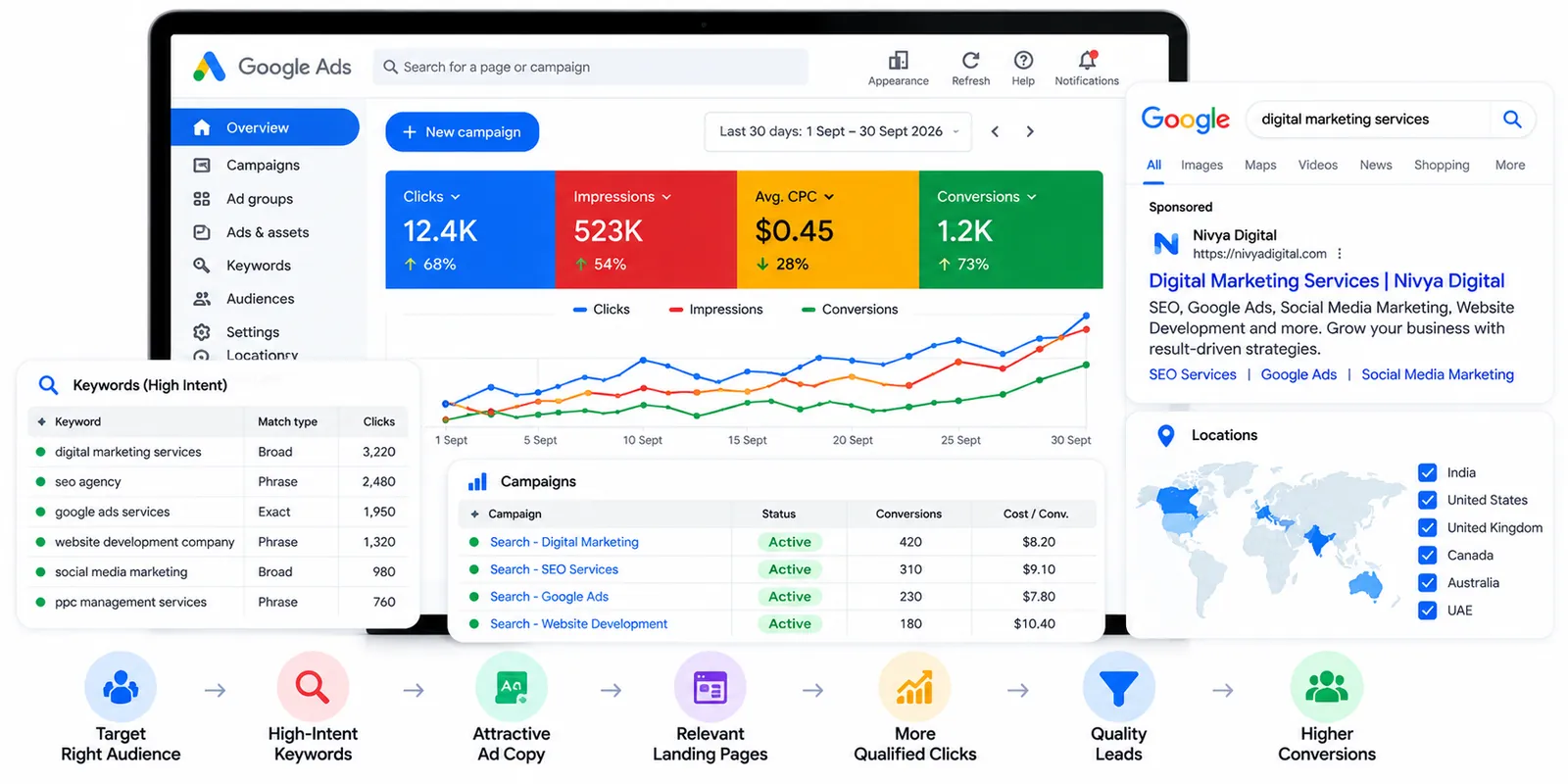
Google Ads allows businesses to advertise against relevant searches and other eligible placements.
For service-based companies, search campaigns can be particularly useful when potential customers are actively looking for a provider.
How to make Google Ads more effective
Start with a clearly defined conversion goal.
Instead of measuring success only through clicks, track valuable actions such as:
Qualified contact form submissions.
Consultation bookings.
Relevant phone calls.
Genuine quotation requests.
Group closely related keywords and send visitors to landing pages that match their expectations.
A person searching for "WordPress website development services" should reach a page focused on WordPress development, rather than a generic homepage.
Review search terms, location targeting, budgets, and conversion quality regularly.
For international campaigns, consider separate targeting and reporting by market so that differences in cost and lead quality are easier to understand.
5. Strengthen Your Social Media Marketing
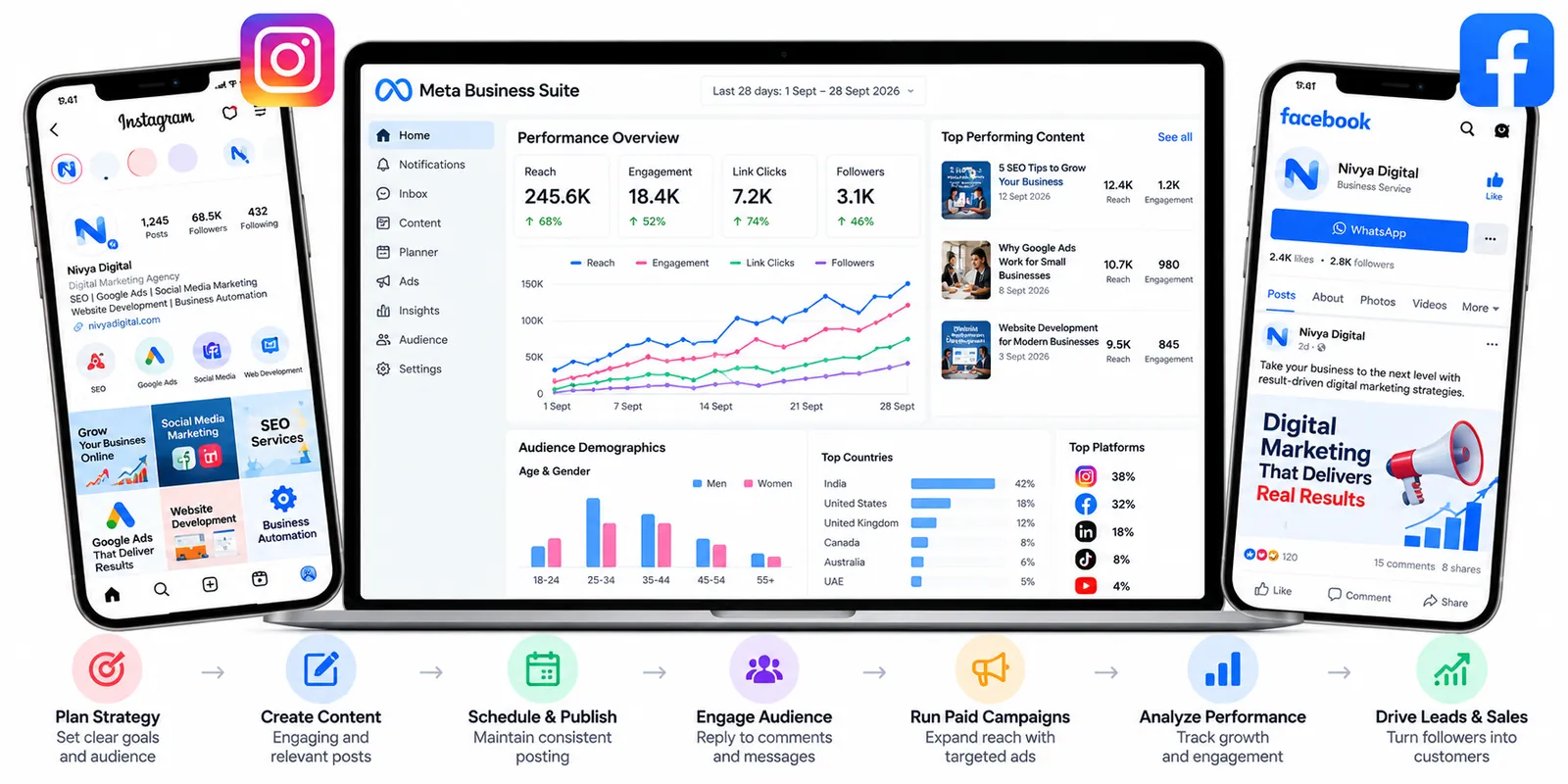
Social media can help businesses build familiarity, demonstrate expertise, and maintain relationships with potential customers.
However, posting every day without a clear purpose is unlikely to produce consistent business results.
Choose platforms based on your audience.
LinkedIn may be relevant for B2B consulting and professional services. Instagram and Facebook can support visually engaging businesses, community building, and consumer-focused campaigns.
Content ideas that provide genuine value
Share educational posts that answer customer questions, explain your services, or demonstrate how a process works.
Publish genuine behind-the-scenes content, useful industry observations, and customer success stories where permission has been obtained.
Use clear calls to action when a post relates directly to your services.
A social media strategy should be measured through meaningful engagement, website visits, enquiries, and assisted conversions—not follower counts alone.
6. Create Helpful Content That Answers Customer Questions
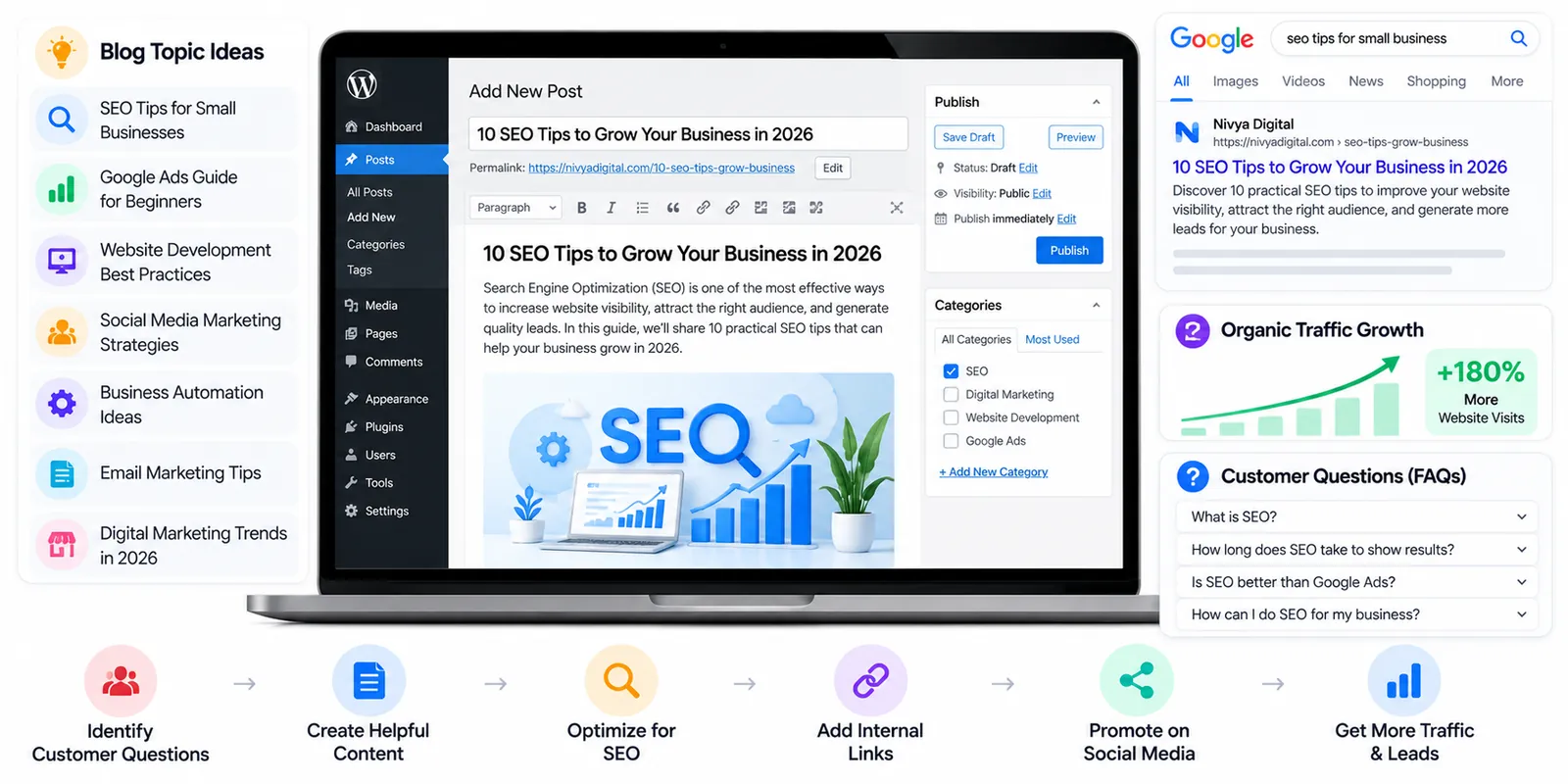
Content marketing is one of the most useful ways to connect customer problems with your business expertise.
Rather than publishing articles simply to include keywords, identify the questions your potential customers genuinely need answered.
For example, a digital marketing agency could publish:
SEO vs Google Ads: Which is better for a small business?
How much does a business website cost?
Why is my website getting traffic but no leads?
How can a business attract international customers?
What should businesses track in Google Analytics 4?
Each article should provide practical answers, relevant examples, and a logical next step.
Make content more valuable than a generic competitor article
Include original explanations, useful checklists, clearly labeled examples, and evidence that supports important claims.
If you have real client experience, consider adding an anonymized case study with permission and verifiable results.
Avoid inventing performance statistics, testimonials, or project outcomes.
Helpful content builds trust by solving a problem before asking for a sale.
7. Improve Your Visibility in AI-Powered Search
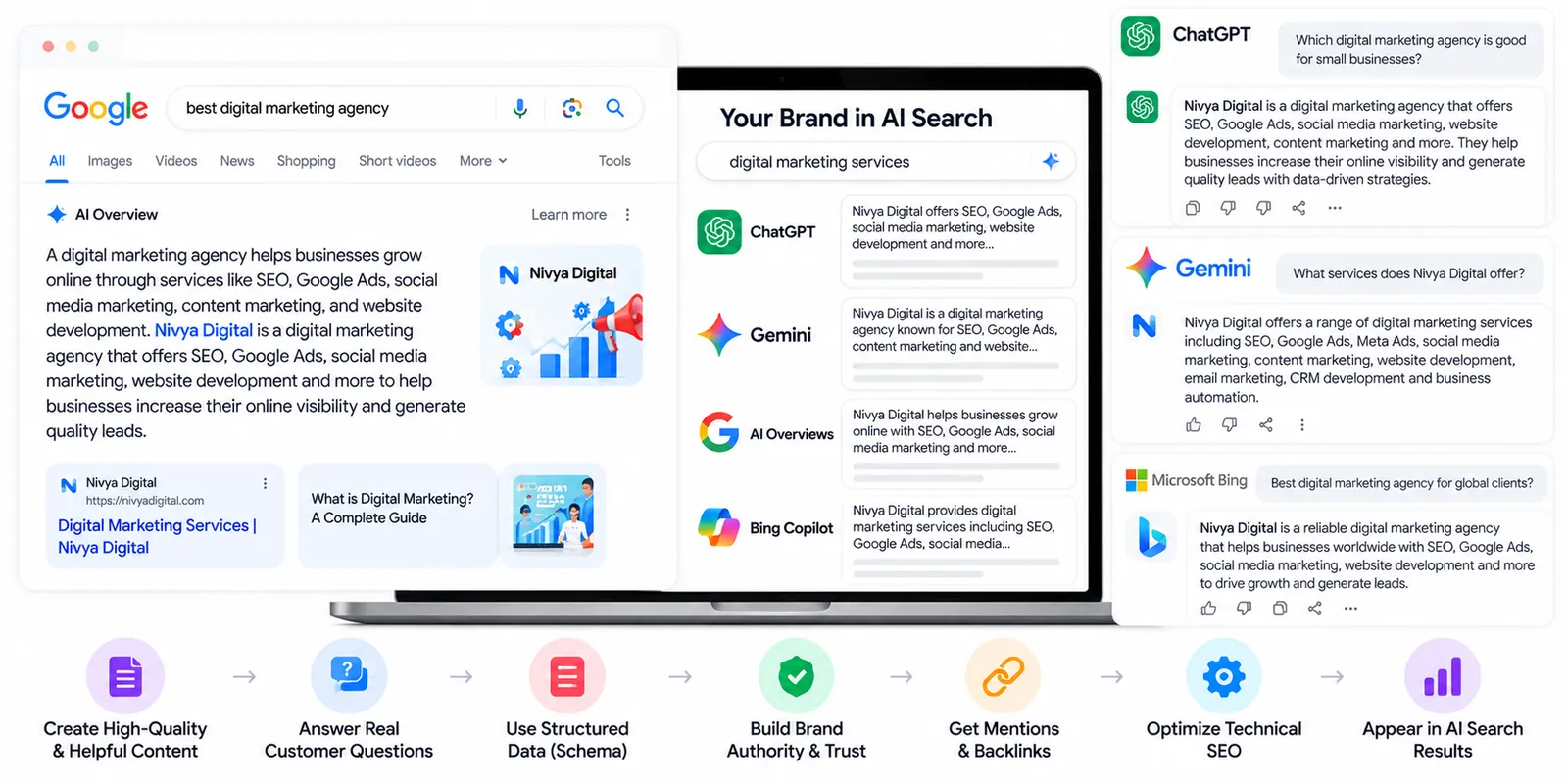
Search behavior continues to evolve as people use AI-assisted search experiences to explore topics, compare options, and find information.
Businesses should therefore make their content easy to understand, accurate, and useful across traditional and AI-powered discovery experiences.
Google's guidance continues to emphasize foundational SEO practices and original, valuable content.
Practical ways to improve content clarity
Use descriptive headings that reflect real questions.
Provide concise explanations before adding deeper detail.
Include relevant facts, examples, and clear definitions.
Keep important service information current.
Make sure essential content is accessible in text and important pages are internally linked.
There is no guaranteed method to make an AI search feature recommend a particular company.
Instead, focus on producing information that genuinely deserves to be discovered and referenced.
8. Use Email Marketing to Build Customer Relationships
Not every website visitor is ready to purchase immediately.
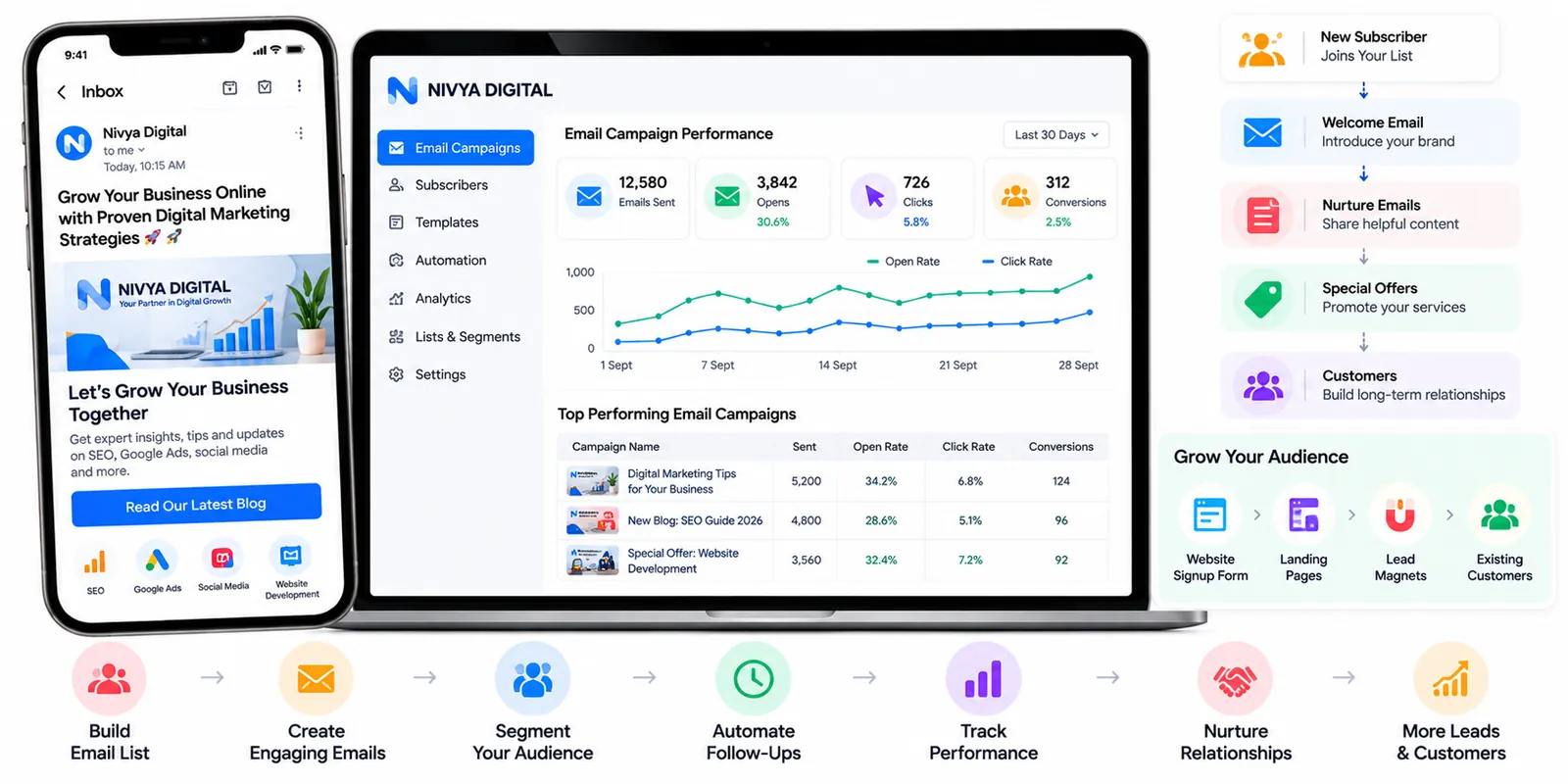
Email marketing can help businesses stay connected with people who have chosen to receive updates.
A useful email strategy may include educational newsletters, onboarding sequences, relevant service updates, and follow-up communication after enquiries.
How to build an effective email strategy
Offer something valuable in exchange for permission to contact subscribers.
Segment audiences based on relevant interests and customer needs.
Write clear subject lines and useful email content.
Make unsubscribe options easy to access and follow applicable privacy and marketing regulations.
For international audiences, ensure your email practices account for the requirements of the countries where recipients are located.
Measure engagement alongside actual business outcomes rather than treating open rates as the only indicator of success.
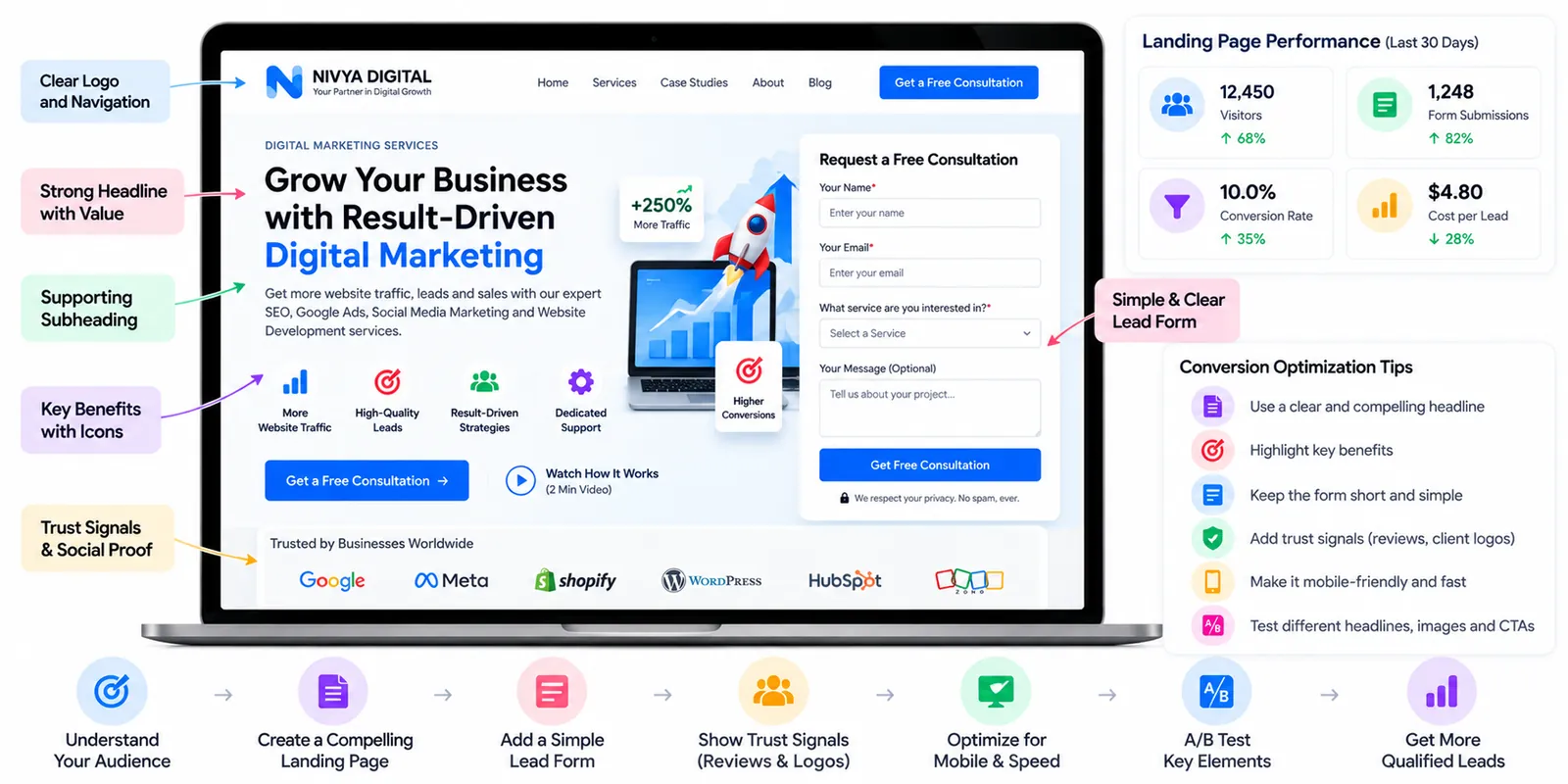
9. Optimize Landing Pages for More Qualified Leads
A website can attract thousands of visitors and still struggle to generate enquiries.
Sometimes the problem is not traffic. It is the experience visitors have after arriving.
A landing page should align closely with the advertisement, search query, or campaign that brought someone there.
Elements of a strong landing page
Start with a headline that communicates a clear benefit.
Explain the problem your service solves.
Describe what is included and how the process works.
Address common objections about timing, communication, deliverables, or pricing.
Include genuine proof where available.
Finish with a simple, relevant call to action.
For example, a landing page for SEO services might invite visitors to request an SEO consultation or website review.
Test one meaningful change at a time and measure whether it improves qualified leads—not just button clicks.
10. Use CRM and Business Automation to Improve Lead Follow-Up
Generating leads is only one part of growing a business.
Businesses also need a reliable way to respond, track conversations, and manage opportunities.
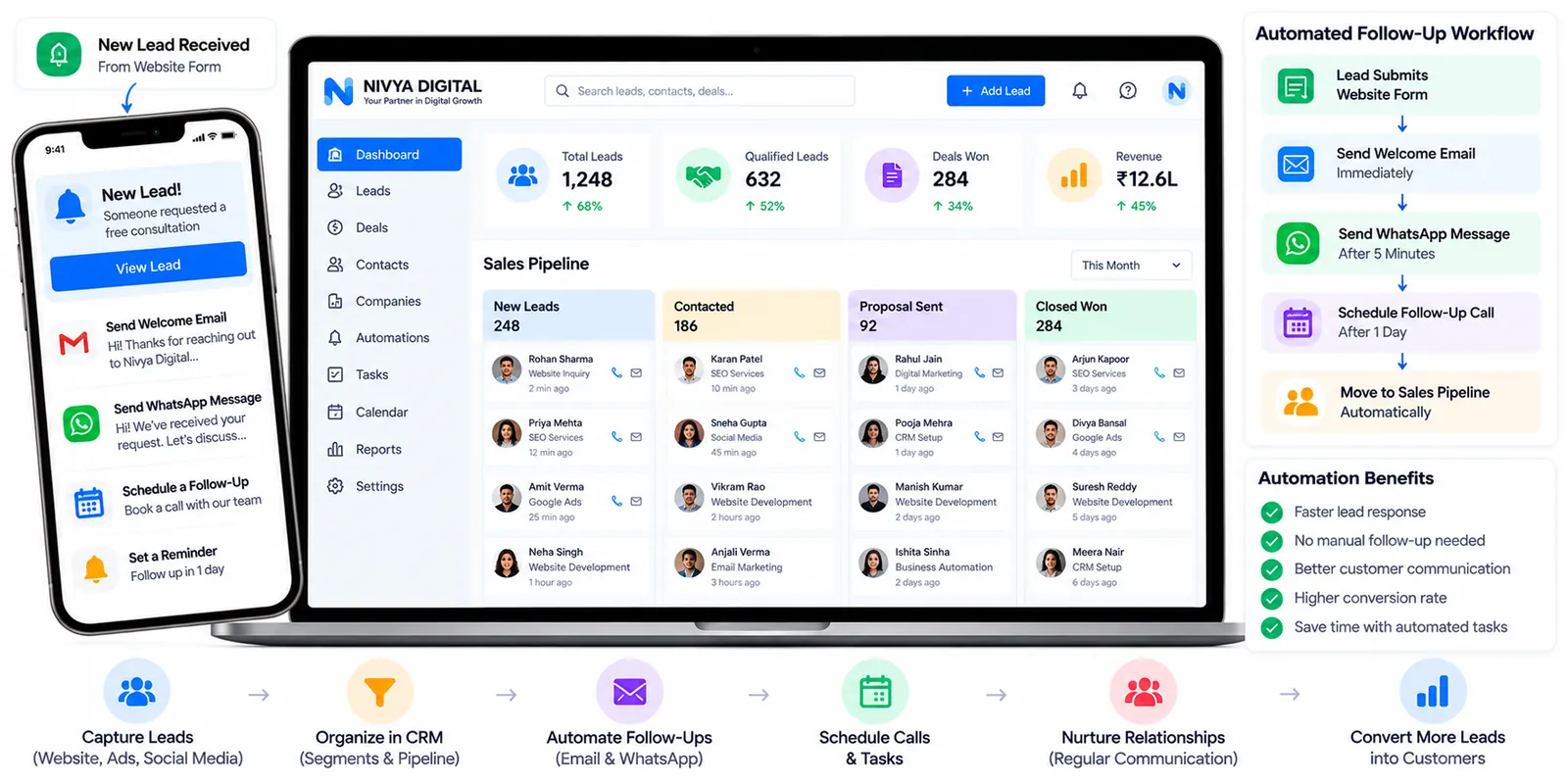
A Customer Relationship Management (CRM) system can help organize enquiries, contact information, sales stages, and follow-up tasks.
Business automation can reduce repetitive administrative work.
Example of a simple lead-management workflow
A potential customer submits an enquiry form.
The enquiry is added to the CRM.
The appropriate team member receives a notification.
The customer receives an acknowledgement.
A follow-up task is scheduled.
The team updates the opportunity as the conversation progresses.
Automation should support timely, relevant communication rather than replace the personal attention customers need.
When serving international clients, a structured process can also make managing time zones and handovers easier.
11. Measure Digital Marketing Performance With the Right KPIs
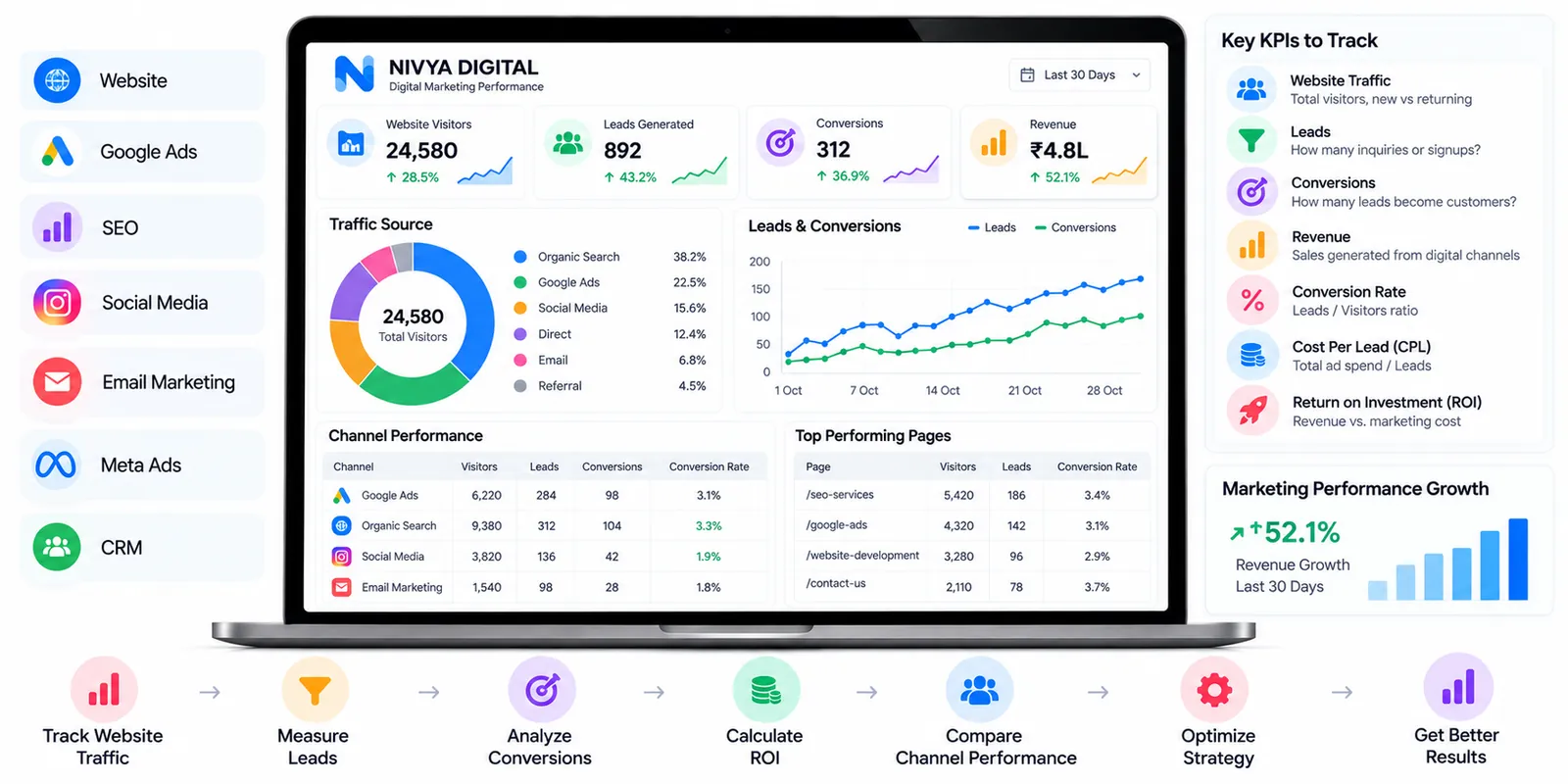
Marketing decisions become more useful when they are connected to reliable data.
Different channels require different measurements, but the central question remains the same:
Is your marketing helping the business achieve its goals?
Important digital marketing KPIs
| KPI | What it helps you understand |
|---|---|
| Organic search clicks | Visits generated through unpaid search results |
| Qualified leads | Enquiries that match your ideal customer profile |
| Conversion rate | Percentage of visitors completing a defined action |
| Cost per lead | Advertising or campaign spend divided by leads generated |
| Customer acquisition cost | Cost associated with acquiring a new customer |
| Return on ad spend | Revenue attributed to advertising relative to ad spend |
| Lead-to-customer rate | Percentage of leads that become customers |
Use Google Search Console to understand search visibility and Google Analytics 4 to examine relevant website events and conversions.
Connect marketing reports with CRM outcomes whenever practical.
For international campaigns, compare markets separately before making budget decisions.
A campaign producing more leads is not necessarily more successful if those leads rarely become customers.
12. Combine Your Marketing Channels Into One Growth Strategy
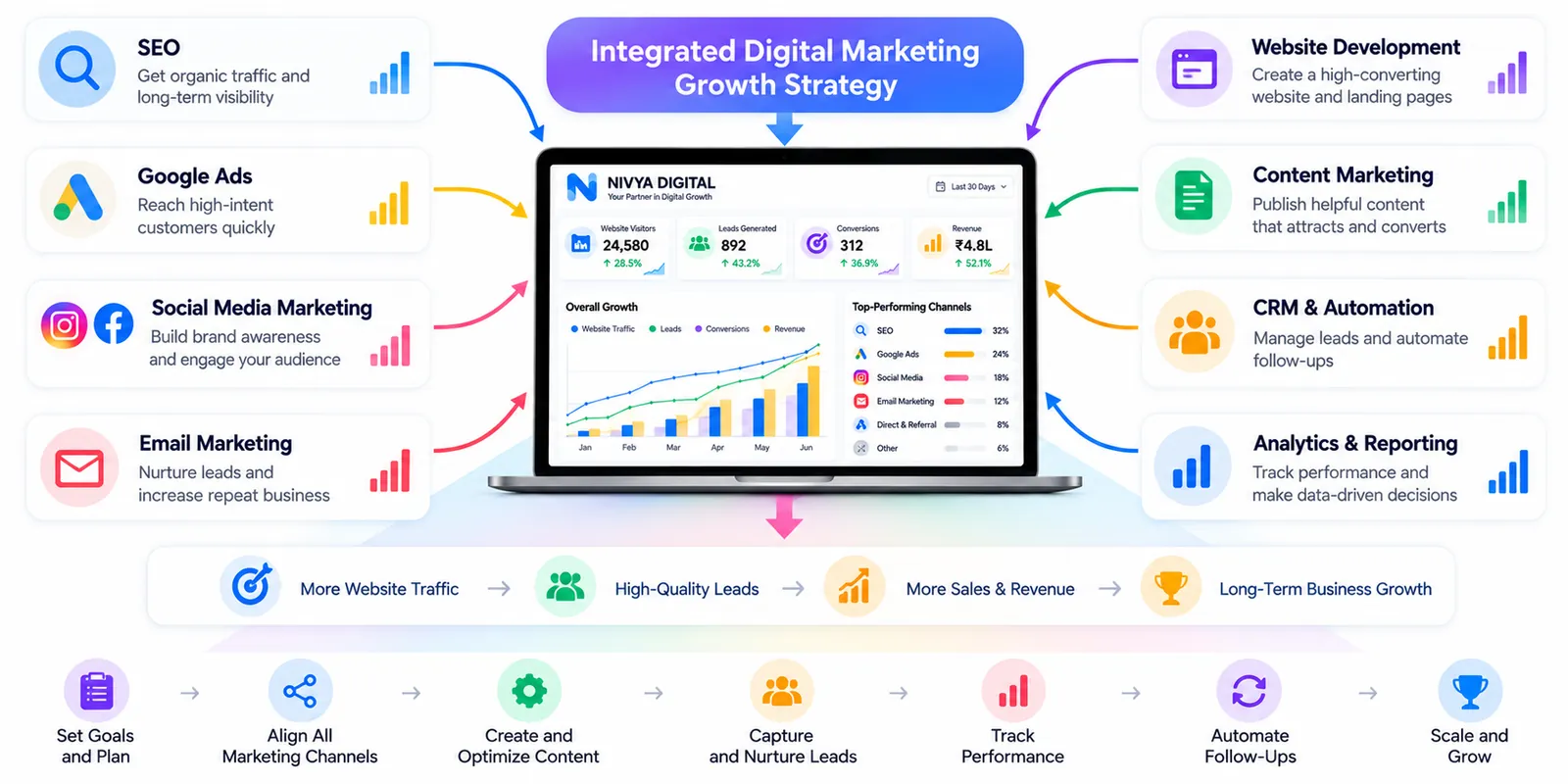
One of the most common marketing challenges is treating every channel as a separate activity.
SEO teams focus on rankings.
Advertising teams focus on clicks.
Social media teams focus on engagement.
Website teams focus on design.
But customers experience your business as one connected brand.
A more effective approach aligns every channel with the same customer journey.
Example of an integrated digital marketing strategy
Imagine a small business that wants to attract customers in India and the United Kingdom.
The business could:
Improve its website and core service pages.
Research search intent in both markets.
Publish educational content addressing customer questions.
Build useful market-specific landing pages.
Run targeted Google Ads campaigns where appropriate.
Share helpful content through relevant social platforms.
Track enquiries and sales opportunities in a CRM.
Review results and improve the channels producing qualified leads.
This approach makes it easier to identify what is working and where the next investment should go.
Local vs International Digital Marketing: What's the Difference?
Both approaches rely on understanding customer needs, but their execution can vary.
| Factor | Local marketing | International marketing |
|---|---|---|
| Target audience | Specific city or service area | One or more countries or regions |
| Keyword research | Location and local service intent | Country-specific terminology and intent |
| Website content | Local relevance and service information | Market-relevant content and delivery details |
| Advertising | Geographic targeting around a service area | Country or regional campaigns |
| Trust signals | Genuine local reviews and relevant work | Verified expertise, client proof, clear remote delivery |
| Measurement | Local calls, bookings and enquiries | Leads, customers and revenue by target market |
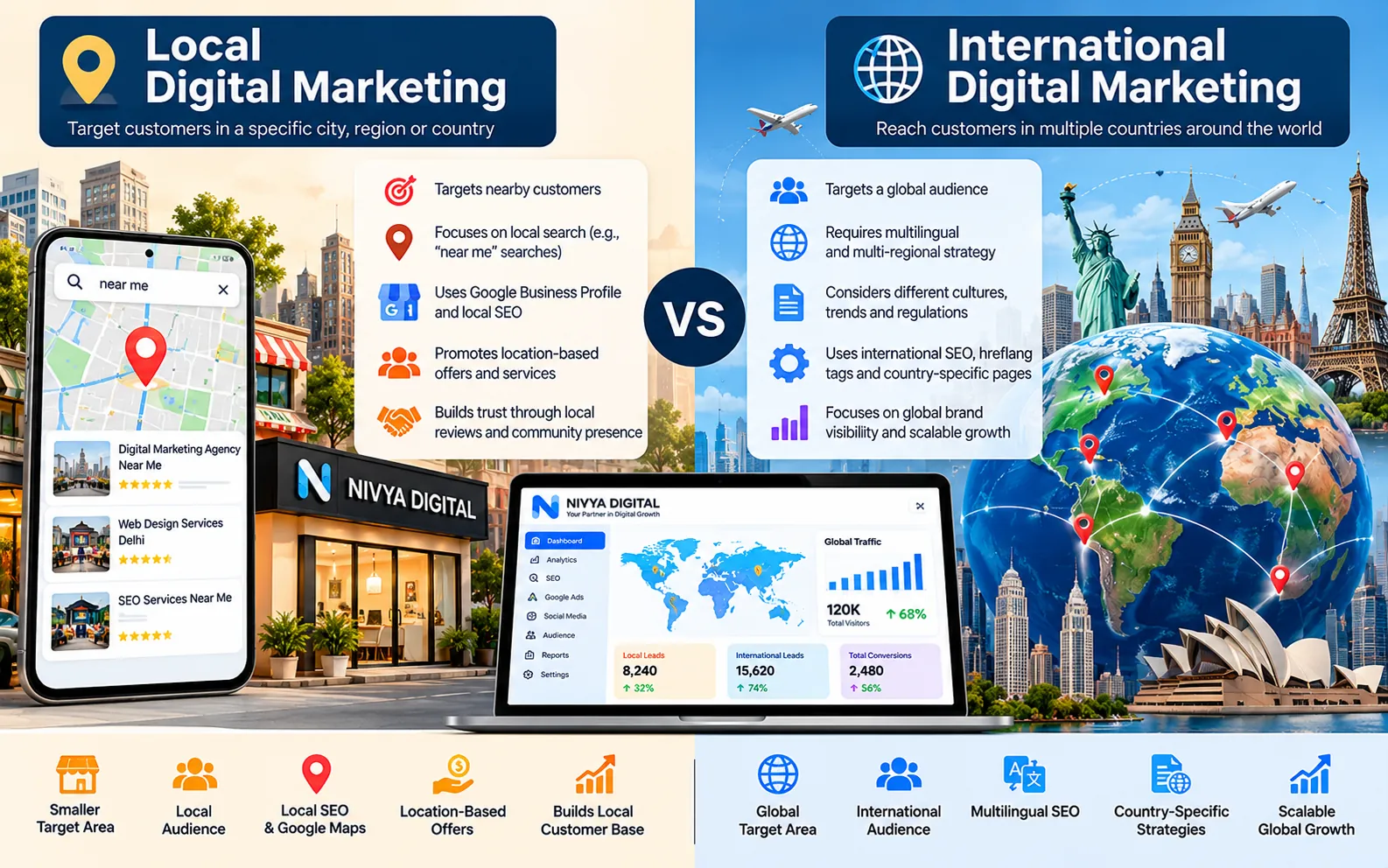
Businesses should avoid assuming that one strategy will perform equally well everywhere.
A Practical 90-Day Digital Marketing Growth Plan
A realistic growth plan starts with priorities, not with trying every available marketing channel.
Days 1–30: Audit and Prepare
Review your website's technical health, content, analytics setup, and conversion opportunities.
Identify your most valuable services and customer segments.
Research relevant keywords and competing pages in your priority markets.
Improve important service pages before expanding your content library.
Days 31–60: Publish and Launch
Create genuinely helpful blog content that supports your services.
Improve internal linking and calls to action.
Launch focused advertising tests if the budget and conversion tracking are ready.
Develop relevant social content and follow-up workflows.
Days 61–90: Measure and Improve
Review organic search performance, landing page conversions, advertising costs, and lead quality.
Identify which channels are producing meaningful business opportunities.
Improve underperforming pages and campaigns.
Document useful lessons and prioritize the next set of improvements.
Ninety days is a planning framework, not a promise of SEO rankings or revenue growth.
How Nivya Digital Can Support Your Online Business Growth
Building an effective digital presence often requires a combination of marketing expertise, website improvements, technology, and ongoing optimization.
Nivya Digital offers digital marketing and technology services designed to support businesses at different stages of their online growth.
Our service areas include:
Search Engine Optimization (SEO)
Google Ads and Meta Ads
Social Media Marketing
Content Marketing and Email Marketing
Website and App Development
CRM Development
Affiliate Marketing
Business Automation
Whether your business is focused on customers in India or exploring opportunities in international markets, the right starting point is understanding your goals, audience, website performance, and available resources.
Instead of relying on one marketing tactic, businesses can benefit from a connected strategy that brings together visibility, customer experience, lead generation, and measurement.
Want to explore digital marketing opportunities for your business?
Visit Nivya Digital to learn more about our services and discuss your business requirements.
Final Thoughts
Growing your business online in 2026 is not about following every digital marketing trend. It is about choosing the strategies that help your ideal customers find you, trust you, and take meaningful action.
A strong website creates the foundation. SEO and content help customers discover your business. Advertising can support targeted acquisition. Social media and email strengthen relationships. Analytics and CRM systems help connect marketing activity with actual business outcomes.
For businesses targeting both national and international markets, the opportunity lies in understanding each audience and delivering a relevant, trustworthy experience.
Build your digital presence with purpose, measure what matters, and improve consistently.
Explore digital marketing and technology solutions at Nivya Digital.
Comments (1)
A useful guide for businesses looking to grow online in 2026. It covers practical digital marketing strategies to improve SEO, generate quality leads, strengthen brand visibility, and expand into local and international markets.