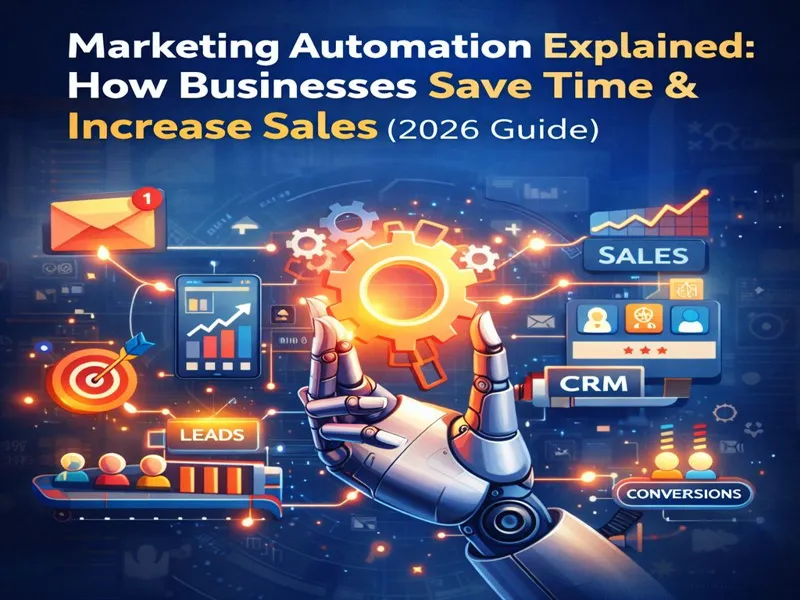
In 2026, companies are competing not just on products or prices but also on speed, personalization and efficiency. Customers demand immediate attention, personalized messaging and a cohesive experience with each digital interaction. This is where marketing automation can come in and shake things up for the better.
With automation, organizations can streamline repetitive marketing tasks — such as emailing or social posting — and not have to do them manually constantly. In this guide, you'll discover exactly what marketing automation is, how it works, why it's so important in 2020 and — most importantly of all – how it can help our business save time and make more sales.
What Is Marketing Automation?
Marketing Automation is the utilisation of software/technology to automate, manage and measure marketing efforts across multiple channels including email, websites, social media marketing, ads and CRM.
Emails rarely are sent directly, and your time doing cadences reduces significantly, If you are doing cold emails manually there's a lot of tasks performed by automation tools instead of you based on rules triggers user behavior. This guarantees that the right message goes to the right person at the right time.
To put it simply, this software helps businesses to work smarter rather than work harder.
The Necessity of Marketing Automation in 2026
The customer journeys of 2026 are more convoluted than ever before. They engage with brands on search engines optimization, social media, through emails, in ads and websites — frequently (in many cases) across multiple devices. And doing this manually is basically impossible.
Marketing automation helps businesses:
●Manage high lead volumes with ease
●Deliver personalized experiences at scale
●Respond instantly to customer actions
●Track performance accurately
Without automation, companies face retarder growth, lost opportunities and lower conversion rates.
How Marketing Automation Works (Step-by-Step)
Marketing automation adheres to a clearly defined workflow, which encompasses data, behavior and communication.
Lead Capture
Automation starts when a user:
●Fills out a form
●Subscribes to a newsletter
●Downloads a guide
●Clicks on an ad
This data is automatically logged and stored.
Lead Segmentation
Leads are segmented based on:
●Demographics
●Interests
●Website behavior
●Purchase intent
This makes for targeted messaging not the run of the mill campaigns.
Automated Workflows
Workflows are predetermined sets of steps invoked upon user actions.
For example:
●Welcome email after signup
●Follow-up emails after downloading content
●Reminder emails for abandoned carts
Lead Nurturing
Leads are sent informative content on regular intervals, which aids them in the direction of a purchasing decision without any hard sell.
Conversion & Sales Handoff
When a lead demonstrates high intent, automation notifies your sales teams or moves the lead into a CRM for follow-up.
Key Advantages of Marketing Automation for Companies
Marketing automation offers quantifiable benefits for businesses that affect growth and profitability. What it does: It saves manual work, refines targeting precision and deepens engagement over the marketing landscape. Teams can spend less time on routine tasks and more time on strategy and innovation by automating low value work. In the end, automation does allow businesses to do more, with less.
Saves Significant Time
Marketing staff have to spend less time doing routine tasks, such as:
●Sending emails
●Scheduling campaigns
●Updating lead statuses
Automation takes care of all of these things automatically, allowing teams to direct their attention toward strategy and being creative.
Increases Sales & Conversions
By providing timely, informative content, automation maintains the interest of prospects and funnels them towards conversion.
Improves Lead Quality
Leads are scored by behavior and the highest-intent prospects are funneled to your sales people.
Enables Personalization at Scale
Personalized experiences are no longer Nice-to-have! Personalizing messages for thousands of users all at once is made feasible by automation.
Provides Data-Driven Insights
All activities are recorded to allow businesses tweak campaigns with real performance data.
Marketing Automation vs Manual Marketing
One of the most important aspects that you need to know is a difference between main marketing and auto-pilot type marketing. Manual marketing is very human-resource intensive, it's really hard to scale. And marketing automation guarantees all this, with a side order of up-to-date. This change allows companies to scale while still performing well.
| Aspect | Manual Marketing | Marketing Automation |
|---|---|---|
| Time efficiency | Low | High |
| Personalization | Limited | Advanced |
| Scalability | Difficult | Easy |
| Lead nurturing | Inconsistent | Systematic |
| Reporting | Manual | Real-time analytics |
Common Marketing Automation Use Cases
Marketing automation is very much a multi-purpose tool. Whether it's email campaigns, CRM connectivities or even eCommerce workflows, automation reinforces various touchpoints. These applications enable businesses to make the most of their operations and give customers better engagement. This in turn makes marketing more strategic and measurable.
Email Marketing Automation
Automated emails include:
●Welcome series
●Drip campaigns
●Re-engagement emails
●Post-purchase follow-ups
You never have to lift a finger for these emails to drive, and keep driving, untact approaches and appointments.
Lead Nurturing Campaigns
Based on their status in the buying journey, leads get educational content, case studies and offers.
CRM Integration
Automation syncs with CRMs to:
●Update lead status
●Assign leads to sales teams
●Track deal progress
E-commerce Automation
Online stores use automation for:
●Abandoned cart recovery
●Product recommendations
●Order confirmations
●Upselling and cross-selling
How Marketing Automation Can Assist Increase Your Gross sales
The fastest results of marketing automation Sales Growth Sunken sales cycle – Automation accelerates the selling process because it instantly responds to leads and guides them with a series of custom content. It makes sure, that the prospects hear the right sound at the right time and as a result trust and intent increase. This steady groove is directly correlated to higher conversion rates and more revenue.
Faster Response Time :- The chance of conversion increases manifold with instant response. No lead is left behind with automation.
Better Customer Experience :- By serving content instead of spam to their customers, trust and loyalty towards the brand is increased.
Shorter Sales Cycles :- Automated Nurturing Educating leads faster also means decreasing the time you take to convert them into history paying customers.
Higher Customer Retention :- You won’t have to rely on manually running follow ups, member campaigns, or personalized offers built to keep customers coming back for the long terms!
Selecting The Best Marketing Automation Software In 2026
The marketing automation platform you ultimately choose can make (or break) your long-term success. Companies should seek solutions for tools that match the company’s goals, work with existing systems and can scale as the business grows. The must-have features: AI-driven insights, omnichannel capabilities and advanced analytics in 2026. The perfect tool makes life easier and rakes in an even greater ROI.
Some things companies should think about when choosing a tool:
●Ease of use
●CRM integration
●Email & workflow capabilities
●Analytics and reporting
●Scalability
2026’s favorite tools are AI automation and predictive analytics platforms, and omnichannel engagement.
Best Practices for Successful Marketing Automation
The key to successful marketing automation is not just technology, but strategy. Businesses need to set ever-important targets, define customer journeys and produce great content. Frequent testing and optimization assure workflows are effective in a long run. When done right automation transforms into an engine of growth, not a technical setup.
Start With Clear Goals :- Decide what you want to accomplish — lead generation, sales growth, retention or engagement.
Map the Customer Journey :- Learn how your viewers engage with your brand before creating workflows.
Focus on Quality Content :- Automation amplifies content. Bad content will get you bad results!
Test & Optimize Regularly :- Examine workflows, emails and performance data to optimize results.
Mistakes to Avoid in Marketing Automation
Poor execution of the automation strategy is what makes most companies not getting any results. Typical mistakes include over-automation, insufficient personalization and ignoring analytics. Automation should be used to improve the customer experience, not bombard users. By avoiding these areas you can have a sustainable and effective marketing efforts.
●Over-automation without personalization
●Sending too many emails
●Ignoring data insights
●Not aligning sales and marketing teams
●Using automation without a strategy
Is Marketing Automation Right for Small Business?
Small business owners are benefiting most from marketing automation. It enables smaller brands to be in the game because everything can be automated, meaning that they don’t need a full marketing department. When small businesses have a solid approach, they’re able to effectively generate new leads, nurture customers and make sales. Automation is the great equalizer in digital marketing.
Yes. conceived, in fact small businesses benefit the most from because automation:
●Reduces workload
●Maximizes limited resources
●Enables professional-level marketing
●Improves ROI
Startups, too, can harness automation to keep pace with their bigger brethren.
Future of marketing automation after 2026
Marketing automation is evolving with:
●AI-powered personalization
●Predictive customer behavior analysis
●Voice and conversational automation
●Hyper-personalized omnichannel experiences
The companies that are early-adopters of automation will reap tremendous competitive benefits.
Final Thoughts
Marketing automation isn’t just a luxury anymore— it’s vital in 2026. Businesses that automatically think generate time, not to mention save all sorts of money and create closer customer relationships by way of having continual sales progress.
Through the utilization of appropriate tools, strategies and workflows you can automate your business in such a way that it changes the way your company gathers leads, nurtures prospects and gains new customers in today’s competitive digital environment:
Comments (1)
The part about saving time resonated with me. We used to spend hours manually qualifying leads, and automation has been a total game-changer for our team's efficiency. Excellent update for 2026 standards.