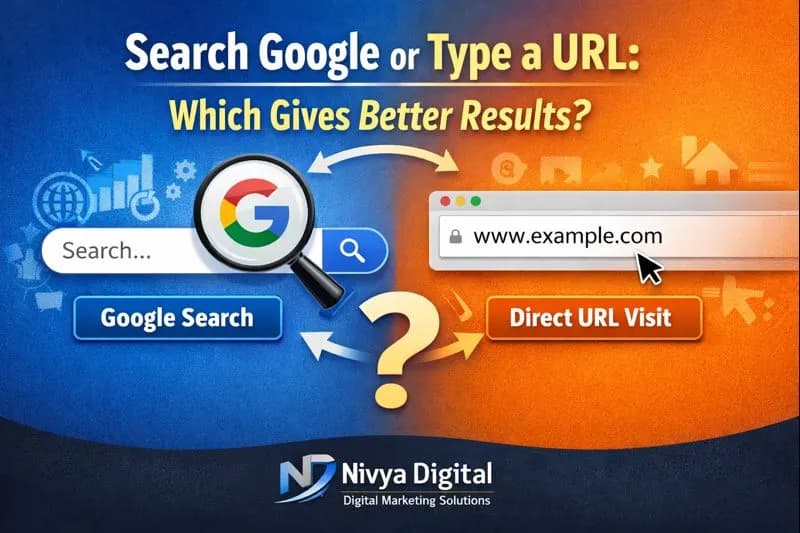
In a digital-first world, nearly every journey on the web starts by entering an address in the browser’s address bar. You either Search Google or Type a URL into the browser, which is often referred to as Search Google or Type a URL in digital marketing. On the surface, these are two seemingly simple actions — but in the world of user experience, SEO, branding, and Google search vs direct traffic they create very different conditions.
It’s crucial for businesses, marketers and website owners to be aware of this distinction. At Nivya Digital ( full-service digital marketing agency ) we get that questions Like Search vs Direct URL on web traffic, conversion, brand visibility and long term growth is very frequently seen to ours brands.
We’re going to demystify it all in this comprehensive guide and spell out what gives the better results (and why) so you know how to properly use both as part of your digital marketing strategy.
What Does “Search Google” Mean?
When users start typing keywords or questions in the search box of Google, they are looking for a piece of information, products or services and solutions. This is when Google shares a variety of sites that are filtered by relevancy, authority and quality.
Example:
Instead of typing www. nivyadigital. com, a user may search:
● best digital marketing agency
● SEO services near me
● social media marketing company
This is what we refer to as search-driven traffic or organic traffic.
Why People Like Searching on Google
● They forget the URL of their website
● They would like to choose from a list of alternatives
● They're studying before they decide."
● They have trust that Google will display the best results.
Nivya Digital gets most of its new business from people Googling us; it’s testament to just how potent search behaviour can be.
What Does “Type a URL” Mean?
When typing a URL, that means users already know the actual address of a certain site and types it to the browser.
Example:
This is called direct traffic.
Why Users Type a URL Directly
● Strong brand recall
● Regular or returning visitors
● Saved bookmarks
● Trust and familiarity
Direct traffic often signals brand strength and creativity.
Key Differences Between Search Google and Type a URL
Table 1: User Behavior Comparison
| Factor | Search Google | Type a URL |
|---|---|---|
| User Intent | Research, comparison, discovery | Brand-specific or repeat visit |
| Traffic Type | Organic / Paid | Direct |
| Brand Awareness | Low to Medium | High |
| Competition | Very High | None |
| SEO Importance | Critical | Minimal |
Which Option Brings More Traffic?
Search Google Wins for Volume
Search Engine Market Share Over 90% of online experiences begin with a search engine worldwide. This means Google search has much more potential to drive new users to your site.
For businesses that want:
● New leads
● New customers
● Brand visibility
Google Search is unbeatable.
At Nivya Digital we make lots of efforts for SEO and Google visibility, because it provides you long term scalable traffic.
Which Option Converts Better?
Type a URL Often Converts Faster
Users who type a URL already:
● Trust the brand
● Know what they want
● Are closer to purchase
So search traffic is bigger, but direct traffic often converts better.
Smart Digital Marketing Strategy
The most successful brands don’t even pick one — they optimize for both.
SEO Implications: Why Google Search Changes Everything
You’re nowhere to be found on the internet if users search on Google and your site doesn’t show up.
Benefits of Ranking on Google
● Free, organic traffic
● Long-term visibility
● Higher brand authority
● Better trust
At Nivya Digital, we provide:
● Keyword research
● On-page SEO
● Technical SEO
● Content marketing
● Local SEO
All designed to help your business dominate Google search results.
Branding Power: Why Typing a URL Matters
It's the equivalent of your users typing your url directly and it would say:
● Your brand is memorable
● Your marketing is working
● You’ve earned trust
Table 2: Marketing Value Comparison
| Aspect | Google Search | Direct URL |
|---|---|---|
| Brand Discovery | Excellent | Poor |
| Brand Loyalty | Medium | Excellent |
| Long-Term Growth | High | High |
| Dependency | On Google Algorithm | On Brand Strength |
Paid Ads vs Organic Search
When you search for it in Google, here is what you get:
● Google Ads (Paid)
● Organic Listings
Which Is Better?
● Paid Ads: Instant exposure, high in cost, though.
● Organic SEO: The slow starter, but the ROI over time
At Nivya Digital, we advise a hybrid approach — Google Ads for short-term victories and SEO for long-term growth.
Mobile Users: Search Dominates
With smartphones, users:
● Rarely type full URLs
● Prefer voice or keyword search
It’s what makes Google Search so powerful today in a mobile-first world.
Which Is Better for New Businesses?
If your brand is new:
● Nobody knows your URL
● Direct traffic will be low
👉 Google Search is essential
This is where Nivya Digital guides startups and SMEs to grow visibility from scratch.
Which Is Better for Established Brands?
If your brand is well-known:
● Users type your URL directly
● Search traffic still supports growth
👉 Both are equally important
Final Verdict — Search Google or Type a URL?
The Truth: You Need Both
● Google Search = Exploration + Growth
● Enter a URL = Trust + Conversions
The savviest brands prioritize SEO, branding, content and user experience simultaneously.
At Nivya Digital we create full digital strategies that:
● Rank you on Google
● Build strong brand recall
● Increase direct traffic
● Maximize conversions
Conclusion
Search information or URL, regardless of which way people come in, these are two very important insights. Search is how we discover and grow, type-in traffic shows trust and loyalty.
If you want to build your business online, the secret isn’t just picking one—it’s learning to do both well.
And this is where Nivya Digital comes in – we are the ideal agency for all your digital marketing needs.
**
Comments (0)
No comments yet
Start the discussion by sharing your perspective