
Have you ever searched for your products or services on Google and noticed that your competitors appear everywhere while your business struggles to get noticed?
Their websites rank higher. Their advertisements appear for important searches. Their social media posts attract engagement. And somehow, they seem to generate more enquiries, leads, and customers.
Meanwhile, your business may be investing in SEO, social media marketing, website development, or paid advertising without achieving the results you expected.
So, why are your competitors getting more customers online in 2026?
The answer is rarely a single marketing trick.
Successful businesses usually combine several important elements: strong online visibility, relevant audience targeting, useful content, effective advertising, trustworthy websites, and consistent customer follow-up.
In 2026, competition has also expanded beyond traditional Google search results. Potential customers can discover brands through AI-powered search experiences, video platforms, social networks, marketplaces, and recommendations.
This means businesses must compete not only for search rankings but also for customer attention, trust, and purchasing decisions.
The good news is that you do not necessarily need a larger marketing budget than your competitors.
You need to understand what they are doing effectively, identify opportunities they have missed, and build a digital marketing strategy that suits your business.
In this guide, we explain 12 reasons competitors may be winning more customers online and practical ways to close the gap.
1. Your Competitors Understand Their Target Audience Better
One of the biggest advantages a competitor can have is a clear understanding of its ideal customers.
Businesses that know their audience can create more relevant content, advertisements, landing pages, and offers.
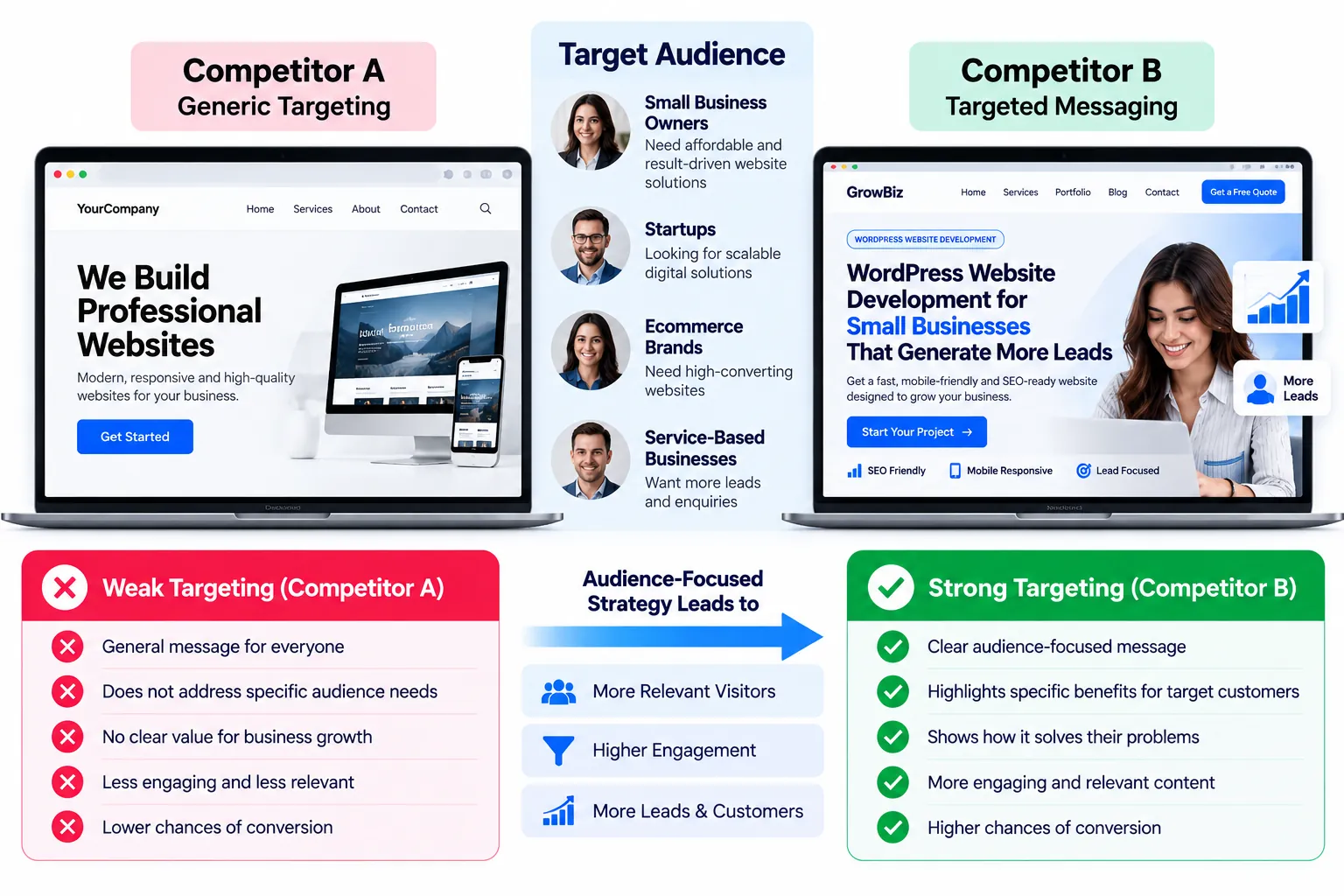
For example, imagine two companies offering website development services.
Company A promotes its services using a general message:
"We build professional websites."
Company B uses a more specific message:
"WordPress Website Development for Small Businesses Looking to Generate More Leads."
The second message communicates a clearer audience and business objective.
It may appeal more strongly to people who recognise themselves in that description.
How to Catch Up
Start by defining your ideal customer profile.
Consider:
Who needs your products or services?
What problems are they trying to solve?
What questions do they ask before purchasing?
Which countries or markets do you want to serve?
What factors influence their buying decisions?
Which online platforms do they use?
You can gather insights from customer enquiries, sales conversations, website analytics, search queries, and customer feedback.
Practical tip: Instead of targeting everyone, create focused messages for your most relevant customer segments.
2. Your Competitors Are Targeting Better SEO Keywords
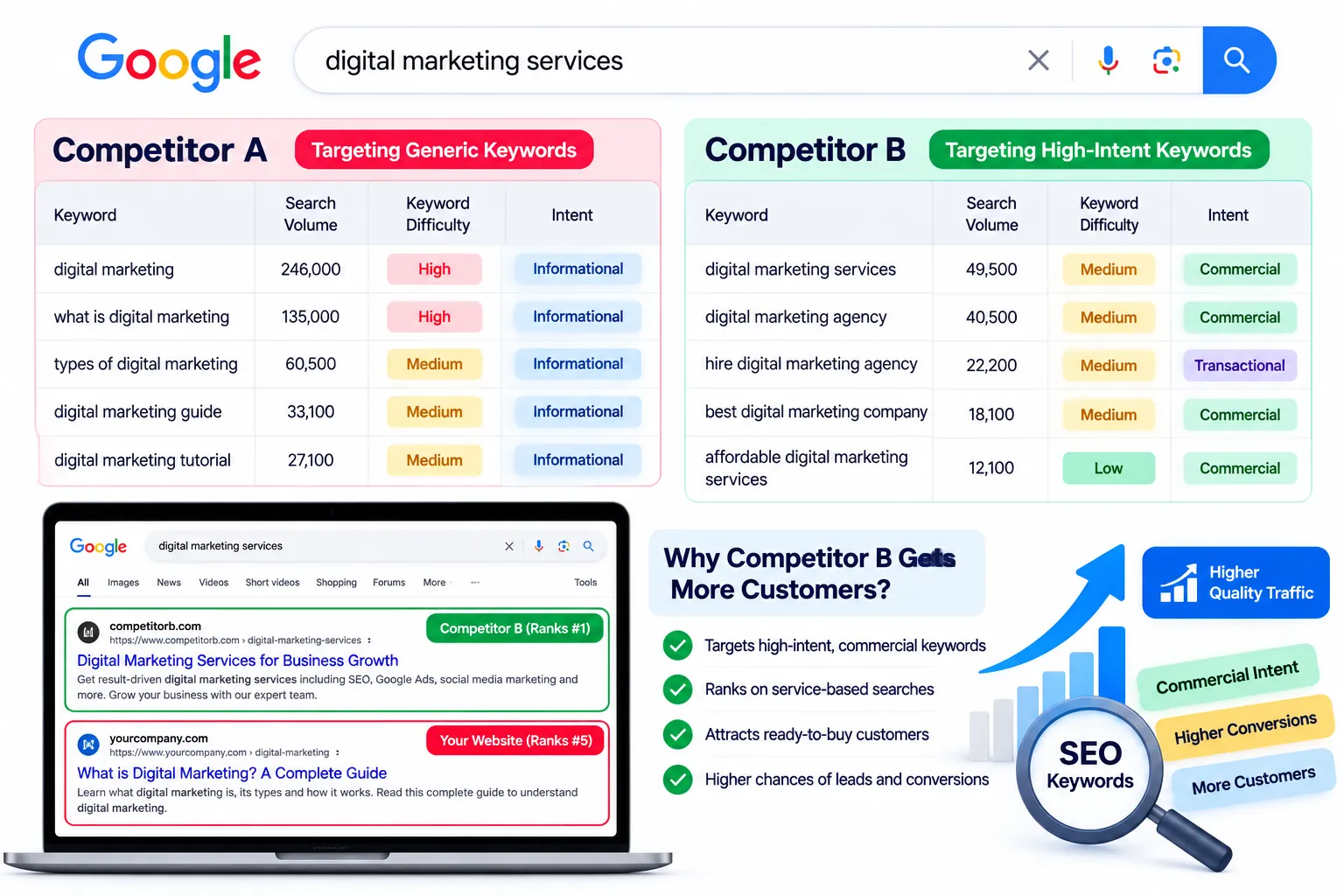
Your competitors may be attracting more potential customers because their websites target search queries with stronger commercial intent.
Not every keyword has the same business value.
For example:
"What is digital marketing?" is primarily informational.
"Best digital marketing agency for small businesses" suggests that the searcher may be comparing providers.
"Hire Google Ads management agency" indicates a more direct interest in purchasing a service.
All three keywords can be useful, but they support different stages of the buying journey.
How to Catch Up
Conduct competitor keyword research.
Useful tools include:
Google Search Console
Google Keyword Planner
Ahrefs
Semrush
Google Trends
Identify keywords that your competitors rank for but your website does not.
Then evaluate each opportunity based on:
Relevance to your business
Search intent
Geographic market
Competition
Potential business value
Create useful content that answers the searcher's question more effectively.
Do not copy competitor content or target keywords simply because they have high search volume.
SEO strategy for 2026: Combine informational keywords with commercial and transactional keywords to attract visitors at different stages of the customer journey.
3. Their Websites Provide a Better User Experience
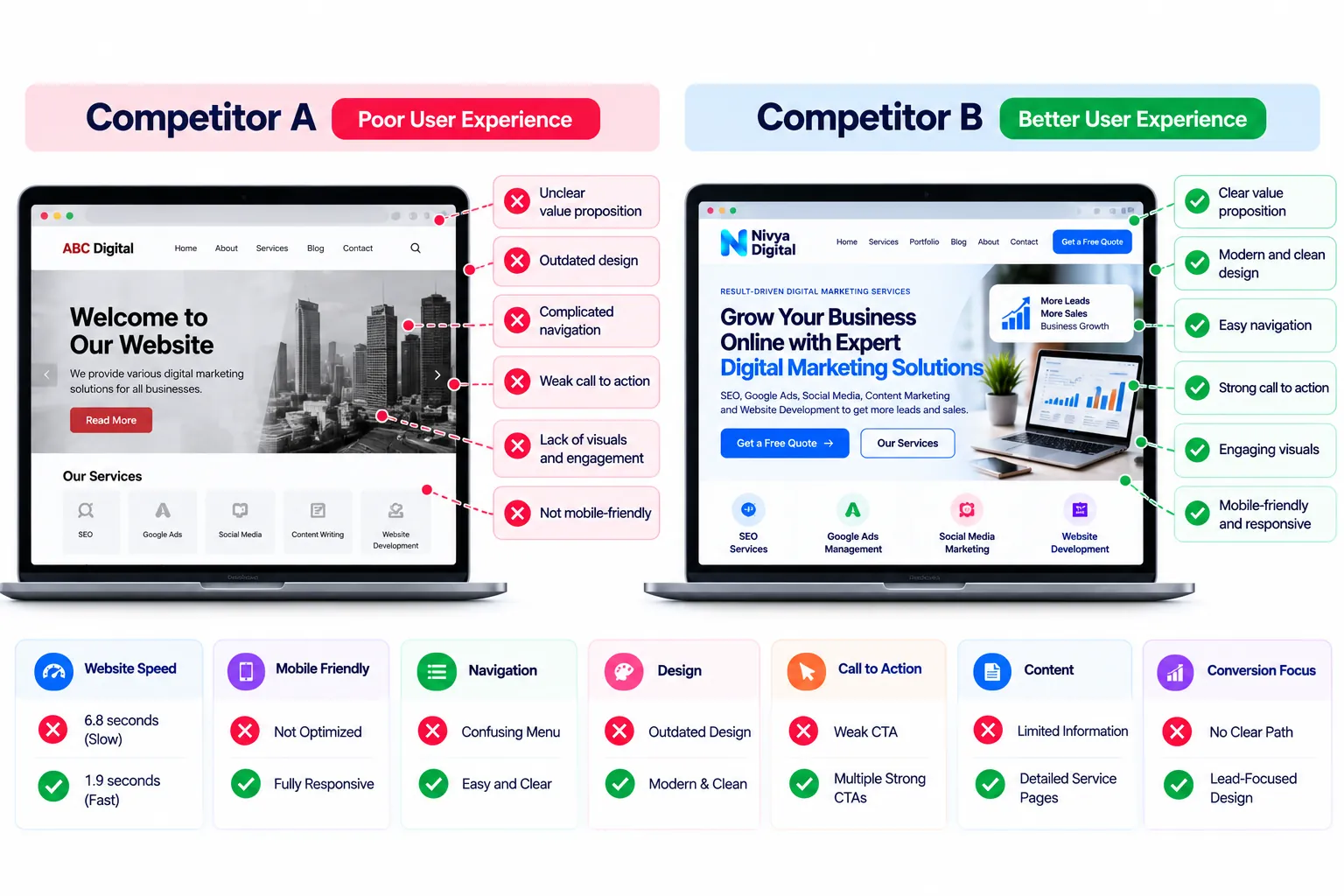
A competitor's website may convert more visitors into customers because it is easier to navigate and understand.
Customers often compare multiple businesses before making a decision.
If one website provides clear information, straightforward navigation, and a simple contact process, it may be more appealing than a confusing alternative.
Common website problems include:
Slow loading
Poor mobile layouts
Unclear service descriptions
Broken buttons
Complicated navigation
Missing contact information
Difficult enquiry forms
How to Catch Up
Review your website from a potential customer's perspective.
Ask yourself:
Can visitors understand what we offer within a few seconds?
Can they easily find our services?
Does the website work properly on mobile devices?
Is it easy to request a quotation or consultation?
Use Google PageSpeed Insights to identify performance problems.
Prioritise improvements to your most important landing pages and service pages.
A professional website should help customers understand your business and take the next step with minimal friction.
4. Your Competitors Are Creating More Helpful Content
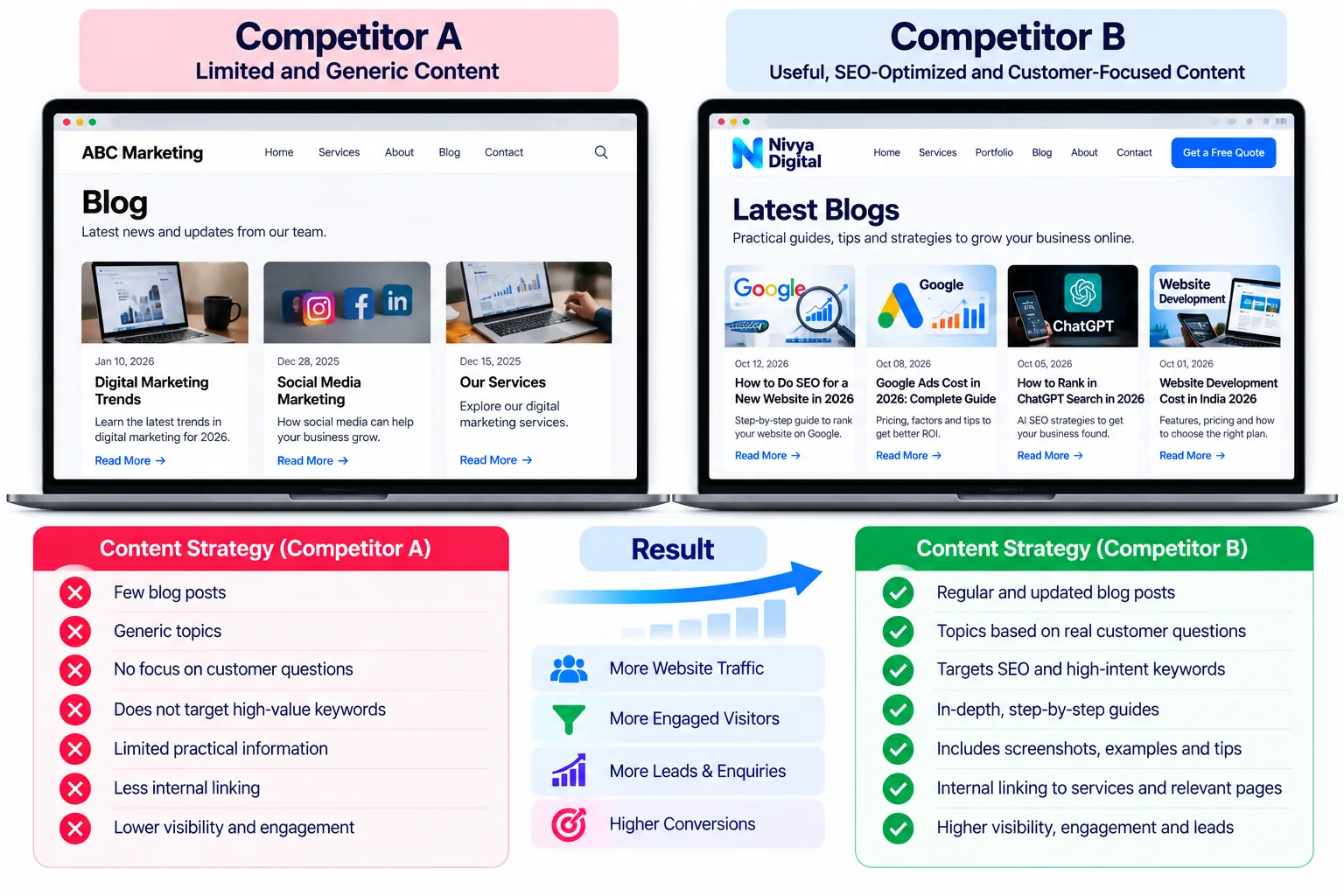
Some businesses publish content regularly but fail to address the questions potential customers actually ask.
Others develop content around specific customer problems, service comparisons, costs, and purchasing decisions.
For example, a digital marketing agency might publish:
How Much Does SEO Cost in 2026?
Google Ads vs Meta Ads: Which Is Better for Lead Generation?
How to Choose a Digital Marketing Agency
Why Your Website Is Getting Traffic but No Leads
What to Expect From Professional SEO Services
These topics can help potential customers evaluate their options.
How to Catch Up
Build a content strategy around the customer journey.
| Customer Stage | Content Examples |
|---|---|
| Awareness | Educational guides and problem-solving articles |
| Consideration | Comparisons, pricing guides, and checklists |
| Decision | Service pages, case studies, and consultation information |
| Retention | Tutorials, updates, and customer resources |
Use clear headings, examples, FAQs, and internal links.
Where appropriate, include original research, practical demonstrations, or first-hand experience.
Focus on usefulness rather than publishing large quantities of repetitive content.
Remember: More blog posts do not automatically mean more customers. Relevant content and a clear conversion journey matter more.
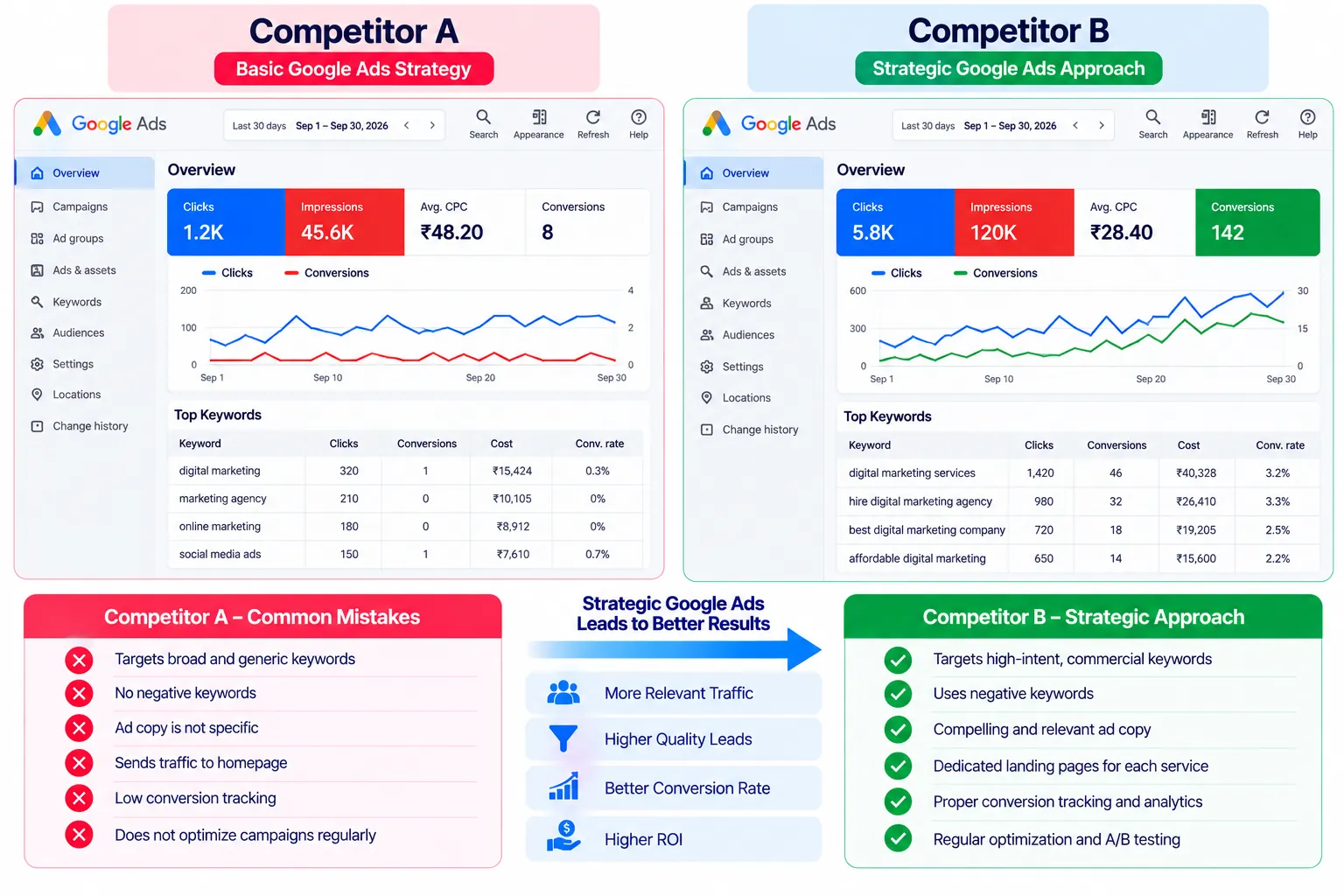
5. They Are Using Google Ads More Strategically
Your competitors may appear above your website in Google Search because they are running paid advertising campaigns.
However, successful advertising requires more than choosing keywords and setting a budget.
Campaign performance can depend on targeting, search intent, advertisement relevance, landing page quality, bidding, and conversion measurement.
How to Catch Up
Start by reviewing your advertising strategy.
Focus on:
High-intent keywords: Prioritise searches relevant to your services.
Relevant ad copy: Explain the offer clearly and avoid misleading claims.
Dedicated landing pages: Send visitors to pages that match the advertisement.
Negative keywords: Exclude irrelevant searches where appropriate.
Conversion tracking: Measure enquiries, purchases, and other meaningful actions.
Campaign reviews: Evaluate performance and adjust based on reliable data.
For example, a company promoting SEO services should consider directing its advertisements to a focused SEO service page rather than an unrelated homepage.
Paid advertising can generate targeted visibility, but profitability depends on campaign economics and execution.
6. Your Competitors Are Building Stronger Brand Trust
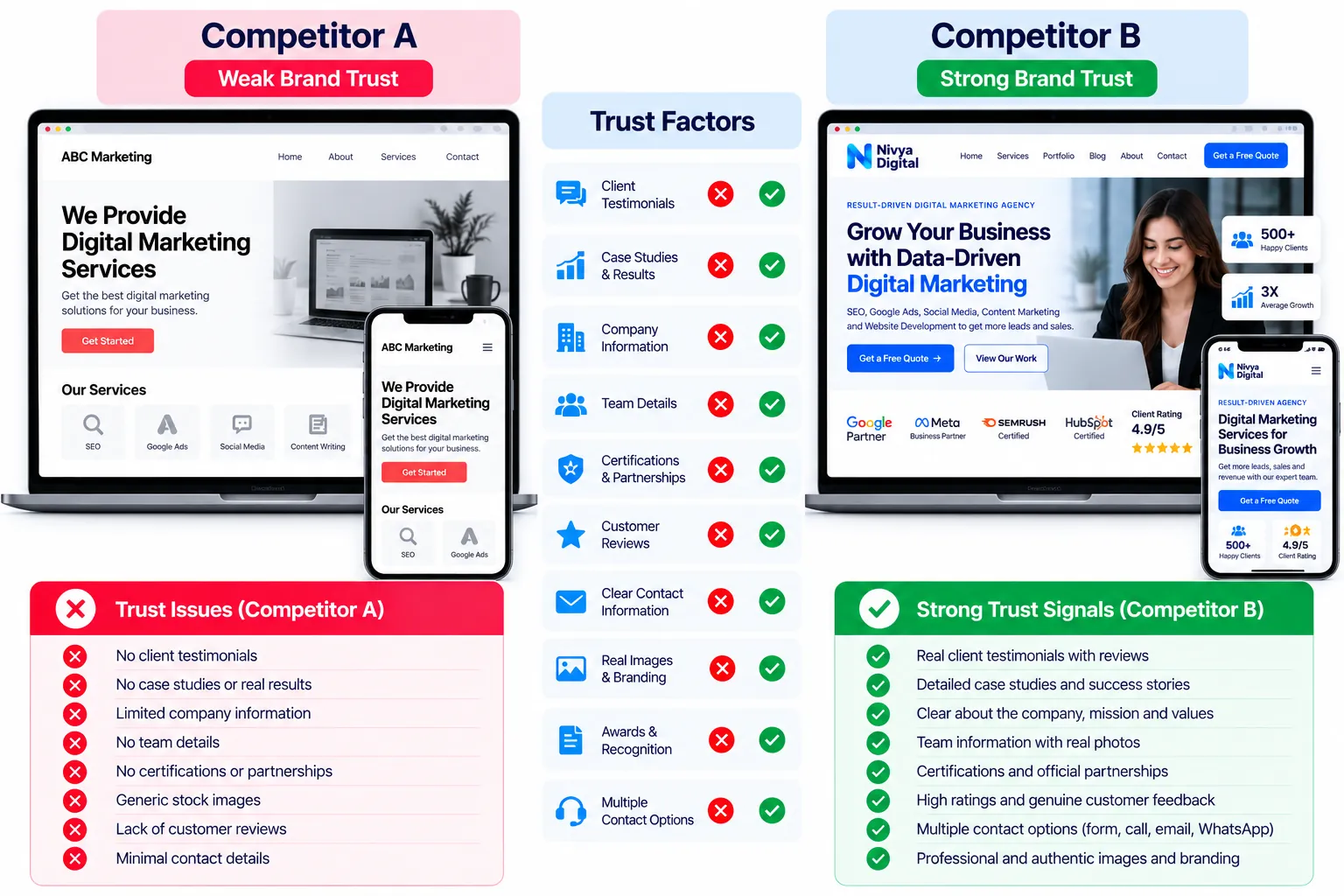
Customers rarely choose a business based on visibility alone.
They also want to feel confident about the company they are considering.
A competitor may have a stronger online presence because its website provides convincing, verifiable information.
This can include:
Genuine customer reviews
Client testimonials
Detailed service descriptions
Real project examples
Relevant certifications
Transparent business information
Clear communication channels
How to Catch Up
Make your website more trustworthy.
Explain who your business serves, what you provide, and how customers can contact you.
Publish authentic testimonials and case studies when available.
If you display certifications, partnerships, or customer logos, ensure they are genuine and that you have permission to use them.
Avoid fabricated reviews or unsupported claims such as guaranteed rankings or guaranteed revenue growth.
A clear and credible website helps visitors evaluate your business with greater confidence.
7. They Are More Visible Across Multiple Digital Channels
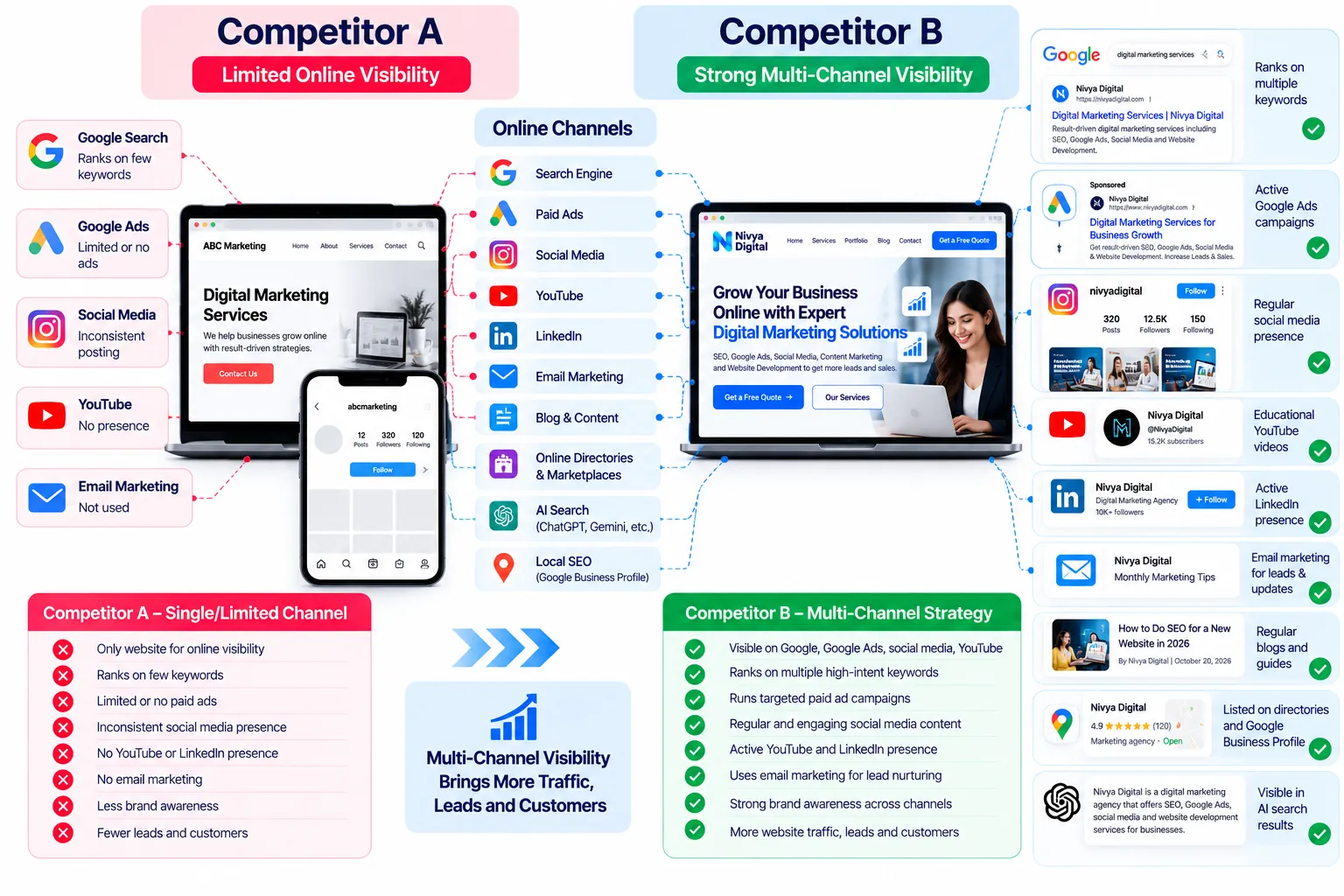
Your competitors may not depend entirely on Google for customer acquisition.
They may attract potential customers through several channels, including:
Organic search
Google Ads
Instagram
Facebook
LinkedIn
YouTube
Email marketing
Referral websites
AI-powered discovery platforms
This broader presence gives customers multiple opportunities to discover and interact with a brand.
How to Catch Up
Identify which platforms are most relevant to your audience.
For example:
A B2B consulting company may benefit from LinkedIn, search-focused content, and email nurturing.
An eCommerce business may use product search, paid social campaigns, organic content, and email marketing.
A local service provider may prioritise relevant local search visibility, reviews, and targeted advertising.
Avoid spreading your resources across every platform.
Instead, select a manageable combination of channels that supports your business objectives.
8. Your Competitors Are Adapting to AI-Powered Search
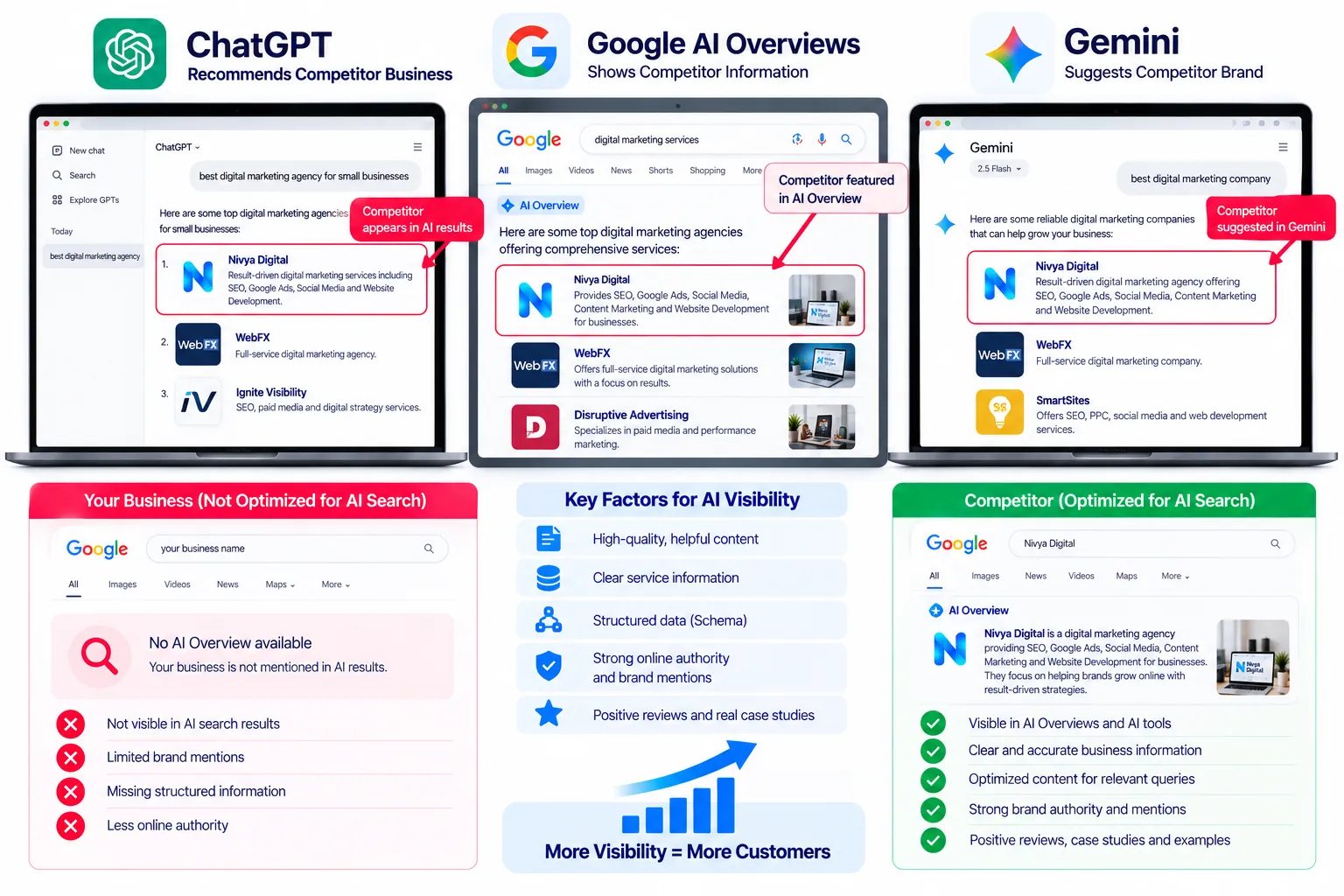
Online discovery is changing as people use AI-powered tools to research products, compare services, and find information.
Platforms such as ChatGPT, Google AI search experiences, and Gemini can influence how people discover businesses and evaluate options.
Traditional SEO remains important, but businesses should also consider whether their information is understandable, accessible, accurate, and useful across different discovery experiences.
How to Catch Up
Strengthen the foundations of your website.
Publish clear information: Explain your services, expertise, and target customers.
Create helpful content: Answer real questions with useful examples.
Maintain consistent business details: Keep important company information accurate across relevant platforms.
Use appropriate structured data: Help eligible search systems understand your content.
Build genuine authority: Publish original information and earn relevant mentions or references.
Measure referral activity: Review identifiable traffic and enquiries from AI platforms where tracking is available.
There is no guaranteed method for getting a business recommended by an AI system.
However, clear, trustworthy, and accessible information can support broader online discoverability.
9. They Are Turning More Website Visitors Into Leads
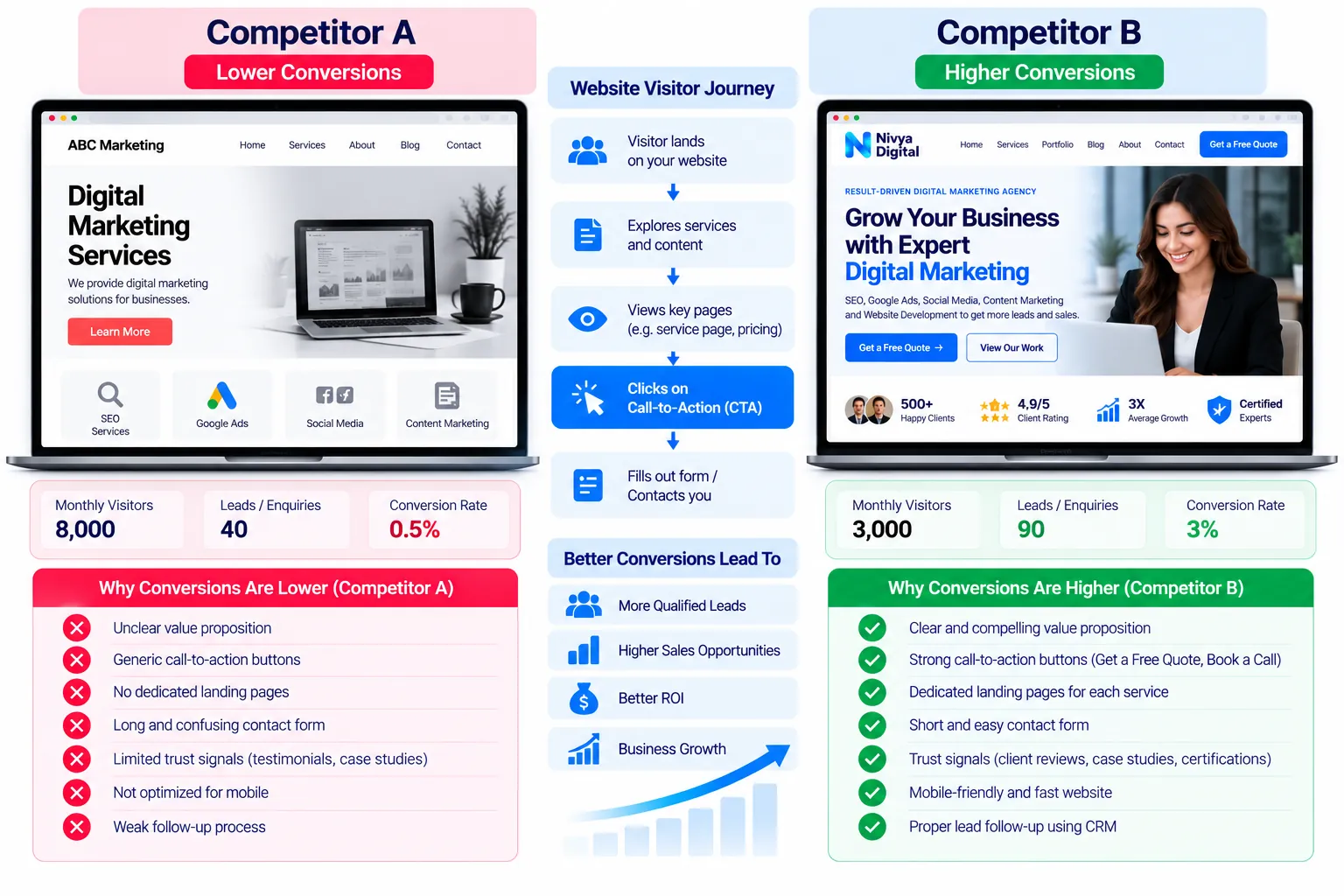
A business with fewer website visitors can sometimes generate more enquiries than a competitor with significantly higher traffic.
This happens when its website has a stronger conversion experience.
Consider this hypothetical example:
| Metric | Business A | Business B |
|---|---|---|
| Monthly visitors | 8,000 | 3,000 |
| Leads | 40 | 90 |
| Visitor-to-lead conversion rate | 0.5% | 3% |
Business B receives fewer visitors but generates more enquiries.
The difference may involve traffic quality, landing page relevance, calls to action, or enquiry forms.
How to Catch Up
Review your most important website pages.
Improve:
Headlines
Calls to action
Service descriptions
Contact forms
Mobile usability
Trust signals
Landing page relevance
Test changes and compare results against your baseline.
Do not assume that every improvement will increase conversions.
Use evidence to determine which changes are effective.
10. Your Competitors Have a Better Lead Follow-Up System
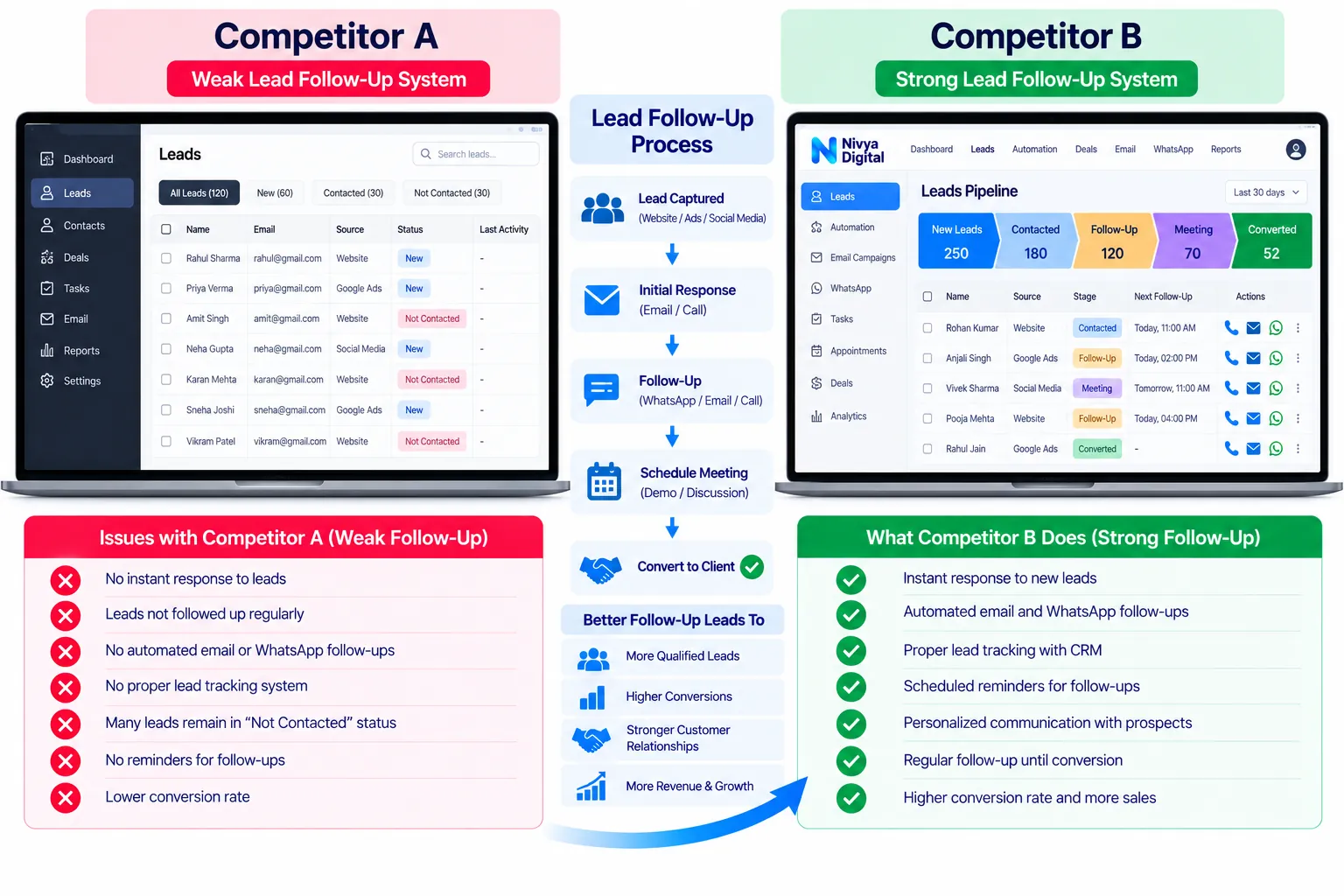
Generating a lead does not guarantee a sale.
Potential customers may contact multiple companies before deciding which provider to choose.
A business that organises enquiries and responds appropriately may be better positioned to continue the conversation.
Without an effective process, enquiries can be missed, duplicated, or forgotten.
How to Catch Up
Create a structured lead-management workflow.
For example:
A customer submits an enquiry.
The enquiry is recorded in a CRM.
The customer receives an acknowledgement.
A team member reviews the request.
The business follows up appropriately.
The outcome is recorded for future analysis.
CRM systems and business automation can help manage these steps.
Email reminders, lead assignment, and follow-up scheduling can reduce manual administration.
Ensure automated communication follows applicable privacy and marketing requirements.
11. They Are Measuring Marketing Performance More Accurately
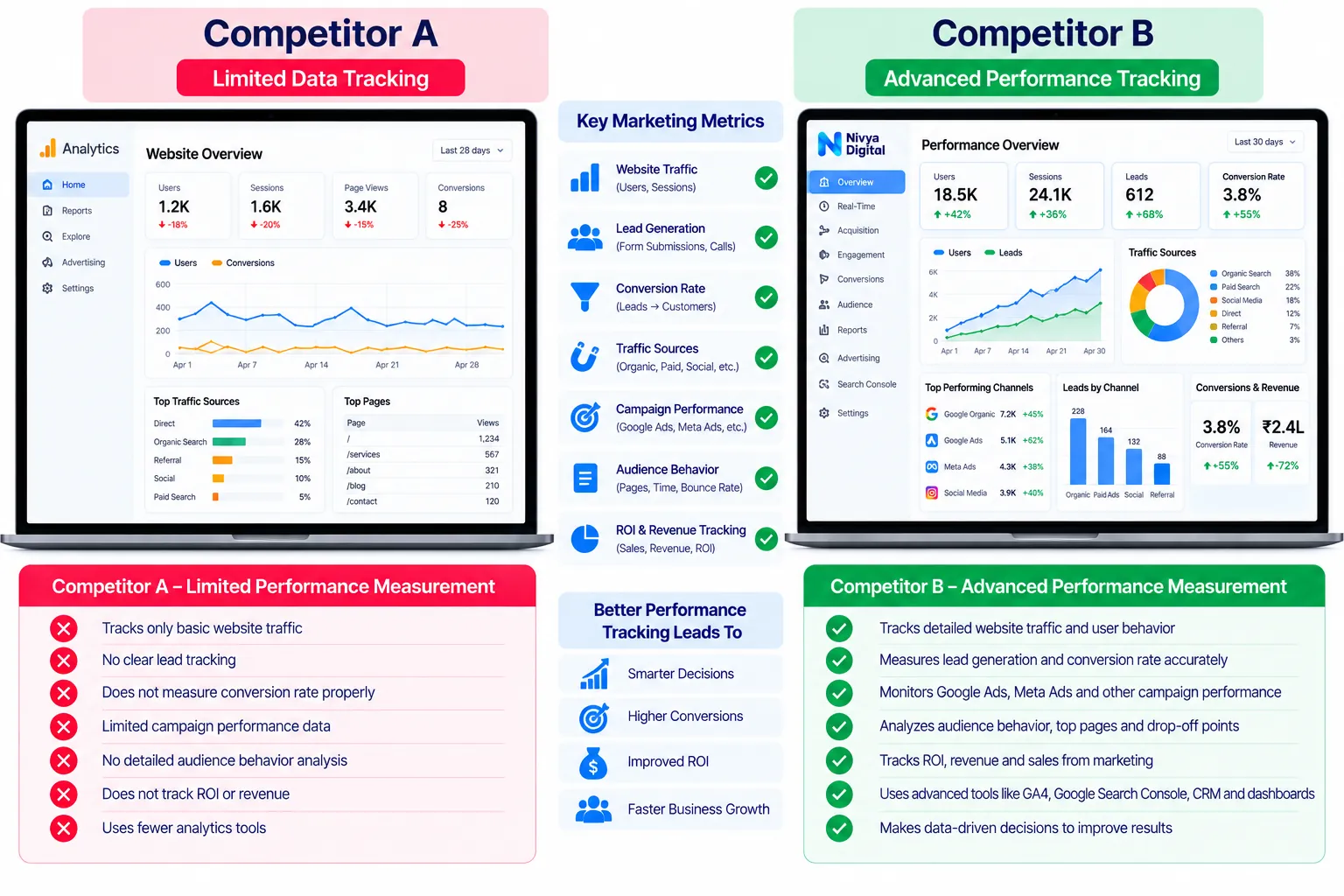
Your competitors may make better marketing decisions because they have a clearer understanding of what is working.
Instead of focusing only on traffic or social media engagement, they may monitor enquiries, qualified leads, customer acquisition costs, and revenue.
Important Digital Marketing KPIs
| KPI | What It Measures |
|---|---|
| Organic traffic | Visits from unpaid search |
| Conversion rate | Percentage of measured visits or users completing a defined action |
| Cost per lead | Advertising or marketing cost divided by leads generated |
| Customer acquisition cost | Cost of acquiring a new customer |
| Lead-to-customer rate | Percentage of leads becoming customers |
| Return on ad spend | Attributed revenue divided by advertising spend |
| Customer lifetime value | Estimated value generated across a customer relationship |
How to Catch Up
Use appropriate analytics and reporting tools.
Google Analytics 4 can help measure website events and key actions.
Google Search Console can provide information about search visibility and organic search performance.
Advertising platforms provide campaign-specific metrics.
CRM reports can help connect enquiries to sales outcomes.
Evaluate these sources together, while recognising that different platforms may use different attribution methods.
The goal is not simply to collect more data. It is to make better business decisions.
12. Your Competitors Keep Improving While You Use the Same Strategy
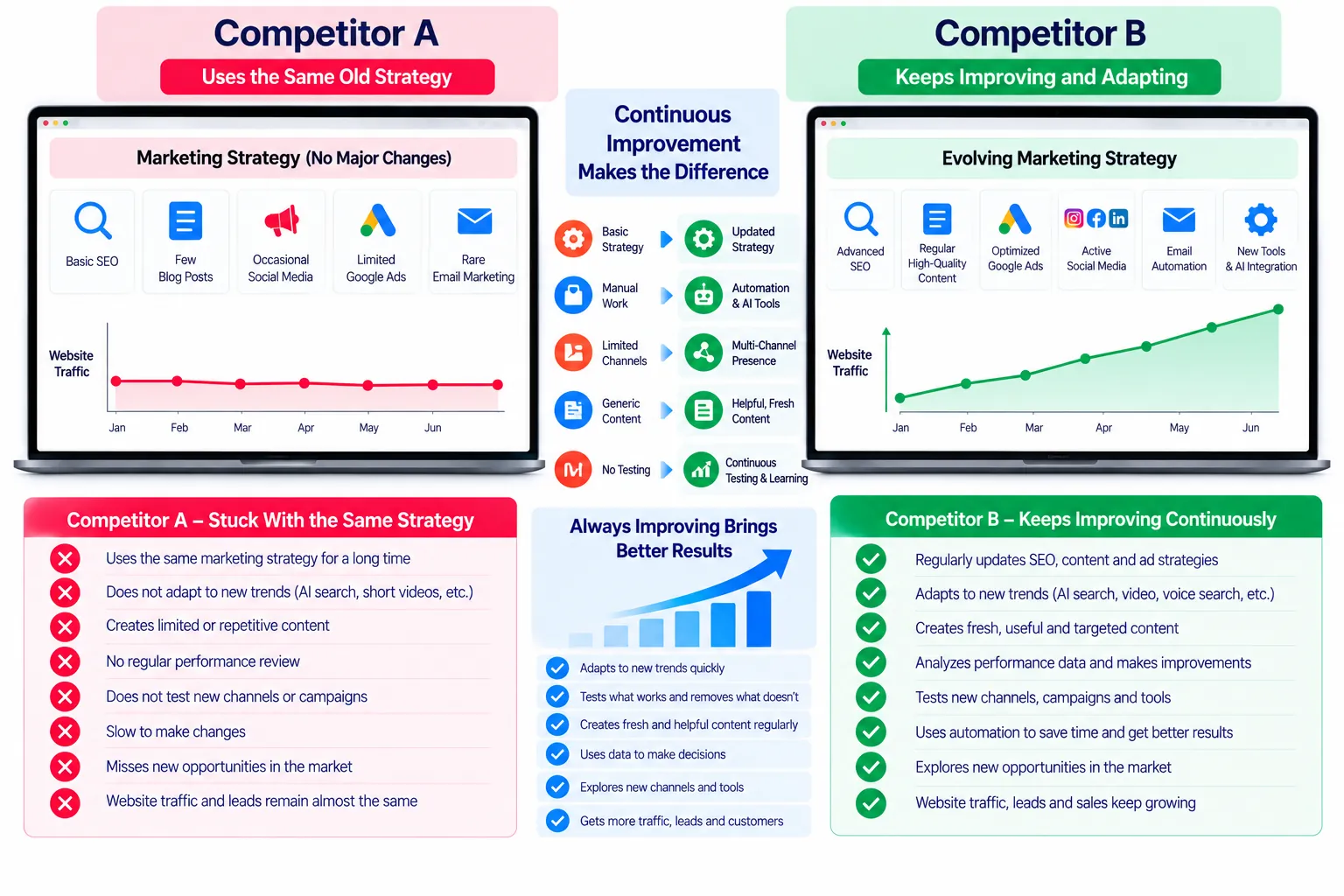
Digital marketing is not a one-time activity.
Customer expectations, competitor campaigns, search experiences, and platform features change over time.
A business that reviews its strategy regularly may identify problems and opportunities sooner.
For example, competitors might:
Update outdated service pages
Improve existing blog content
Test new advertisements
Refresh landing pages
Expand into relevant markets
Improve mobile usability
Introduce better lead-management workflows
How to Catch Up
Build a regular review process.
Each month, assess:
Which marketing channels generated qualified leads?
Which landing pages performed best?
Which search queries are gaining or losing visibility?
What new content have competitors published?
Which campaigns need improvement?
What should be tested next?
Make changes based on your goals and available evidence rather than copying every competitor activity.
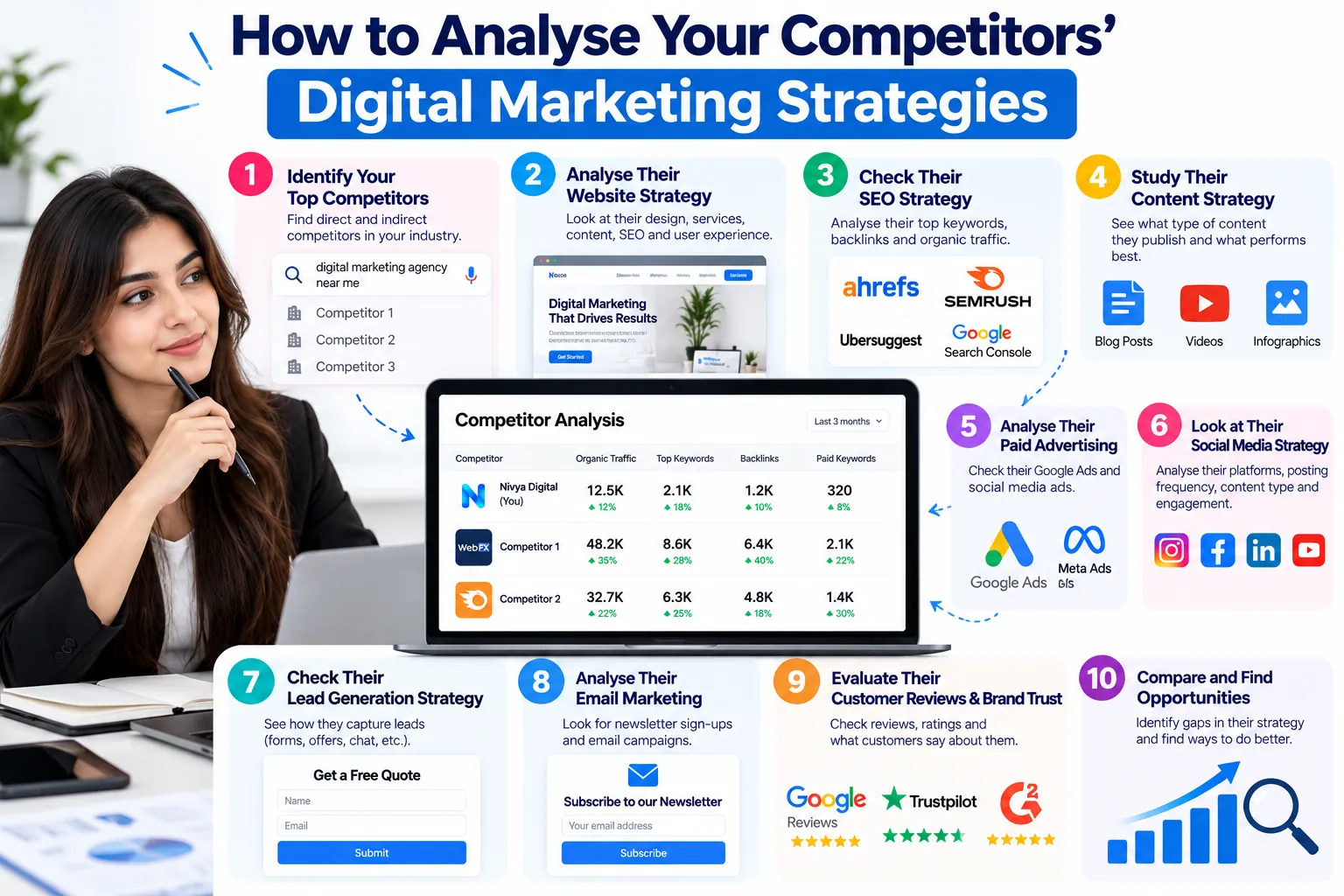
How to Analyse Your Competitors' Digital Marketing Strategies
Competitor analysis helps you understand how other businesses position themselves online.
However, publicly available information cannot reveal every aspect of a competitor's marketing performance.
You can usually observe their content, search visibility, website experience, and publicly visible advertisements.
You generally cannot verify their actual customer numbers, profitability, or private conversion data without access to reliable internal information.
Step 1: Identify Your Real Competitors
Search for your main products and services.
Identify businesses targeting similar customers, services, and geographic markets.
Separate direct business competitors from websites that compete only for informational keywords.
Step 2: Analyse Their SEO Performance
Review:
Relevant ranking keywords
Search intent
Content topics
Service pages
Internal linking
Technical website quality
Backlink opportunities
Tools such as Ahrefs and Semrush can provide estimates of search visibility and keyword rankings.
Treat third-party traffic estimates as directional rather than exact.
Step 3: Review Their Website Experience
Examine their navigation, messaging, service descriptions, mobile design, and contact process.
Look for ideas that may help customers understand your own business more easily.
Step 4: Study Their Content Strategy
Identify common customer questions their content addresses.
Look for missing explanations, outdated information, or opportunities to create more useful resources.
Step 5: Examine Their Public Advertising
Review available advertising transparency resources and visible search advertisements.
Look for patterns in messaging, offers, and landing page positioning.
Do not assume that an advertisement's visibility proves it is profitable.
Step 6: Create a Competitor Gap Analysis
Use your findings to prioritise opportunities.
| Area | Questions to Ask | Potential Action |
|---|---|---|
| SEO | Which relevant keywords are missing? | Build targeted content |
| Website | Is the customer journey confusing? | Improve important pages |
| Content | Which buying questions remain unanswered? | Publish useful guides |
| Advertising | Are campaigns reaching the right audience? | Improve targeting and landing pages |
| Trust | Is credible proof easy to find? | Add genuine evidence |
| Conversions | Are visitors taking meaningful actions? | Test CTAs and forms |
| Follow-up | Are enquiries managed consistently? | Improve CRM workflows |
This approach gives you a practical plan rather than a list of competitor activities to imitate.
SEO vs Google Ads vs Social Media: Which Helps You Compete Better?
Different digital marketing channels serve different purposes.
| Marketing Channel | Main Advantage | Best Suited For |
|---|---|---|
| SEO | Builds organic search visibility over time | Relevant search demand |
| Google Ads | Reaches audiences through paid search campaigns | High-intent searches |
| Social Media Marketing | Supports audience engagement and discovery | Brand awareness and community building |
| Content Marketing | Answers questions and supports purchasing decisions | Education and lead nurturing |
| Email Marketing | Maintains communication with opted-in audiences | Lead nurturing and retention |
| Conversion Optimisation | Improves the website enquiry experience | Businesses with relevant existing traffic |
| CRM Automation | Organises enquiries and follow-up | Lead management and sales processes |
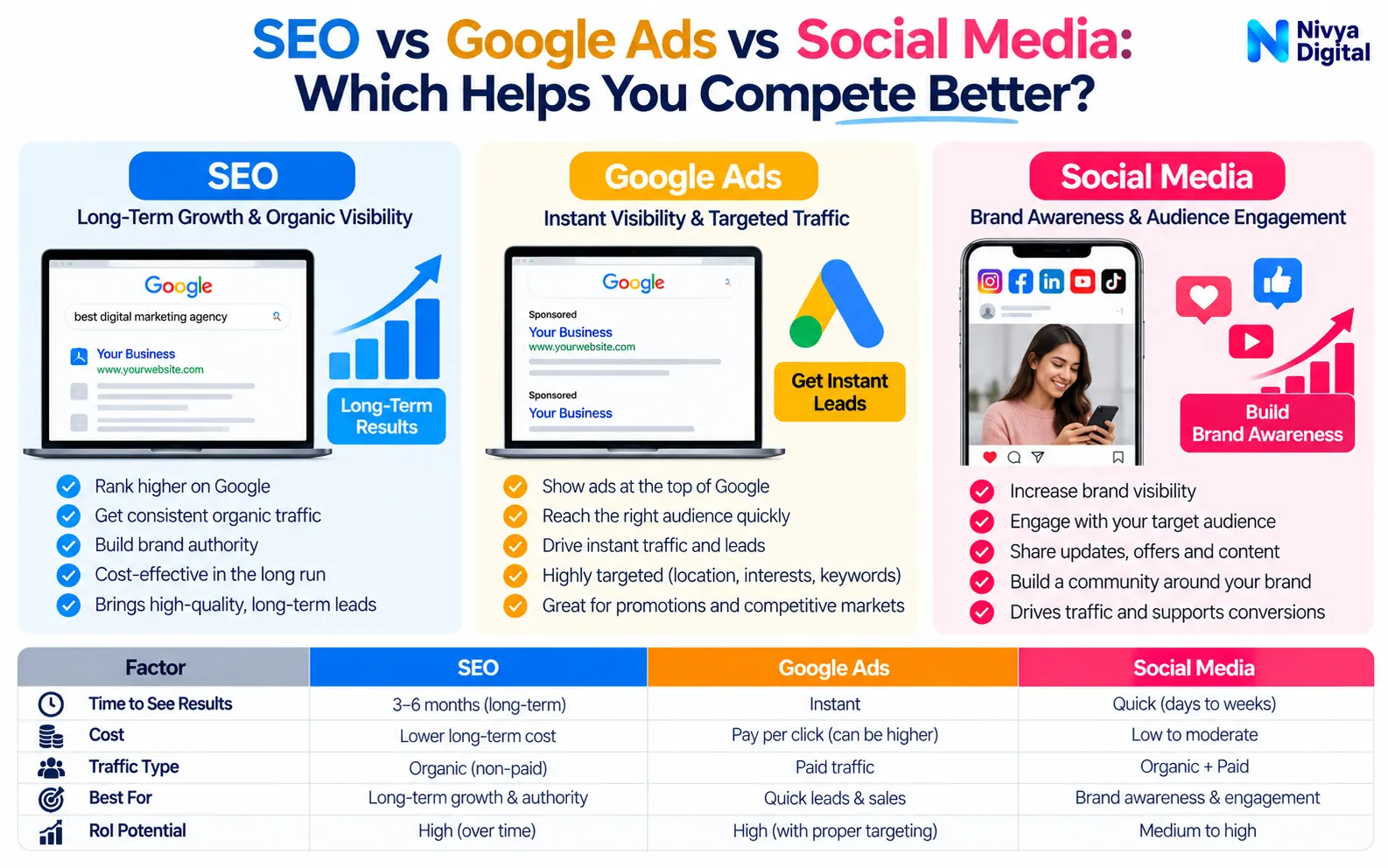
There is no single best channel for every business.
A strong strategy combines channels based on customer behaviour, competition, available resources, and business goals.
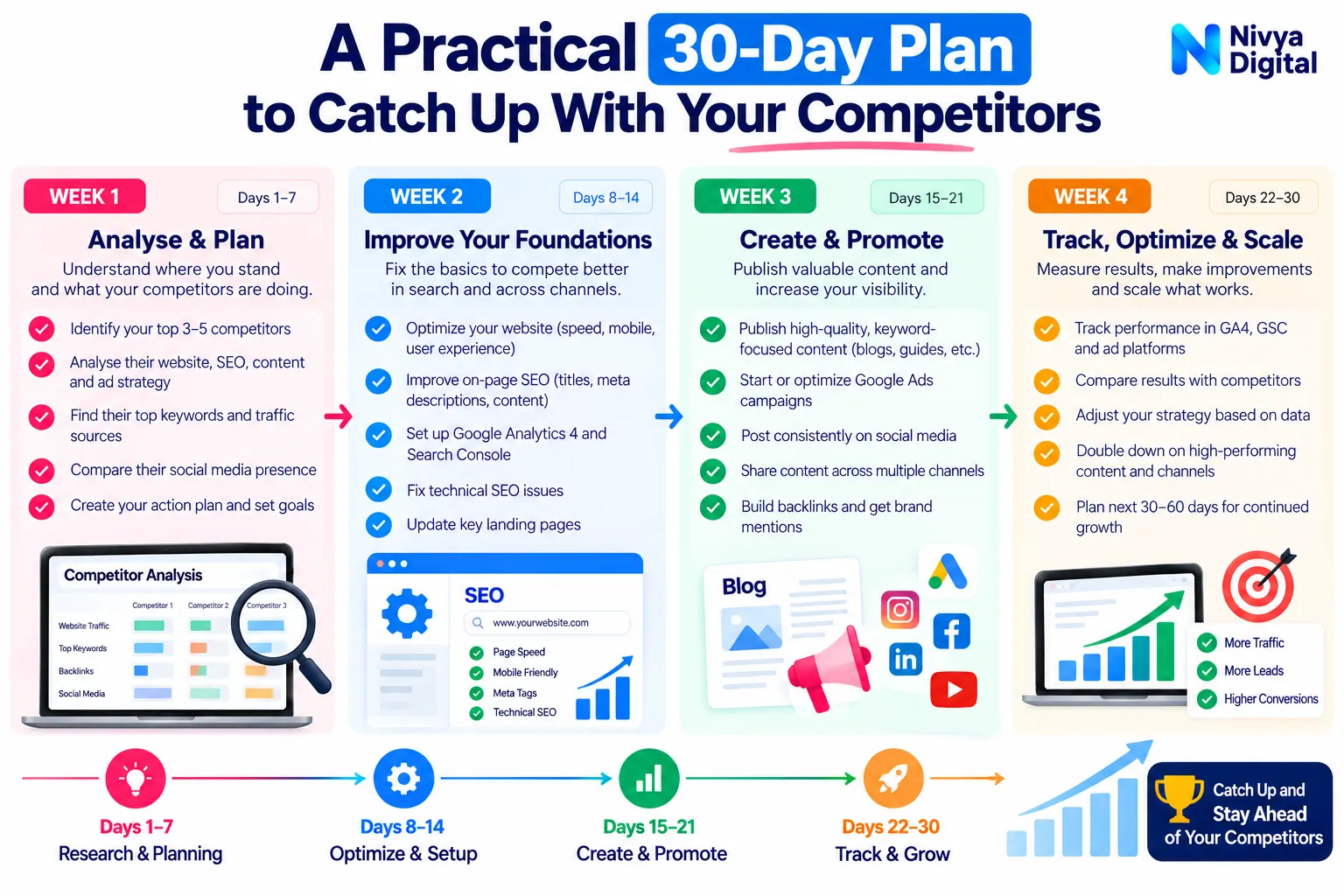
A Practical 30-Day Plan to Catch Up With Your Competitors
You do not need to redesign your entire marketing strategy immediately.
Start with a structured review.
Week 1: Research Your Competitors
Identify three to five relevant competitors.
Review their main service pages.
Analyse important keywords.
Compare content topics.
Examine their public advertising messages.
Identify gaps in your own website.
Goal: Create a prioritised list of competitive opportunities.
Week 2: Improve Your Website and SEO
Update important service pages.
Improve page titles and descriptions.
Strengthen internal links.
Fix obvious mobile usability issues.
Clarify your value proposition.
Improve enquiry forms and CTAs.
Goal: Remove important barriers to discoverability and enquiries.
Week 3: Strengthen Your Customer Acquisition Strategy
Publish or update commercially relevant content.
Review existing advertising campaigns.
Improve landing page relevance.
Add genuine trust signals.
Review your social media channel strategy.
Connect relevant blog posts to service pages.
Goal: Attract and engage more relevant potential customers.
Week 4: Measure and Optimise
Check website conversion tracking.
Review qualified enquiries.
Compare campaign performance.
Identify pages requiring further improvement.
Test a specific CTA or landing page change.
Plan the next month's priorities.
Goal: Establish a repeatable process for improvement.
Thirty days may be enough to identify issues and begin implementing changes, but meaningful SEO and revenue outcomes can take longer.
Common Mistakes Businesses Make When Trying to Beat Competitors
Competitor research is useful, but copying competitors without understanding their objectives can waste resources.
Avoid these mistakes:
Copying competitor content: Create original material that genuinely helps your audience.
Targeting only high-volume keywords: Search intent and business relevance matter.
Increasing advertising budgets without analysis: Review campaign performance before scaling.
Ignoring mobile visitors: Ensure important pages work across devices.
Publishing content without conversion paths: Help interested readers find relevant services.
Using fake testimonials: Only publish genuine, verifiable customer feedback.
Expecting immediate SEO results: Sustainable improvements require time and ongoing work.
Tracking traffic but not customers: Measure qualified leads and business outcomes wherever possible.
The objective is to develop a better customer experience, not simply imitate a competitor's website.
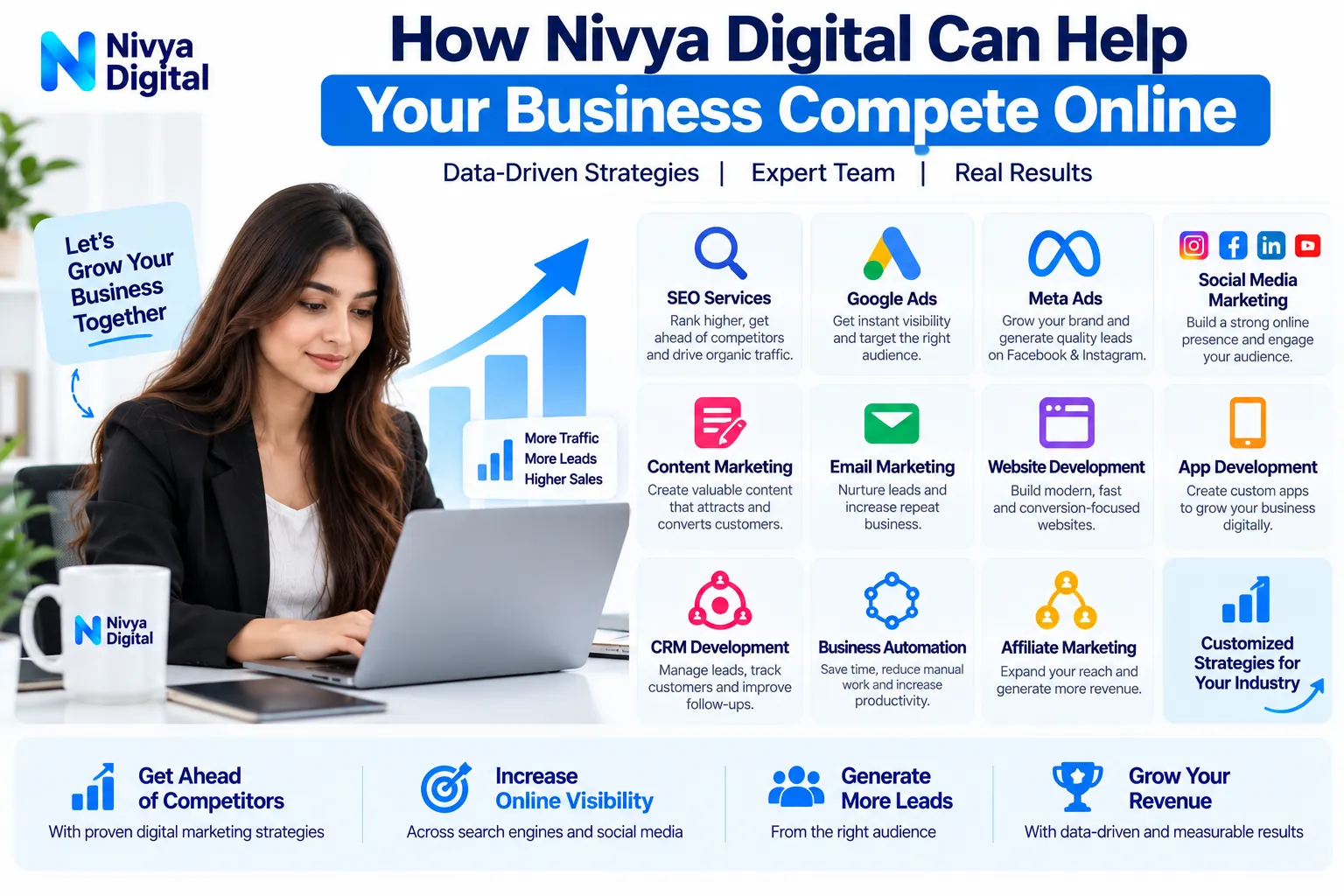
How Nivya Digital Can Help Your Business Compete Online
Understanding why competitors are attracting more customers is the first step.
The next step is building a digital marketing strategy that addresses the gaps in your own business.
At Nivya Digital, we offer digital marketing and technology services for businesses seeking to strengthen their online presence.
Our services include:
Search Engine Optimisation
Improve search visibility through keyword research, on-page optimisation, technical SEO, content strategy, and competitor analysis.
Google Ads Management
Develop paid search campaigns aligned with relevant audiences, business objectives, and conversion measurement.
Website Development
Create or improve websites with clear navigation, mobile usability, and customer enquiries in mind.
Social Media and Meta Ads
Support audience discovery, engagement, and paid social marketing campaigns.
Content Marketing
Develop useful content that addresses customer questions and supports the buying journey.
CRM Development and Business Automation
Help businesses organise enquiries, improve lead management, and support follow-up workflows.
Whether your business serves customers locally, nationally, or internationally, the right strategy should reflect your audience, competition, and goals.
Ready to Improve Your Competitive Position?
Your competitors may be attracting more online attention today, but that does not mean your business cannot improve its visibility and customer acquisition strategy.
Start by identifying the most important gaps and addressing them systematically.
Explore Nivya Digital's services and discuss your digital marketing goals.
Website: https://nivyadigital.com/
Final Thoughts
If your competitors are getting more customers online in 2026, the solution is not necessarily to spend more money or publish more content.
It is to understand what makes their marketing effective and build a stronger strategy for your own audience.
Review your SEO performance, website experience, advertising campaigns, content quality, trust signals, conversion tracking, and lead follow-up process.
Focus on attracting relevant visitors, answering their questions, and making it easier for them to choose your business.
You do not need to copy your competitors to compete with them. You need to understand your customers better and deliver a more useful online experience.
For businesses seeking support with SEO, paid advertising, website development, content marketing, or automation, explore the services available at Nivya Digital.
Visit https://nivyadigital.com/ to learn more.
Comments (0)
No comments yet
Start the discussion by sharing your perspective